Why Race Doesn’t Matter in Nutrition Policy

This is the first of a series looking at what does and doesn’t matter when it comes to nutrition policy. When I started out on this adventure, I thought that science would give me the answers to the questions I had about why public health and clinical recommendations for nutrition were so limited. Silly me. The science part is easy. But policy, politics, economics, industry, media framing, the scientific bureaucracy, cultural bias—now that stuff is crazy complicated. It’s like an onion: when you start peeling back the layers, you just want to cry. I am also honored to say that this post is part of the Diversity in Science Carnival on Latino / Hispanic Health: Science and Advocacy

When we began investigating relationships between diet and chronic disease, we didn’t pay much attention to race. The longest-running study of the relationship between dietary factors and chronic disease is the Framingham Heart Study, a study made up entirely of white, middle-class participants. Since 1951, the Framingham study has generated over 2 thousand journal articles and retains a central place in the creation of public health nutrition policy recommendations for all Americans.

More recent datasets—especially the large ones—are nearly as demographically skewed.

The Nurses’ Health Study is 97% Caucasian and consists of 122,000 married registered nurses who were between the ages of 30 and 55 when the study began in 1976. An additional 116,686 nurses ages 25 – 42 were added in 1989, but the racial demographics remained unchanged.

The Health Professionals’ Follow-up Study began in 1986, as a complementary dataset to the Nurses’ Health Study. It is 97% Caucasian and consists, as the name suggests, of 51, 529 men who were health professionals, aged 40-75, when the study began.

The Physicians’ Health Study began in 1982, with 29, 071 men between the ages of 40-84. The second phase started in 1997, adding men who were then over 50. Of participants whose race is indicated, 91% are Caucasian, 4.5% are Asian/Pacific Islander, 2% are Hispanic, and less than 1% are African-American or American Indian. I have detailed information about the racial subgroups of this dataset because I had to write the folks at Harvard and ask for them. Race was of such little interest that the racial composition of the participants is never mentioned in the articles generated from this dataset.

Over the years, these three mostly-white datasets have generated more journal articles than five of the more diverse datasets all put together.* These three datasets, all administered by Harvard, have been used to generate some of the more sensationalist nutrition headlines of the past few years–red meat kills, for instance–with virtually no discussion about the fact that the findings apply to a population–mostly white, middle to upper middle class, well-educated, health professionals, most of whom who were born before the atomic bomb–to which most of us do not belong.

Shift in demographics in past 50 years;
predicted shift in next 50 years

Although we did begin to realize that race and other characteristics might actually matter with regard to health (hence the existence of datasets with more diversity), we can’t really fault those early researchers for creating such lopsided datasets. At that point, not only was the US more white than it is now, scientific advances that would reveal more about how our genetic background might affect health had not yet been developed. We had not yet mapped the human genome; epigenetics (the study of the interaction between environmental inputs and the expression of genetic traits) was in its infancy, and biochemical individuality was little more than a glimmer in Roger Williams’ eye.

Socially, culturally, and I think, scientifically, we were all inclined to want to think that everyone was created equal, and this “equality” extended to how our health would be affected by food. Stephen Jay Gould’s 1981 book, The Mismeasure of Man, critiqued the notion that “the social and economic differences between human groups—primarily races, classes, and sexes—arise from inherited, inborn distinctions and that society, in this sense, is an accurate reflection of biology.” In the aftermath of the civil rights movement, with its embarrassingly racist behavior on the part of some representatives of the majority race and the heartbreaking violence over differences in something as superficial as skin color, it was patently unhip to suggest that racial differences were anything more than just skin deep.

But does that position still serve us now?

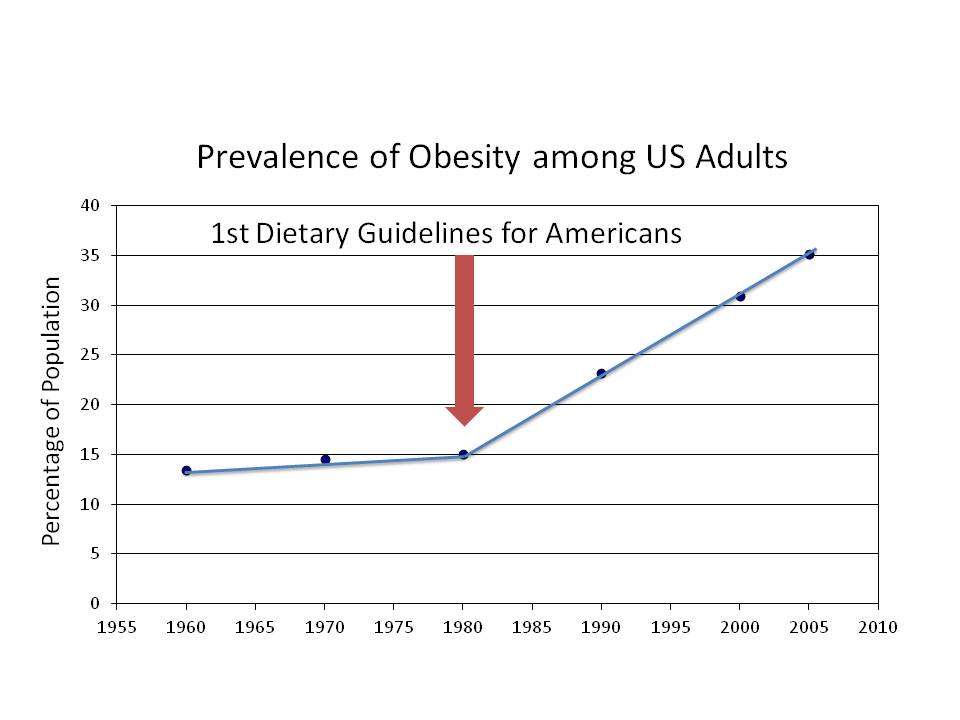
In the past 35 years, our population has become more diverse and nutrition science has become more nuanced—but our national nutrition recommendations have stayed exactly the same. The first government-endorsed dietary recommendations to prevent chronic disease were given to the US public in 1977. These Dietary Goals for Americans told us to reduce our intake of dietary saturated fat and cholesterol and increase our intake of dietary carbohydrates, especially grains and cereals in order to prevent obesity, diabetes, heart disease, cancer, and stroke.
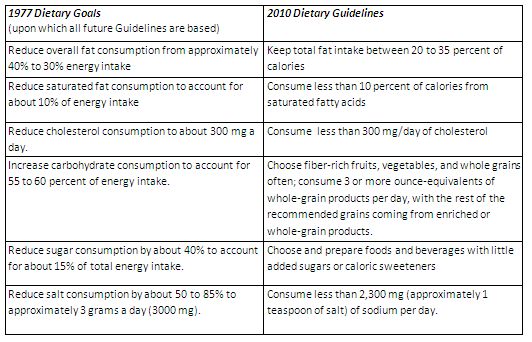
Since 1980, the decreases in hypertension and serum cholesterol—health biomarkers—have been linked to Guidelines-directed dietary changes in the US population [1, 2, 3, 4].

“Age-adjusted mean Heart Disease Prevention Eating Index scores increased in both sexes during the past 2 decades, particularly driven by improvements in total grain, whole grain, total fat, saturated fatty acids, trans-fatty acids, and cholesterol intake.” [1]

However, with regard to the actual chronic diseases that the Dietary Guidelines were specifically created to prevent, the Dietary Guidelines have been a resounding failure. If public health officials are going to attribute victory on some fronts to Americans adopting dietary changes in line with the Guidelines, I’m not sure how to avoid the conclusion that they also played a part in the dramatic increases in obesity, diabetes, stroke, and congestive heart failure.

If the Dietary Guidelines are a failure, why have policy makers failed to change them?

It is not as if there is an overwhelming body of scientific evidence supporting the recommendations in the Guidelines. Their weak scientific underpinnings made the 1977 Dietary Goals controversial from the start. The American Society for Clinical Nutrition issued a report in 1979 that found little conclusive evidence for linking the consumption of fat, saturated fat, and cholesterol to heart disease and found potential risks in recommending a diet high in polyunsaturated fats [5]. Other experts warned of the possibility of far-reaching and unanticipated consequences that might arise from basing a one-size-fits-all dietary prescription on such preliminary and inconclusive data: “The evidence for assuming that benefits to be derived from the adoption of such universal dietary goals . . . is not conclusive and there is potential for harmful effects from a radical long-term dietary change as would occur through adoption of the proposed national goals” [6]. Are the alarming increases in obesity and diabetes examples of the “harmful effects” that were predicted? It does look that way. But at this point, at least one thing is clear: in the face of the deteriorating health of Americans and significant scientific evidence to the contrary, the USDA and HHS have continued to doggedly pursue a course of dietary recommendations that no reasonable assessment would determine to be effective.

But what does this have to do with race?

Maintaining the myth that a one-size diet approach works for everyone is fine if that one-size works for you—socially, financially, and in terms of health outcomes. The single positive health outcome associated with the Dietary Guidelines has been a decrease in heart attacks—but only for white people.

And if that one-size diet doesn’t fit in terms of health, if you end up with one of the other numerous adverse health effects that has increased in the past 35 years, if you’re a member of the mostly-white, well-educated, middle/upper-middle class demographic—you know, the one represented in the datasets that we continue to use as the backbone for our nutrition policy—you are likely to have the financial and social resources to eat differently from the Guideline recommendations should you choose to do so, to exercise as much as you need to, and to demand excellent healthcare if you get sick anyway. Even if you accept that these foods are Guidelines-recommended “healthy” foods, you are not stuck with the commodity crop-based processed foods for which our nutrition programs have become a convenient dumping ground.

In the meantime, low-income women, children, and minorities and older adults with limited incomes—you know, the exact population not represented in those datasets—remain the primary recipients of federal nutrition programs. Black, Hispanic, and American Indian kids are more likely to qualify for free or reduced-price school lunches; non-white participants make up 68% of the Special Supplemental Nutrition Program for Women, Infants, and Children enrollment. These groups have many fewer social, financial, and dietary options. If the food they’re given doesn’t lead to good health—and there is evidence that it does not—what other choices do they have?

When it comes to health outcomes in minorities and low-income populations, the “healthier” you eat, the less likely you are to actually be healthy. Among low-income children, “healthy eaters” were more likely to be obese than “less-healthy eaters,” despite similar amounts of sedentary screen time. Among low-income adults, “healthy eaters” were more likely to have health insurance, watch less television, and to not smoke. Yet the “healthy eaters” had the same rates of obesity as the “less-healthy heaters” and increased rates of diabetes, even after adjustment for age.

These associations don’t necessarily indicate a cause-effect relationship between healthy eating and health problems. But there are other indications that being a “healthy eater” according to US Dietary Guidelines does not result in good health. Despite adherence to “healthy eating patterns” as determined by the USDA Food Pyramid, African American children remain at higher risk for development of diabetes and prediabetic conditions, and African American adults gain weight at a faster pace than their Caucasian counterparts [7,8].

Adjusted 20-year mean weight change according to low or high Diet Quality Index (DQI) scores [8]

In this landmark study by Zamora et al, “healthy eaters” (with a high DQI) were compared to “less-healthy eaters” (with a low DQI). Everyone (age 18-30 at baseline) gained weight over time; the slowest gainers—white participants who were “healthy eaters”—still gained a pound a year. More importantly however, for blacks, being a “healthy eater” according to our current high-carbohydrate, low-fat recommendations actually resulted in more weight gain over time than being a “less healthy eater,” an outcome predicted by known differences in carbohydrate metabolism between blacks and whites [9].

Clearly, we need to expand our knowledge of how food and nutrients interact with different genetic backgrounds by specifically studying particular racial and ethnic subpopulations. Social equality does not negate small but significant differences in biology. But it won’t matter how much diversity we build into our study populations if the conclusions arrived at through science are discarded in favor of maintaining public health nutrition messages created when most human beings studied were of the adult, mostly white, mostly male variety.

Right now the racial demographics of the participants in an experimental trial or an observational study dataset doesn’t matter, and the reason it doesn’t is because the science doesn’t matter. What really matters? Maintaining a consistent public health nutrition message—regardless of its affect on the health of the population—that means never having to say you’re sorry for 35 years of failed nutritional guidance.

*ARIC – Atherosclerosis Risk In Communities (1987), 73% white; MESA – Multi Ethnic Study of Atherosclerosis (2000), 38% white, 28% African American, 12% Chinese, 22% Hispanic; CARDIA – Coronary Artery Risk Development in Young Adults (1985), 50% black, 50% white; SHS – Strong Heart Study (1988), 100% Native American; BWHS – Black Women’s Health Study(1995), 100% black women.

References:

1. Lee S, Harnack L, Jacobs DR Jr, Steffen LM, Luepker RV, Arnett DK. Trends in diet quality for coronary heart disease prevention between 1980-1982 and 2000-2002: The Minnesota Heart Survey. J Am Diet Assoc. 2007 Feb;107(2):213-22.

2. Hu FB, Stampfer MJ, Manson JE, Grodstein F, Colditz GA, Speizer FE, Willett WC. Trends in the incidence of coronary heart disease and changes in diet and lifestyle in women. N Engl J Med. 2000 Aug 24;343(8):530-7.

3. Fung TT, Chiuve SE, McCullough ML, Rexrode KM, Logroscino G, Hu FB. Adherence to a DASH-style diet and risk of coronary heart disease and stroke in women. Arch Intern Med. 2008 Apr 14;168(7):713-20. Erratum in: Arch Intern Med. 2008 Jun 23;168(12):1276.

4. Briefel RR, Johnson CL. Annu Rev Nutr. 2004;24:401-31. Secular trends in dietary intake in the United States.

5. Broad, WJ. NIH Deals Gingerly with Diet-Disease Link. Science, New Series, Vol. 204, No. 4398 (Jun. 15, 1979), pp. 1175-1178.

6. American Medical Association. Dietary goals for the United States: statement of The American Medical Association to the Select Committee on Nutrition and Human Needs, United States Senate. R I Med J. 1977 Dec;60(12):576-81.

7. Lindquist CH, Gower BA, Goran MI Role of dietary factors in ethnic differences in early risk of cardiovascular disease and type 2 diabetes. Am J Clin Nutr. 2000 Mar; 71(3):725-32.

8. Zamora D, Gordon-Larsen P, Jacobs DR Jr, Popkin BM. Diet quality and weight gain among black and white young adults: the Coronary Artery Risk Development in Young Adults (CARDIA) Study (1985-2005). American Journal of Clinical Nutrition. 2010 Oct;92(4):784-93.

9. Hite AH, Berkowitz VG, Berkowitz K. Low-carbohydrate diet review: shifting the paradigm. Nutr Clin Pract. 2011 Jun;26(3):300-8. Review.
Why Fat is Still a Feminist Issue

Sing along when the chorus rolls around (with apologies to Helen Reddy):

Yes I ate brown rice
And anything whole grain
Yes I’ve exercised
And look how much I’ve gained
If I have to, I won’t eat anything
I am fat
I am invisible
I am WOMAAAAAAAN!

The United Nations declared 1975 to be International Woman’s Year. Unfortunately, we haven’t really come a long way, baby, since then. Right now, I’m going to sidestep the whole media-generated body image issue, the glass labyrinth, the mommy wars, the “strong is the new sexy” idea (which somehow won out over my own personal favorite “smart is the new sexy” with campaign ads of slightly-unwashed-looking ladies without pedicures huddled over lab benches) and all the other complexities of contemporary feminist theory, and just focus on one little segment of how our national nutrition recommendations might have sucked the life out of women in general for the past 30 plus years.

We’ve been acting like the whole low-fat/low-glycemic/low-carb/paleo/whatever nutrition argument is a PubMed duel between scientists, and the fact that we are surrounded by lousy, nutrient-poor, cheap food is the fault of the Big Evil Food Industry. Let’s focus our attention regarding the current health crisis in America where it really belongs: on short-sighted, premature, poorly-designed (albeit well-intentioned) public health recommendations that were legitimized with the 1977 Dietary Goals for Americans and institutionalized as US policy beginning with the 1980 Dietary Guidelines for Americans.  Yes, fat is still a feminist issue.  But I’m not talking about body fat.

The scientific underpinnings for these recommendations came primarily from studies done with white men. And although the science conducted on these white guys was generally inconclusive, the white guys in Washington—in an attempt to prevent what they saw as a looming health crisis in America—recommended that Americans consume a diet high in carbohydrates and low in fat. And although these premature recommendations have certainly not prevented any health crises in America (the appearance seems to be just the opposite, see: Public Health Nutrition’s Epic Fail), they’ve also had serious repercussions in other respects for the rest of us, i.e. the ones of us who are not white men. [Please don’t take this as a “I hate white guys” thing; I love white guys. I gave birth to two of them.] I’m going to get into the “not white” part of the equation in another post (perhaps unimaginatively titled, Why Nutrition a Racial Issue), but let me focus just on the “not men” part.

For those of us who are not men (and mostly not poor and not part of a minority group), the 1970’s brought us Charlie’s Angels and the Bionic Woman. Women were given the message that we should be able to do and have “it all” (whatever “it all” was). The expectation was that you could “bring home the bacon, fry it up in a pan” and be thin, gorgeous, and sexy (and white) while you did it.

[circa 1980]

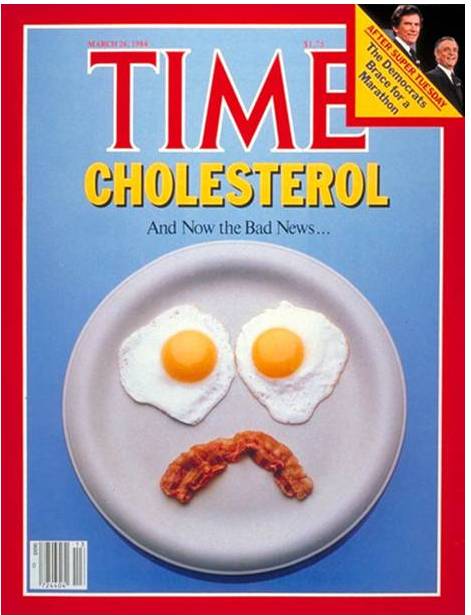
Only now bacon (and eggs for that matter) was forbidden, and as the eighties evolved into the nineties, breakfast became granola bars or rice cakes, nibbled virtuously while we drove the kids to school on our way to the job where we got paid less than the men with whom we worked. All the while, we were convinced that we could continue to fit into our tailored power suits by eating a diet that wasn’t designed with our health in mind.

[bacon eggs frowny face, circa 1984]

As with nearly every other aspect in the fight for equal opportunities and treatment, our health as women was based on a single shiny little myth: success would come to those who were willing to work hard, sacrifice, and follow the rules. Airbrushed media images of buns of steel and boobies of plastic sold a diet-exercise message based on an absurdly crude formula—”calories in, calories out”— with one simple rule that would guarantee success: “eat less and move more.”

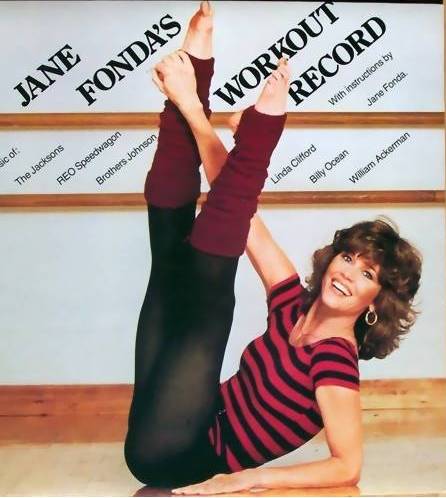
So we did. We ate less and exercised more and got tired and hungry and cranky—and when all that work didn’t really work in terms of giving us the bodies we were told we should have, we bought treadmills and diet pills, Lean Cuisines and leg warmers. We got our health advice from Jane (“feel the burn”) Fonda and Marie (“I’m a little bit country”) Osmond. We flailed through three decades of frustration, culminating— unsurprisingly enough—in the self-flagellation of Spanx® and the aptly-named Insanity®.

[Jane Fonda circa 1982]

Some of us “failed” by eating more (low-fat, high-carb) food and getting fat, and some of us “succeeded” by developing full-blown eating disorders, and some of us fought the battle and won sometimes and lost other times and ended up with closets full of size 6 (“lingering illness”) to size 26 (“post pregnancy number 3”) clothes. Most of us—no matter what the result—ended up spending a great deal of time, money, and energy trying to follow the rules to good health with the deck stacked against us. If we got fat, we blamed ourselves, and if we didn’t get fat it was because we turned our lives into micromanaged, most-virtuous eater/exerciser contests. Either way, our lives were reduced, distracted, and endlessly unsatisfying.  We were hungry for more in so many ways and aching for rest in so many others, but our self-imposed denial and exhaustion allowed us to control, at least for a bit, the one thing we felt like we could control, that we’d fought to be able to control:  our bodies.

We stopped cooking and started counting. We stopped resting and playing and started exercising. We stopped seeing food as love and started seeing it as the enemy. We didn’t embrace these bodies that were finally, tenuously, ours; we fought them too.

Access to high quality nutrition has always been divided along gender lines [1].  There was a time–not that long ago–in our world when men, by virtue of their size, stature, place as breadwinner (i.e. because of their “man-ness”) were entitled to a larger piece of meatloaf than their sisters (a practice that persists in many cultures still).  How many of us (of a certain age) have heard, “Let you brother have the last piece of chicken, he’s a growing boy”?  Now–conveniently–women would do their own restricting.  Gloria Steinem, with a fair amount of prescience that seems to predict the epigenetic contributions of diet to obesity, noted in her 1980 essay The Politics of Food:*

“Millions of women on welfare eat a poor and starchy diet that can permanently damage the children they bear, yet their heavy bodies are supposed to signify indulgence.  Even well-to-do women buy the notion that males need more protein and more strength.  They grow heavy on sugar and weak on diets . . . Perhaps food is still the first sign of respect–or the lack of it–that we pay to each other and to our bodies.”

Dieting and exercising not only provided a massive distraction and timesuck for women, it helped maintain a social order that the feminist movement otherwise threatened to undermine, one where women were undernourished and overworked, in a word: weak.

And when the scientists finally got around to testing the whole low-fat thing on (80% white) women? The verdict, published in  2006, looked like this:

The results, published in the Journal of the American Medical Association, showed no benefits for a low-fat diet. Women assigned to this eating strategy did not appear to gain protection against breast cancer [2], colorectal cancer [3], or cardiovascular disease [4]. And after eight years, their weights were generally the same as those of women following their usual diets [5].

But it was too late. We’d raised a generation of daughters who look at us and don’t want to be us, but they don’t know how to cook and they don’t know what to believe about nutrition and they too are afraid of food. Some end up drinking the same Kool-Aid we did, except that—in the hubris of a youth that doesn’t contain hallucination-inducing sleep deprivation from babies and/or stress and/or a career on life-support, where diet and exercise and rest are, like Peter Frampton’s hair, a dim memory—they think they will succeed where we failed. Or maybe they’ve found the vegan-flavored or paleo-flavored Kool-Aid. But they are still counting and exercising and battling.

White women have been [irony alert] scientifically proven to be more likely to closely follow the high-carb, low-fat dietary ideal set forth by the Dietary Guidelines than any other demographic [6]. (Black guys—who may not be all that convinced that rules created by the US government are in their best interests, given some history lessons—are likely to have the lowest adherence.) White women apparently are really good at following rules that were not written with them in mind and which have not been shown to offer them any health benefits whatsoever (but which have proven immensely beneficial for the food and fitness—not to mention pharmaceutical—industries). The best little rule-followers of all are the dietitians of the Academy of Nutrition and Dietetics (87% white women), who heartily endorsed the 2010 Dietary Guidelines, which reinforced and reiterated 30 years of low-fat, high-carb dogma despite the Harvard-based science that demonstrated that it offered no benefits to women. (Interesting tidbit: The Academy of Nutrition and Dietetics has elected two male presidents in the past decade despite the fact that men make up only 5% of the membership. My husband thinks the organization has “daddy issues.”)

In 2010, the American Medical Association recommended that women of normal weight (that’s less than 40% of us, by the way) who wanted to stay that way “while consuming their usual diet” (i.e. low-fat, high carb) would have to exercise for an hour a day

[Other reassuring conclusions from that study: There was an overall weight gain over the 13-year time frame. Exercising for anything less than 7 hours per week was associated with weight gain over time. If a woman was already fat, increased exercise was more likely to be related to increased weight than weight loss.  If these messages don’t scream to women all over America, “GIVE UP NOW!!!” I don’t know what would. By the way, those of us who go out and skip and jump and run because we like to and it makes our hearts truly happy are not exercising. We’re playing. I love to wave at those women from my couch.**]

But let’s get back to that hour a day for just a second.

Take a look at a recent study by Dr. David Ludwig, out of Harvard. It demonstrated that people who had recently been dieting (something that would apply to almost every woman in America), and were eating a low-fat diet, had to add an hour a day of exercise in order to keep their “calories in, calories out” balanced, while those on a reduced-carbohydrate diet expended that same amount of energy just going about their business.

What is all the women in the world who have been unsuccessfully battling their bulge woke up tomorrow morning and said:

I want my hour a day back?

For those of us who do not want to exercise for an hour just to maintain our weights or for those of us for whom exercise isn’t doing a damn thing except making us hungry and cranky and tired while we gain weight, we don’t have to. Instead, we can eat fewer of those USDA/HHS/dietitian-pushed, nutritionally-pathetic, low-fat whole-grain carbohydrate foods and more truly nourishing food and do whatever we please with that extra hour.

Who knows what changes we can make to a world that desperately needs our help?  In America alone, this would mean giving around–ooh let’s just say–50 million adult women an extra hour a day. That’s an extra 365 hours a year per woman, an extra 18 billion hours of womanpower a year total.

We could stop exercising and start playing. Stop counting calories and start enjoying feeling nourished. Start putting the love back into our food and embracing the bodies we have and the bodies of the men, women, and children all around us. I know that some of us would find that hour well spent just napping. Others of us might use that hour to figure out how to dismantle the system that stole it from us in the first place.

I can bring home the bacon, fry it up in a pan. And eat it.

******************************************************************************

In my own personal celebration of Asskicking Women of Food, I think (I hope) my next post will be:  The Grande Dames (Goddesses? Queens?) of Nutrition

*Thanks to Gingerzingi for bringing this to my attention.  What a great essay–look for it in a collection entitled Outrageous Acts and Everyday Rebellions.

**I have absolutely nothing against activities that bring inner/outer strength and happiness.  But exercise in the 80s and 90s was not about being happy or strong–it was about punishing ourselves (feel the burn? seriously?) in order to win at a game–being in total control of everything in our lives from babies to bodies to boardrooms–whose rules were created within the very social construct we were trying to defeat.

References:

1.  Bentley, Amy (1996) Islands of Serenity: Gender, Race, and Ordered Meals during World War II. Food and Foodways 6(2):131-156.

2. Prentice RL, Caan B, Chlebowski RT, et al. Low-fat dietary pattern and risk of invasive breast cancer: the Women’s Health Initiative Randomized Controlled Dietary Modification Trial. JAMA. 2006; 295:629-42.

3. Beresford SA, Johnson KC, Ritenbaugh C, et al. Low-fat dietary pattern and risk of colorectal cancer: the Women’s Health Initiative Randomized Controlled Dietary Modification Trial. JAMA. 2006; 295:643-54.

4. Howard BV, Van Horn L, Hsia J, et al. Low-fat dietary pattern and risk of cardiovascular disease: the Women’s Health Initiative Randomized Controlled Dietary Modification Trial. JAMA. 2006; 295:655-66.

5. Howard BV, Manson JE, Stefanick ML, et al. Low-fat dietary pattern and weight change over 7 years: the Women’s Health Initiative Dietary Modification Trial. JAMA. 2006; 295:39-49.

6.  Sijtsma FP, Meyer KA, Steffen LM et al.  Longitudinal trends in diet and effects of sex, race, and education on dietary quality score change: the Coronary Artery Risk Development in Young Adults study. Am J Clin Nutr. 2012 Mar;95(3):580-6. Epub 2012 Feb 1.

N of 1 Part 5: A Different Question

The magic formula

My friend, Andrew Abrahams, puts the current “diet wars” situation this way:

1.  the n of 1 view:  what works for you is what works, this is all that matters, end of story.

2.  the Platonic view: this is how your body/metabolism works, and so this is what you should do and if it isn’t working you probably are not doing right.

I think many of us start off being interested in nutrition because we like to know stuff, and knowing stuff about how to be healthy and fit is really cool because then you get to look better in your bathing suit than most or you can solve health problems that others can’t or any number of other minor acts of smug superiority masquerading as an objective search for knowledge. When we start out, we usually are completely immersed in perspective #2, that there is a “right” way to eat and exercise. We figure out what the “right” way is through various forms of scientific investigation/reporting brought to us by experts and/or the media; we apply that magic formula to ourselves, and we wait for the magic results to happen. If we are young and unencumbered by reality, they usually do—no matter what formula for fitness and health we’ve chosen from the ones offered by the experts—and we congratulate ourselves for our hard work and strength of character.

Enter reality. Crying babies. Crazy work hours. Demoralizing paychecks. Chronic injuries. Insane parents. Needy friends. Crying, crazy, demoralizing, chronically insane, needy life partners (No, my dear sweet rockstar hubby, I certainly couldn’t have had you in mind when I wrote this.)

A little reality can drop-kick your magic fitness formula into outer space.

For many of us, somewhere along the line, the magic formula stops working, or we stop working at the magic formula, or a little (or a lot) of both.

Some of us respond to this by looking for the next—better, easier, quicker, more doable—magic formula. Some of us respond by working even harder at the magic formula we haven’t given up on—yet. Some of us give up looking and trying because life is hard enough already.

But that doesn’t mean we’ve given up on the idea that there is a “right” way to go about being healthy. I was a low-fat vegetarian eater for 16 years because I thought it was the “right” way to eat. I’ve been a (mostly) low-carb, animal eater for 13 years, during most of which I thought I’d—finally—found the really “right” way to eat.

What I’d really found was a new and different way to be wrong.

I wasn’t wrong about the diet plan–for me. It helped me lose 60 pounds that I’ve kept off for 13 years without hunger, without a calculator, and without having to exercise more than I want to. What I was wrong about was being right. I was wrong about the magic formula—any magic formula.

[In blog posts yet to come, I’ll tell you all the story of the woman who changed my perspective on everything.]

I hate being wrong (although goodness knows I’m really good at it, from years of practice). I really want there to be a formula, magic or otherwise. I like order, routine, facts, and answers. Gray areas make me woozy. That’s why I love biochemistry. It’s a game with nothing but rules that, literally, every body has to follow.

But, to quote Andrew Abrahams again, a detailed understanding of the minutiae of biochemical mechanisms doesn’t really help us in the big messy world of real people. Although everyone is subject to the same biochemical rules, how those rules play out in any given individual is difficult—perhaps impossible—to predict.

I salute the work that Gary Taubes and Peter Attia are doing with NuSI, which will focus on providing randomized controlled experimental evidence regarding nutritional interventions. The idea is to have both highly controlled experiments and more “real world” ones. Hooray for both. These experiments may help us understand how well certain nutrition interventions work—in experimental situations with a selected group of individuals. As awesome as this might be for a scientific pursuit, this science still may not be of much help for you personally, depending on how closely matched you feel your life and your self are to the experimental conditions—and it won’t provide any easy answers for the hardest issue of all, public health policy.

One big long experiment

Is there a way to round up our messy, individual realities into comprehensible information that will eventually translate into meaningful policy? Maybe. Andrew Abrahams and others in the ancestral health community have been tossing around the idea of “n of 1” nutrition for a while. The basis for this approach is the idea that we all experiment. In fact, life is one big long experiment.

But how do we conduct these “n of 1” experiments in a manner that

  • helps the person doing the experiment learn the right lessons (rather than be distracted by coincidences or random events)?
  • helps the clinician give better nutrition guidance, not of the “one size fits all” variety?
  • helps the field of nutrition science develop more meaningful methods of investigation, especially with regard to long-term health and prevention of chronic disease?
  • helps us renegotiate the top-down, one-size-fits-all framework of current public health nutrition policy?

Andrew Abrahams had the brainchild of setting up a community for n of 1 nutritional experimentation to do exactly this.

As Andrew says, and I agree, individual characteristics, circumstances, and history are tremendously important as far as choosing food and activity that works for you. His idea is to create a way to help people with this n of 1 experimentation so they can evaluate how their body will respond to changes and find what’s right for them.

The purpose of this community would be to capture the wide variety of attributes that may contribute to the outcomes for any individual, and provide modeling tools that can help people make the right decisions about what changes to make.

From a participant’s perspective, it would:

  • provide a way for you to observe and analyze personal health in an organized and (more or less) objective fashion
  • give direction, support, and structure to your own n of 1 experimentation
  • create a community of fellow experimenters with whom you could compare/contrast results

From a health professional’s perspective, it would:

  • provide a way to assist clients/patients in find what works best for them without a superimposing “it’s supposed to work this way for everyone” bias
  • create a set of algorithms for adapting common patterns to individualized recommendations and further experimentation
    • For example: A postmenopausal female who wants to lose weight may start one way and experiment in a series of steps that is different from, say, a 30-year old marathoner who wants to have a healthy pregnancy.

From a researcher’s perspective, it would:

  • create a way to structure and conduct experiments across a variety of nutritional (and other) factors
  • allow sharing and analysis of both pooled results and case studies/series of relevant community members or subpopulations with common characteristics
  • develop tools allowing one to interpret the community results in an individual context, make predictions and suggest “next steps”
  • contribute to the development of modeling systems for complex and interrelated inputs and outputs

A different question means a different approach to public health

I see the value of n=1 as a scientific pursuit because it will teach us to ask a very different question than the one we’ve been asking.  We’ve been asking, “What way of eating will prevent chronic disease in most/all Americans?” Typically, nutrition epidemiology is recruited to try to answer that question with the idea that there is some factor or factors (like smoking and lung cancer) that can be included/eliminated to reach this goal.  We’ve been so phenomenally unsuccessful at chronic disease prevention with our current population-wide model that I think a new framework of investigation is needed. Thus, n of 1 investigation changes the question to something more like: “What way of eating will bring improved health to you now?”

As people make incremental changes toward shorter-term personal health goals, modeling tools can be used to map out “nearest neighbor” communities. These communities may be similar in terms of personal characteristics and health history, but also attributes relating to culture, region, lifestyle, ethnic and family background, education, income, etc. Over time, this information will reflect long-term health outcomes built on a background of complex human traits interacting with complex human environments.

The complexity of n of 1 nutrition seems to be the very opposite of public health nutrition. And it would be naïve to think that the concept of n of 1 will not be at least partially co-opted by the food, drug, and research industries (“Try new Methylation Carbonation –for PEMT polymorphisms!”).  But by its very nature, n of 1 nutrition resists being turned into yet another “magic formula.”  More importantly, it reframes our current approach to public health nutrition along two very important lines:

First, it weakens the current public health message that a one-size-fits-all dietary recommendation is appropriate. This is especially important because it has been assumed for 30+ years that dietary recommendations that are normed on one population are equally applicable to other populations. A landmark study published in 2010 shows that African-Americans who consumed a “healthier” diet according to Dietary Guidelines standards actually gained more weight over time than African-Americans who ate a “less healthy” diet [1].

DQI stands for Diet Quality Index. Blacks with a higher DQI had more weight gain over time than blacks with a lower DQI. From [1]


Second, n of 1 nutrition emphasizes the need to return to a focus on the provision of basic nutritional needs rather than prevention of chronic disease.  Balancing the complexity of the n of 1 concept (i.e. each human is radically different from another) with the simplicity of promoting/understanding essential nutrition (i.e. but each human shares these same basic needs provided by food) moves us away from the prevention model to the provision model. And the literature is pretty straightforward about what our basic nutritional needs are:

  • essential amino acids
  • essential fatty acids
  • vitamins and minerals
  • sufficient energy

Notice anything missing on that list of essentials? As the Institute of Medicine’s Food and Nutrition Board says: The lower limit of dietary carbohydrate compatible with life is apparently zero” (DRI, Ch. 6, 275) [2]. This doesn’t mean you can’t or shouldn’t eat carbohydrate foods, or that some carbohydrate foods aren’t beneficial for some people or even many people. Indeed, some of my best friends are carbs. But dietary carbohydrate is not an essential component of our nutritional needs and never has been (although it is a fine source of energy if energy is what is you need and you aren’t wearing a 6-month supply on your backside like I am). Rather, carbohydrate has been recommended as the source of the majority of our calories as a means of replacing the fat, saturated fat, and cholesterol that we’ve been told cause chronic disease.* This recommendation seems to have conveniently upsized the market for the industrialized and heavily marketed foods—made mostly from corn, wheat, and soy—that take up most of the space on our grocery store shelves.

But I think the most significant ramification of the history of our Dietary Guidelines is not its effect on diet so much as the acceptance of the notion that something as intimately and intricately related to our health, culture, personality, lifestyle, family, and history as food can and should be directed—in a most comprehensive manner—from a place exceedingly remote from the places where we actually get fed.

Focus on community

While the ostensible focus of n of 1 nutrition is the individual, the real focus is the community. Advances in both biological and social sciences are increasingly focused on what are now considered to be the primary determinants of health status for an individual: that person’s genetic community and that person’s present community. What health behaviors you as an individual think you “choose” have already been largely determined by social factors: culture, socioeconomic status, education, etc. Those behaviors interact with genetic and epigenetic mechanisms that you didn’t have much choice about either. Although every individual has some control over his/her health behaviors, many of the health outcomes that we think of as being a result of “individual choice” are already largely predetermined.

One of the enduring myths of healthcare in the US is that there are some folks out there who “choose” poor health. Maybe there are, but I’ve met a lot of people in poor health, and I’ve never met anyone who deliberately chose it.

As we find virtual “nearest neighbor” communities in our n of 1 nutrition database, we may be able to use this information to assist real communities to develop their own appropriate food-health systems. Despite our increasing diversity, much of America still clusters itself in communities that reflect shared characteristics which play leading roles in health and health behavior. Culturally-influenced food preferences and nutrition beliefs may be part of that community formation and/or may reinforce those communities. With scientific tools that embrace complexity and diversity, we can honor those characteristics that make one community (real or virtual) different from the next, rather than ignore them.

N of 1 nutritional approaches will give us a new way to think about public health nutrition and the individuals and communities most affected by nutrition policy. I’m proud to say that Healthy Nation Coalition will be supporting the project.

Up next:  My take on why nutrition is a feminist issue, or “I am Woman, hear my stomach growl.”

*While on a field trip to Washington, DC in January of 2010, I met Linda Meyers, one of the authors of reference #2 below. I asked her why carbohydrates were recommended as such a large part of our diet if there is no essential requirement for them. Her response was that the recommendation was based on prevention of chronic disease. I’m still not sure I get that.

References:

1. Zamora D, Gordon-Larsen P, Jacobs DR Jr, Popkin BM. Diet quality and weight gain among black and white young adults: the Coronary Artery Risk Development in Young Adults (CARDIA) Study (1985-2005). American Journal of Clinical Nutrition. 2010 Oct;92(4):784-93.

2. Dietary Reference Intakes for Energy, Carbohydrate, Fiber, Fat, Fatty Acids, Cholesterol, Protein, and Amino Acids (Macronutrients) (2005)

Just Asking the Question


So wouldn’t it be cool if we could ask folks on the street what they think caused the obesity crisis, and then show them this and ask them again?

Now back to your regularly scheduled blob.

Data from:  Centers for Disease Control and Prevention (CDC).  National Center for Health Statistics, Division of National Health and Nutrition Examination Surveys.  Prevalence of Overweight, Obesity, and Extreme Obesity Among Adults: United States, Trends 1976–1980 Through 2007–2008.