The REAL Paleo Challenge: How NOT to be Just Another Elitist Fad for Skinny White People Wearing Goofy Shoes

The blogsphere is beginning to rattle with commentary on the recent Ancestral Health Symposium 2012 events. Some folks who don’t necessarily “look the paleo part” have voiced concern about feeling excluded or marginalized as the conversation/social activities/celebrity parade seemed dominated by:

  • white people
  • young people
  • thin/athletic/fit people
  • men
  • well-educated, upper-middle class socioeconomic status people
  • people wearing goofy-looking shoes

You can read my take on why that might be the case here: AHS 2012 and the BIG BUTT: Lessons in Nutritional Literacy.

I understand that an NPR reporter was at the event, interviewing some of the movers and shakers. There was some concern that the reporter seemed to think that the paleo movement is a bit of an elitist fad. I understand this perspective, and on many levels, I agree.

As a “fad,” the paleo movement is a bunch of highly enthusiastic people with a lot of disposable income and time who are deeply committed to a particular way of being fit and healthy. It has its leaders, it controversies, its “passwords” (can you say “coconut oil” or “adrenal burnout”?), and its stereotypical paleo dude or dudette. As a fad, it would be destined to go the way of all of other diet and health fads—including Ornish and Atkins, Pritikin and Scarsdale, extending all the way back to the “Physical Culture” movement of the earlier part of this century (Hamilton Stapell spoke about this at AHS2012).
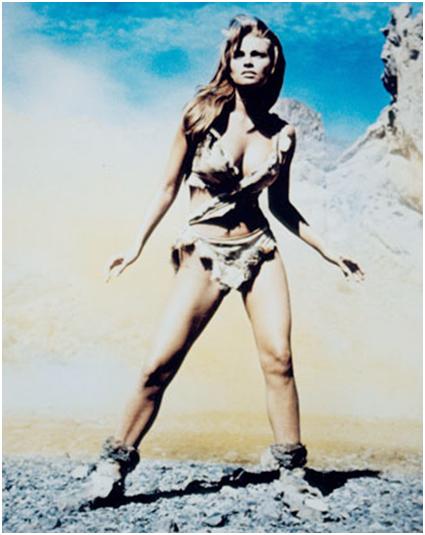
The original paleo chick – no high heels on this lady

Is it elitist? Well, there are some ways that it is possible that the paleo movement may marginalize the very folks who might benefit most from its efforts. Maybe an African-American guy still sensitive to the fact that his grandfather was consider “primitive” might not want to get his full cavemen on. Maybe a Mexican-American woman who remembers her abuela telling her stories about being too poor to have shoes doesn’t really want to go back to being barefoot just yet. Maybe an older, heavier person simply feels intimidated by all the young healthy fit people swarming to the front of the food line.

But the paleo movement does not have to be an elitist fad unless insists on limiting itself to its current form, and I believe the people at the Ancestral Health Society  are working hard to make sure that doesn’t happen. This is why I really love these folks. I don’t mean the paleo leaders like Mark Sisson or Robb Wolf, although I’m sure they’re good people; I’ve just only met them briefly. I mean those somewhat geeky-looking-in-an-adorable-sort-of-way folks in the brown T-shirts who hung in the background and made it all happen for us last week. Notice that they don’t call themselves the Paleo Health Society, right? I love them because they ask good questions, they question themselves, they think long-term, and they’ve created a community that allows these conversations to take place.

So, what do we do to transform this paleo-led, AHS-supported community into the public health, human rights revolution it could be?

According to Doug Imig at the University of Memphis, a protest becomes a movement when:

1) It defines and proclaims widely shared cultural norms.

2) It creates dense social networks.

3) It gives everybody something to do.

Each of these deserves its own blog post, so let’s look at the first—and most important—item: widely shared cultural norms. This is where the “elitist fad” part of paleo falls short, but not really. Because in all my encounters with paleo folks and people from AHS, I find norms and values that the culture as a whole can embrace. Here’s the weird thing, I’ve spend the past couple of years also talking to mainstream scientists, from one end of the diet spectrum to another, including Joanne Slavin, a down-to-earth, warm, wonderful lady who was on the most recent Dietary Guidelines Advisory Committee and Henry Blackburn, who is a delightful gentleman and a protégé of Ancel Keys. Guess what? We all have some values in common.

Here are some concepts that I think may unite us all, from vegan to primal, from slow food to open government, from “mainstream” scientist to “fringe scientists” like Gary Taubes (yes, one of my UNC instructors referred to GT as a “fringe scientist,” although another found his views “very convincing”—go figure):

We must create an open, transparent, and sustainable food-health system.

The RD that inspired me to take an internship at the American Dietetic Association for a semester, Mary Pat Raimondi, said: “We need a food system to match our health system.” And whatever shape either of those systems may take, she is absolutely right. Conversations about food must encompass health; conversations about health must encompass food.

Right now our food-health system is closed. Directives come from the top down, public participation is limited to commentary. The people who are most affected by our nutrition policies are the farthest removed from their creation. We need to change that.

Right now our food-health system lacks transparency. USDA and HHS create nutrition policy behind doors that only seem to be transparent. Healthy Nation Coalition spent a year filing Freedom of Information Acts in order to get the USDA to reveal the name of a previously-anonymous “Independent Scientific Panel” whose task, at least as it was recognized in the Acknowledgments of the Dietary Guidelines, was to peer-review “the recommendations of the document to ensure they were based on a preponderance of scientific evidence.” You can read more about this here, but the reality is that this panel appears to not be a number of the things it is said to be. This is not their fault (i.e. the members of the panel), but an artifact of a system that has no checks and balances, no system of evaluation, and answers to no outside standards of process or product. This must change.

Our food-health system must be sustainable. And Pete Ballerstedt would say, yes, Adele, but what do you mean by “sustainable”? And to that I say—I mean it all:

Environmental sustainability – Nobody wants dead zones in the Gulf or hog lagoons poisoning the air. But environmental sustainability can’t be approached from the perspective of just one nutritional paradigm, because a food-health system must also have:

Cultural sustainability – We are not all going to become vegans or paleo eaters. Our food-health system must support a diversity of dietary approaches in ways that meet other criteria of sustainability.

Economic sustainability – Our food-health system must recognize the realities of both producers and consumers and address the economic engines that make our food-health system go around.

Political and scientific sustainability – Our food-health system must become a policy dialogue and a scientific dialogue. Think of how civil rights evolved: an equal rights law was passed, then overturned, a Jim Crow law was passed, then overturned, an equal right law was passed, then upheld, etc. etc. This dialogue reflected changing social norms and resistance to those changes. But we have no way to have a similar sort dialogue in our food-health system.

What would the world look like if, in 1980, an imaginary Department of Technology was given oversight of the development of all knowledge and production associated with technology? Production of food and knowledge about food (i.e. nutrition) became centralized within the USDA/HHS in 1977-1980 and there have been no policy levers built into the system to continue the conversation, as it were, since then. The Dietary Guidelines have remained virtually unchanged since 1977; our underlying assumptions about nutrition science have remained virtually unchanged since 1977. That’s like being stuck in the age of microwaves the size of Volkswagens, mainframe computers with punchcards, and “Pong.” We need a way for our food-health system to reflect changing social and scientific norms.

One of the primary shifts in understanding that has taken hold since 1977 is that:

There is no one-size-fits-all diet that works for everyone.

In 1979, Dr. William Weil Jr at the Department of Human Development at Michigan State University, voiced concern about “the frequent use of cross-national and cross-ethnic inferences” [Weil WB Jr. National dietary goals. Are they justified at this time? Am J Dis Child. 1979 Apr;133(4):368-70.]  He went on to day that we cannot assume that “because ‘a’ and ‘b’ are correlated in one population group that they will also be correlated in another group” yet our one-size-fits-all dietary recommendations make just that assumption.

There were more scientific articles generated from the Nurses’ Health Study–composed of 97% white women–in 2009 alone, than in the entire 10+ year history of the Black Women’s Health Study. Those large epidemiological studies done with a mostly white dataset are what drive our policy making, even though evidence also points to fact that we should not be making the assumptions to which Dr. Weil referred. A landmark study published in 2010 shows that African-Americans who consumed a “healthier” diet according to Dietary Guidelines standards actually gained more weight over time than African-Americans who ate a “less healthy” diet [Zamora D, Gordon-Larsen P, Jacobs DR Jr, Popkin BM. Diet quality and weight gain among black and white young adults: the Coronary Artery Risk Development in Young Adults (CARDIA) Study (1985-2005). American Journal of Clinical Nutrition. 2010 Oct;92(4):784-93].

.

DQI stands for Diet Quality Index. Blacks with a higher DQI had more weight gain over time than blacks with a lower DQI. From Zamora et al.

Even with a more homogenous population, this issue applies. Remember all those discussions about “safe starches” you heard at AHS2012?

This concept also captures the emerging knowledge of how genetic variability affects nutrition needs and health, i.e. individualized nutrition, a very useful buzzword. I have lots to say about n of 1 nutrition coming up soon. But, most of all, not trying to cram everyone into the same nutritional paradigm captures reality of our own lives and choices about food. Which brings me to:

Food is not just about nutrition, and nutrition is not just about science.*

When we all begin to question our own assumptions about food and nutrition, we will be better able to reach across communities, create common ground, and be humble about our way forward.

We need to understand and help others understand that all nutrition messages are constructed and contain embedded values and points of view.

We need to learn to ask and teach others to ask: Who made the message and why? Who may benefit or be harmed? How might people interpret this message differently?

We need to think and help others to think about income and funding models, industry, and the framing of dietary problems by scientist, bloggers, and the media (and I don’t just mean “the other guys”—apply these critical thinking skills to your own nutrition/food community).

Nothing about our food and nutrition thinking was born in a vacuum. Food is a part of our cultural and social fabric. It allows us to belong; it allows us to define ourselves. Even as we strive to find better science and to shift our current diet-nutrition paradigm, we must approach this with the understanding that there is no truly objective science. How science gets used, especially in the policy arena moves us even farther from that non-existent ideal. Even as we strive to improve public health, we must understand that we don’t always know what “health” and “healthy food” means to the people we think we are trying to serve.

If these points sound remarkably like the mission statement for Healthy Nation Coalition, my non-profit, then you’ve been paying attention. But it is not my plan for HNC to “lead” any nutrition reform movement as much as it is for us to get behind everyone else and shove them in the same direction. There is very much a herding kittens aspect to this (as Jorge of VidaPaleo.com pointed out), but as a former high school teacher and mother of three, this is not new territory to me.

So, yes, I have an agenda. Everyone has an agenda. I’ll spell mine out for you:

Somewhere out there in America, today, there is a young African-American girl being born into a country where many—if not most—of the forces in her world will propel her towards a future where she will gain weight, get sick, have both of her legs amputated, get dialysis three times a week, be unemployed and unemployable, on disability and welfare, and—this is what gets me out of bed in the morning and drags my weary ass to one more round of getting punched in the face by those very forces arrayed against her—she will, somewhere underneath it all, blame herself for her situation. I’m an old white lady, in a position of relative power and knowledge. I don’t know this young lady, and she doesn’t know me. She doesn’t owe me anything because she’s not asking for my help. But it is my job in this life to begin—at the very least—to shift those forces so that she has a better opportunity to choose a different life if she wants to. That’s all I care about. I don’t care who gets credit or who gets the cushy book deal.  I just want it to happen.  I would want the world to do the same for my children if they had not had the privilege of birthright that they do. That child is my child as sure as the three that live here and drive me crazy are. All I ask of the paleo community is that she be your child too. And if, as a community, you decide to adopt this child, well then, don’t worry about becoming an elitist fad made up of goofy-shoe wearing white people destined to fade into obscurity. Instead, you all will change the world.

Next Up: What makes a movement? (and I mean a social change one, not the bowel-y kind)

*Much of what follows borrows liberally from the work of Charlotte Biltekoff at UC-Davis, a wonderfully warm and intelligent woman who has been working on and thinking about this issue for—believe it or not—longer than Gary Taubes. She has a book coming out next summer which, IMHO, will be the social/cultural partner to Good Calories, Bad Calories.

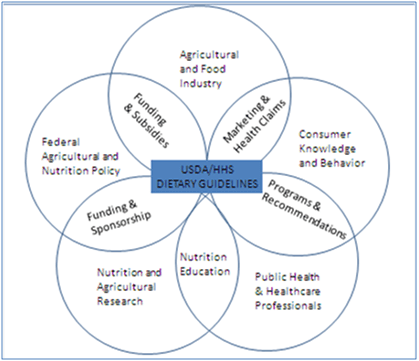
The Mobius Strip of Policy Change


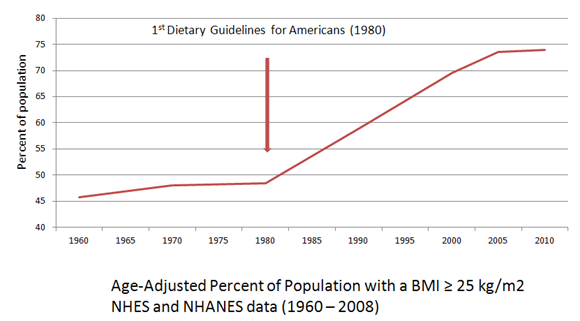
I love working with individuals, but it takes policy-level change to really make an impact on public health. Policy, however, is a double-edged sword. Decades-long cascades of unintended consequences can arise from well-intentioned policy. The Dietary Guidelines started out in 1980 as an unmandated humble little 40-page booklet offering nutrition guidance to the public, while freely admitting that “we don’t know enough about nutrition to identify an “ideal” diet for each individual” and that “in those chronic conditions where diet may be important . . . the roles of specific nutrients have not been defined.”

Since then, I’m still not sure how, the Dietary Guidelines have become the center of all information and decision-making surrounding food and nutrition in America—in policy, healthcare, industry, media, and science (where researchers should know better than to use a policy document as the basis for scientific research). And—for better or worse—Americans have actually shifted their eating habits to fall in line with Guidelines recommendations (see: Americans don’t follow the Guidelines—or do they?)


The Guidelines were created to prevent chronic disease.  They have changed very little in 30 years, while rates of obesity, diabetes, and other chronic disease have rapidly increased (see: Public Health Nutrition’s Epic Fail). Currently, there is no “policy lever” for changing the way the Guidelines are created or administered. The Guidelines have no system of checks and balances, no outcome evaluation process, and no way to counter the influence of entrenched special interests (including both the food and science industries).

Right now, it seems that no amount of public outcry, accumulation of scientific evidence otherwise, or increase in diseases the Guidelines were meant to prevent can shift them from their current staked position that a high-carbohydrate, high-fiber, low-fat, low-cholesterol, low-saturated fat, low-sodium diet is right for all Americans. Under the USDA/HHS “calories in, calories out” paradigm, it’s Americans that need to change (“eat less and move more”), not nutrition policy. Policy changes are urged only to “make the healthy choice the easy choice”  for fat stupid Americans (especially low-income ones) who apparently otherwise don’t care and can’t think.

I would expect such policy reform to have, as Jon Stewart put it, “the draconian government overreach we all love with the probable lack of results we expect.”

So what kind of policy reform should we be working towards? One of the Big Questions I ponder is whether we need to replace the current USDA/HHS Dietary Guidelines with “better” ones, or find a different way to create nutrition policy, or just ditch all government-sanctioned nutritional recommendations altogether. (Other Big Questions: What’s for dinner? and How can I further embarrass my children?)

I don’t fundamentally oppose or support government-funded nutrition programs. If they were administered differently, I might like them a lot more. If we are going to use government funds to feed people, we will need some way of guiding that process. Right now, our federally-funded nutrition programs have a tendency to serve as outlets for cheap industrialized food, and I’m afraid that our nutrition guidance has not only allowed, but encouraged that role. On the other hand, scrapping that guidance altogether may leave government programs that are struggling for funds vulnerable to choosing food from the lowest bidder, which would only serve to reinforce the current situation.

I also have problems with replacing one-size-fits-all Guidelines with different one-size-fits-all Guidelines because that process denies the very real variability in nutritional needs and preferences of individuals and diverse sub-populations. Worse yet, it teaches people that answers about nutrition come from packages and experts rather than the body’s response to food.

As a transition, or middle ground, I currently favor the idea of locally-determined nutritional policies and programs. Sounds good, right? Nutrition programs could be tailored to meet the needs of the community they serve.

But this is where the confluence of things needed to make this type of policy shift happen turns into a Dilbert cartoon. Everything that needs to happen requires something else to happen first until it all loops back on itself like a Mobius strip.


Let’s take school lunches.  

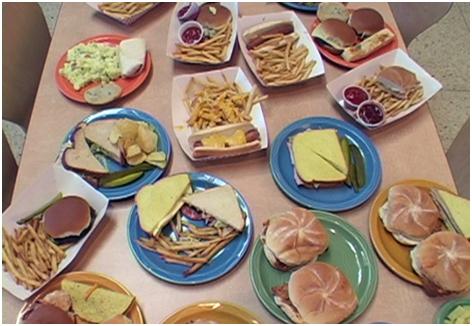
Ideally, the type of school lunches served should be determined by the members of the community eating them, i.e. the kids, parents, teachers, etc.  This allows for appropriate community-level health, ethnic, cultural, regional, seasonal, and economic adjustments and prevent fiascos like the Los Angeles lunchroom garbage cans filled with “healthy” lunches (like “brown rice cutlets”).

Ideally, a trained professional at the local level, for instance an RD, would be able to guide this process, balancing the nutritional needs of that specific community with other social and cultural factors, creating an affordable menu, and modifying the program based on outcomes.  But this would mean that the RD would have to have training across the spectrum of nutrition science, rather just following USDA/HHS policy statements which are based on research done on white (frequently male) adults circa 1970-1980 and which may not be applicable to other populations.

This in turn would require the nutrition curriculum for health professionals to not be skewed by entrenched interests in academics, politics, and industry (and would probably require almost a complete re-thinking of 30 years of nutrition epidemiology).

This would require the USDA/HHS and other institutions to support–through funding, publication, and use—nutrition research that may possibly undermine or even contradict 30 years of previous nutritional guidance. This research would not only provide a knowledge base for health professionals, but would provide an unbiased source of information for consumers which would help to create informed stakeholders in the nutrition-food system.

At the same time, industry, producers, and growers would have to work with the community to make foods available that meet the demands of the local program at a reasonable cost.  And right now—due to agricultural practices and USDA policies—foods that are widely and cheaply available to federal nutrition programs are the ones that the USDA/HHS Guidelines have determined are “healthy” even though this definition of “healthy” seems to be based, at least in part, on whether or not those foods are widely and cheaply available for federal nutrition programs.

See what I mean?  I have a hard time figuring out where we need to insert the monkey-wrench that will stop the endless cogs from turning out the same policies, practices, and programs that have been radically unsuccessful for the past 30 years.

Which won’t, of course, stop me from trying.

As I’ve been working with Healthy Nation Coalition and tossing ideas around with people who are also working on this issue, I’ve found some that I believe are fundamental to fixing our food-health system. These concepts originated with people much smarter than me, but I am hoping that in my academic work and in our non-profit work at Healthy Nation Coalition, I will have the opportunity to be a part of developing them further:

1) N of 1 Nutrition – a movement towards more individualized nutrition, although the “1” can also be a family, community, or other subpopulation

2) Nutritional Literacy – a movement to foster an understanding of the cultural forces that shape our nutritional beliefs and our relationships to food and food communities

3) Open Nutrition – a movement to raise awareness regarding the laws, policies, institutions, and other social, economic and cultural forces that may impact access to nutrition information and development of sustainable systems that produce foods that support health

It takes about 30 years for any given scientific paradigm to shift. It is time. But how will we do it differently? I think these concepts are the “next steps” that will help us steer the next 30 years of nutrition in a direction that may help us avoid another cascade of unintended consequences down the road. More on each soon.


Why Calories Count—Fo’Shizzle

Calories are the Radical Terrorist Plot of food. We don’t really know what they are, where they are, or how to successfully avoid them, but they affect all aspects of our lives: how much we eat, how often we exercise, whether or not we feel good about ourselves (our notions of “good” and “bad” behavior frequently revolve around how many calories we’ve avoided/consumed/burned/sat on). Like the Radical Terrorist Plot thing, sometimes it means our lives can get a little weird.

We do know one thing about calories though. According to Marion Nestle,
. . . many people in the world are consuming more calories than they need and becoming overweight and obese.” Simply put, we’re fat because we eat TOO MANY CALORIES—whatever that means.


So—exactly why do calories count?


Luckily, Nutrition Expert Marion Nestle has now written a whole big book to help us understand the mysteries of calories. She very thoughtfully posted an interview of herself being interviewed about the book on her website so we could all see what she thought about her own book. But she’s such a smart person, being a Nutrition Expert and all, I was concerned that some folks would have trouble figuring out exactly what she was saying. I hope this helps clarify things.

Calories count because they are easy to understand.

According to Marion Nestle, “Calories are a convenient way to say a great deal about food, nutrition, and health.” This is true. For instance, calories can tell you a great deal about how many calories are in your food, without having to take into account anything about nutrition or health.

Marion Nestle explains that the idea behind calories is abstract but simple: “They are a measure of the energy in food and in the body . . .” This is also true. In addition, calories are a way to measure the guilt quotient (lotsa calories) and marketability (teensyweensy amounts of calories) of food, making calories an exceptionally useful concept to both food manufacturers and those working on developing an unhealthy relationship to food.

Calories—as well as guilt and marketability—in food can be determined directly by using a bomb calorimeter, which measures the exact calorie content of food by igniting and burning a dried portion of it. In case you’re wondering, this is EXACTLY how your body measures calories too!

Marion Nestle explains that “Calories measure energy to keep bodies warm, power essential body functions, move muscles, or get stored as fat.” I would add that I don’t really know what calories do either, but if you use calories to keep your body warm, I guess my hot flashes make me “da bomb (calorimeter).” [I so crack myself up]. Hey, but then wouldn’t menopause turn us all into skinny bitches instead of fat ones?

Back to top

Calories count because calories are very confusing.

Marion Nestle explains that the reasons we haven’t been able to grasp the whole calories in-calories out thing is that “Even talking about calories is difficult. For starters, calorie counts are given in no less than five different units — calories, Calories, kilocalories, Joules, and kilojoules (along with their abbreviations cal, Cal, kcal, J, and kJ).” These concepts are so confusing to regular folks that only Nutrition Experts like Marion Nestle and Michael Pollan actually KNOW how many calories people should really be eating; the rest of the country is just guessing.

And when Americans “self report” on how many calories they eat? Well, let’s just say they are “underreporting,” shall we?

Back to top

Calories count because we don’t count them.

Government-Approved Nutrition Experts—not unlike Marion Nestle—MUST make a Big Statement about the Plight of Fat Americans, oh, about every year or so (it’s in their job description). When Slender Motivated Upper-class Gainfully-employed (code name: SMUG) Americans who read the New York Times need to know why we just can’t seem to get those fat stupid Americans to stop being so fat and stupid, they can call on Nutrition Experts–not unlike Marion Nestle–who KNOW the problem is that Americans eat too many calories—whatever that means. By keeping the focus on calories in-calories out, Nutrition Experts and food writers know that they can count on Americans to continue not counting calories, just as they have not counted them for hundreds of thousands of years, thus guaranteeing job security and future book contracts all around.

Back to top

Calories count because we do count them.

According to Nutrition Expert Marion Nestle, “The U.S. diet industry is worth about $60 billion a year.” Clearly, Americans are willing to shell out for just about anything if they think it will help them figure out why they can’t lose weight when they are doing everything they’ve been told to do for the past 30 years, including eating less fat, eating more carbohydrates, and exercising.

As long as Nutrition Experts can keep Americans counting calories, the food industry, the diet industry, the exercise industry, and the Nutrition Expert industry can keep counting the Benjamins. No calories in a Benjamin—it’s all fiber, baby.


A high fiber Benjamin

Back to top

Calories count because we can’t count them.

According to Nutrition Expert Marion Nestle, you can’t see, taste, or smell calories. This means calories are like Santa Claus and the Easter Bunny. You would have no way of knowing they even exist if there weren’t a giant academic-scientific-industrial-media complex devoted to the worship of calories and keeping them alive in our hearts and minds!


Spoiler alert: This is not the real Easter Bunny.  Like calories, the real Easter Bunny is invisible.

Back to top

Calories count because we can count them.

Fortunately, there’s an easy way to keep track of your calories even though you can’t see, taste, or smell them.

Marion Nestle says that the best way to measure calories is to step on a scale. So, lessee. I stepped on the scale and I weigh 160 pounds. If I’m 55% water (hooray, no calories there!), and 4% minerals (wait, does calcium have calories?), and then 13% protein (4 calories), 24% fat (9 calories) and 4% carbohydrate (4 calories), well then, hmm multiply by and convert and carry the one and—got it!—I’m exactly 194766.884 I’m exactly 206112.371 calories.

That means if I decrease my calorie intake by 500 calories a day (this where all that helpful calorie information on the side of the box of low-fat, high-fiber, individually calorie-control portion food comes in handy) and increase my activity by 500 calories a day (which I understand I can do simply through insanity, which—according to my children—should not be much of a stretch), that means that on November 10, 2012, sometime around noon, I will disappear altogether because all my calories will be gone. See how easy that is.


Counting calories is easy with a few simple tools.

Back to top

Calories count because we should count them.

Because counting calories is sooooo easy, anybody should be able to succeed at maintaining energy balance. There are lots of ways to demonstrate to the world that YOU have the intelligence, willpower, stamina, time, money, and Fine Upstanding Moral Character to keep your calorie balance in check.

Back to top

Calories count because counting calories is the only way to keep track of how many calories are in your food.

As with most other important things in life, if you can’t count it, it doesn’t count.

According to Marion Nestle, calories are derived from food. This is true of course, but only if you actually eat it. If you do decide to eat food, it’s really important to know how many calories are in your food.

This is why accurate calorie counts on everything we eat are so important! Turns out that your 500-calorie Leen Quizeen entrée may really contain—brace yourself—540 calories! With such inaccuracies in the calorie labeling of food, it’s no wonder Americans are fat.

According to Marion Nestle, this gross inaccuracy of calorie counts means that, “it works better to eat smaller portions than to try to count calories in food.” Lucky for us, food manufacturers make handy little portion-controlled packages of healthy whole grain food for us. And thoughtful Exercise Experts have given us calorie counts for every activity you can think of!


Healthy BAKED (not FRIED) whole grain portion-controlled fish-shaped food-like substance.

For example: An hour of coal mining equals 5 bags of 100-calorie whole grain goldfish, but since those food companies probably snuck in some extra calories in just to mess with us, if you’re coal mining for an hour, you should probably only eat 4 bags.

Back to top

Calories count because they are the only thing in your food worth counting.

Marion Nestle says, “Although diets with varying proportions of fat, carbohydrate, and protein may be easier for you to stick to or be more satiating, the bottom line is that if you want to reduce your body weight, you still need to consume fewer calories.” In other words, whether or not you feel full or satisfied has nothing to do with whether or not you’ll consume fewer calories. The reason we consume too many calories is because portion sizes are bigger, soda is cheaper, TV shows are more interesting, and couches are more comfortable than ever before. Plus the intelligence, moral fiber, character, and willpower of the American people are in serious decline.

Back to top

What can we do about the “calorie” problem?

According to Marion Nestle, “many groups have a stake in how calories are marketed, perceived, labeled, and promoted”—with the obvious exception of Nutrition Experts writing books about calories. They have NO dog in this fight.

Food manufacturers want Americans to eat a lot of calories, which totally explains why they sneak extra calories into our food for free without telling us.

This is why efforts to do something about obesity must focus on eating less of the foods that don’t come from food manufacturers—like eggs and meat—and focus on eating more foods that come in boxes and bags and cans that have a CALORIE count on them! Of course, Americans should also consume less soda, fast food, snacks, and other highly profitable items. That is, unless these are highly profitable items that Nutrition Experts really like! And really, it would go a long way towards solving our childhood obesity problem if we could only get calorie counts on beer for goodness sake! Darn that alcohol industry.


Thanks to lobbying efforts of the alcohol industry, there is no CALORIE label on this beer!

As Marion Nestle says, “On the societal level, we need measures to make it easier for people to eat less.” We need to work to change the food environment to one that makes it easier to eat healthfully, because—just between you and me—most Americans are just not willing to take charge of their own health.

Things YOU can do to “make the healthy choice the easy choice” for all those poor stupid fat people:

  • Support labeling laws—those poor stupid fat folks need accurate calorie counts on their movie popcorn, darn it!
  • Insist on more Government Approved Information about Nutrition (code name: GAIN)—because it’s been such smashing success so far!
  • Support controls on food advertising to children. The current childhood obesity crisis clearly demonstrates that parents can’t be trusted with complicated decisions like how to feed their children. This is where Nutrition Experts–not unlike Marion Nestle–can advise the FDA, the FCC, NASA, and NASCAR about the nutritional differences  (i.e. calorie counts) between a whole grain bagel (OK!)* and a frosted donut (Oh no you don’t!)** so parents won’t have to worry their pretty little heads about it anymore.
  • Support agricultural policies that encourage consumption of fruits and vegetables (but not eggs and pork chops) from local food systems.  Everyone knows that 90 calories of kale and kohlrabi are less fattening–and even more importantly, many times more virtuous–than the 90 calories in an egg.
  • Help create environments that encourage physical activity, like cities without public transportation. Those fat people standing in line for a bus would burn a lot more calories if they were WALKING to work!

SMUG Americans must remember: those stupid fat people are not just fat and stupid. In the face of our “obesogenic” environment, they are helpless. You need to be the change you want to see—especially in the seat next to you on an airplane.

That right, SMUG Americans, only YOU can prevent fat people.

*330 calories

**270 calories

Back to top

Big Fat Liars

Since 1980, Americans have gotten progressively more lazy and gluttonous. As if this were not bad enough, apparently about 2/3 of the population—the fat 2/3 of the population—have also become unrepentant liars. Although we have no way to explain this precipitous decline in the moral fiber of Americans, we know it must be happening because Americans seem to be getting fatter and fatter even though many of these fat Americans report that they are not eating more calories than their normal-weight, honest, hard-working counterparts.

It seems that when we gave the USDA and HHS the responsibility for determining what food was healthy for each of as individuals, Government Approved Nutrition Experts also developed a magical ability (in Nutrition, we love magic!) to tell the difference between what was Truly True and what was a Big Fat Lie. Here’s a response I got to a food record assignment during an introductory Nutrition course:

Question: What are your barriers to meeting the MyPyramid recommendations? (In other words, what might prevent you from consuming the recommended amount of each food group?)
My answer (after describing the low-carb diet that I used to lose weight and improve my migraines):I have a history of glucose intolerance and overweight/obesity.  Past a certain point of consumption, carbohydrates make me gain weight, raise my blood     pressure, reduce my energy levels, give me migraines, make my blood sugar wonky, and leave me hungry and cranky.  I stick to fiber-rich, nutrient-dense, non-starchy vegetables for my carbohydrates, although I do eat fruit when it is in season locally.
Instructor’s response (I am not making this up):  It is actually the total calories that make you gain weight, not the carbohydrates.  The high fat intake would be more detrimental than the whole grains and fiber rich vegetables.  Refined carbohydrates would cause the symptoms you describe but using whole grains and high fiber fruits and vegetables should not do so.  You need carbohydrate for your brain to function.  It does not function on fat and protein calories.  In fact eating a low carbohydrate diet such as you describe would make you tired, give you migraines, make you hungry and cranky.

Silly me! Of course the Nutrition Expert knows what REALLY caused my weight gain and migraines. Obviously the lack of carbohydrate to my brain prevented me from realizing her innate superiority at understanding and interpreting my own personal experiences. Either that or I’m just a Big Fat Liar.

Let me introduce you to another Nutrition Expert with the magical ability to tell Truth from Fat People Fiction–Michael Pollan:

Consider: When the study began, the average participant weighed in at 170 pounds and claimed to be eating 1,800 calories a day. It would take an unusual metabolism to maintain that weight on so little food. And it would take an even freakier metabolism to drop only one or two pounds after getting down to a diet of 1,400 to 1,500 calories a day — as the women on the “low-fat” regimen claimed to have done. Sorry, ladies, but I just don’t buy it. (Pollan M. Unhappy Meals)

The women in the Women’s Health Initiative (to which Pollan refers) are: Female. Post-menopausal. Overweight. From my experience at the Duke Lifestyle Medicine Clinic (director, Dr. Eric Westman), just about any woman who met those three criteria exhibited this sort of “freaky metabolism.” Not only is it possible for a woman in that hormonal situation to maintain her weight on 1800 kcals/day, it may be absolutely impossible for her to lose weight on 1400-1500 kcals/day—if she’s eating foods that enhance fat storage and prevent fat utilization (carbs, I’m lookin’ at you). In fact, not only did I see many other women like this in clinic, I stopped losing weight myself (at 185 pounds) eating 1200-1500 calories a day—and I wasn’t even postmenopausal. But then, at that point, I wasn’t a Nutrition Expert either. Not like Michael Pollan.

I always wonder why Mr. Investigative Journalist/Nutrition Expert Pollan didn’t go out find a few real live overweight, post-menopausal women and ask them what their personal experiences were with weight loss instead of simply discounting the experiences—and calling into question the humanity and integrity—of the “ladies” in the study. Oh wait, if the ladies he interviews are overweight, they’d all just LIE to him!

Anyway, why ask a real person, when you have Science on your side? Here’s a nutrition textbook explaination just how it is that we KNOW fat people lie:

Another approach to check for underreporting is to compare reported usual energy intake with resting energy expenditure calculated using various equations . . . If a subject’s reported usual energy intake is <1.2 times his or her calculated REE, underreporting of energy, and therefore nutrient, intake is highly likely. (Lee & Nieman, 2007).

In other words, if fat people don’t eat as much as we think they should be eating according to calculations that are known to be notoriously inaccurate, they must be “underreporting” (this is a complicated Scientific Term that means “lying about”) how much they eat. In my current Obesity class at UNC, Dr. Andrew Swick has confirmed—through evaluations done in a metabolic chamber—that some overweight/obese women have energy requirements as low as 1200-1300 calories (hmm, “freaky metabolism” maybe?),  requirements that would be far below “calculated requirements” referred to above. Dr. Swick pointed out to us that some fat people don’t, in fact, eat that much food.

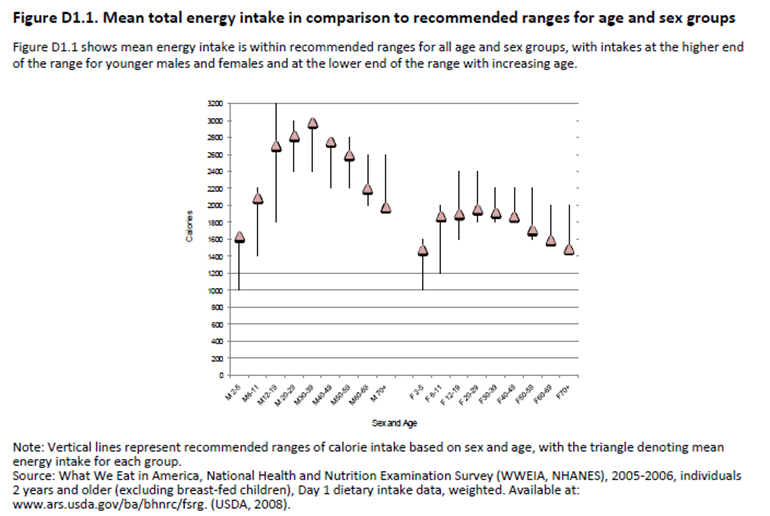
But we should never let reality stand in the way of Government Approved Nutrition Information (code name: GAIN). Our good buddies at the USDA and HHS prepared this helpful chart for the 2010 Dietary Guidelines Advisory Committee Report to show how many calories Americans are consuming compared to the recommended ranges:

The vertical lines are recommended calorie ranges; the pink triangles are the average calorie intake in each group. Caloric intake appears to be within the recommended range for all age levels; adult women in general seem to be consuming at the very low end of their caloric range, about as many calories as a preschool male. That’s right, women over the age of 50 eat, on average, about as much food as 2-5 year old boys.

This must be more of that “freaky metabolism” thing to which Mr. Pollan refers. Or—wait—maybe they are all just LYING (the old ladies, not the little boys): the 2010 Dietary Guidelines for Americans go on to say, “While these estimates do not appear to be excessive, the numbers are difficult to interpret because survey respondents, especially individuals who are overweight or obese, often underreport dietary intake.” And we know what “underreport” means, right?

According the USDA and HHS, Americans aren’t fat because they are told to eat foods they don’t need to eat, Americans are fat because they eat too much–and then lie about it.

So, let me sum this up for the folks at home:

Fat people say that they don’t eat more calories than their normal weight (and apparently morally superior) counterparts.  But we know they are lying because Nutrition Experts—like Michael Pollan—KNOW how much fat people eat should be eating (i.e. A LOT of food—otherwise, golly, they wouldn’t be so darn fat).  ).  He KNOWS this because he’s a Nutrition Expert and because we have scientists who have calculations that tell us how much fat people are supposed to eat (i.e. A LOT) so when fat people say they don’t each as much as scientists think they eat (i.e. A LOT), well then, the only possible explanation for that is that the fat people are LYING!  And if that’s not enough evidence for you (and really, it should be), you can absolutely believe that that fat people LIE about how much they eat because the Government says they do.

And the government never lies.

References:

Lee RD and Nieman DC. Nutritional Assessment, 4th ed. Boston: McGraw Hill, 2007.

Pollan M. Unhappy Meals. The New York Times Magazine, January 28, 2007

U.S. Department of Agriculture and U.S. Department of Health and Human Services. Report of the Dietary Guidelines Advisory Committee on the Dietary Guidelines for Americans, 2010. June 15, 2010.

U.S. Department of Agriculture and U.S. Department of Health and Human Services. Dietary Guidelines for Americans, 2010. http://www.cnpp.usda.gov/DGAs2010-PolicyDocument.htm Accessed January 31, 2010.

If Nutrition Experts Built Bridges–

If you are an engineer, your plan—bottom line, no fudging about—has to WORK. All. The. Time. It’s what we expect from engineers.

On the other hand, if you are a Government-Approved Nutrition Expert, your plan doesn’t have to work AT ALL.

Which may be why we don’t let Nutrition Experts build bridges.

To ensure a more impressive rate of success, engineers tend to build their bridges and elevators based on a few mysterious but fundamental concepts like physics (or as we say around here, fweezix). Now, to paraphrase Barbie, I understand that physics is TOUGH. But it is also, well, insurmountably the real deal, and anything that defies the laws of physics is generally—for lack of a better word—considered to be magic.

Now, from my biochemistry classes, it looks like the principles of nutrition are built on chemistry, and the principles of chemistry are built on—you guessed it!—politics physics But when I step across the hall to my public health classes, then the principles of nutrition are based on the Dietary Guidelines, which—as they tend to be in defiance of the laws of physics—I guess must be magic!

Despite the rockin’ groove, I’m not sure that I believe in magic.

But Calories In = Calories out is not magic, it’s physics, right? It seems indisputable—a veritable law of thermodynamics—that if you consume fewer calories than you expend, you will lose weight. Conversely, if you consume more calories than you expend, you will gain weight. Duh.

Sometimes when things aren’t working (i.e. major bridge oopie ), we get a glimpse of the realities of the physics behind the system. Let’s take a look at a category of individuals that do lose weight easily—too easily: Type 1 diabetics. A type 1 diabetic could eat 5000 calories a day, never move a muscle, and still lose weight (for the record: this is not a good thing). What happens to those calories? Why don’t they get stored as fat (hello? calories IN?) A type 1 diabetic can’t store them as fat. Why not? No insulin. Without insulin, the body cannot store energy at all. Type I diabetics must be given insulin or they literally waste away. It’s not because they try harder; it’s because of physics.

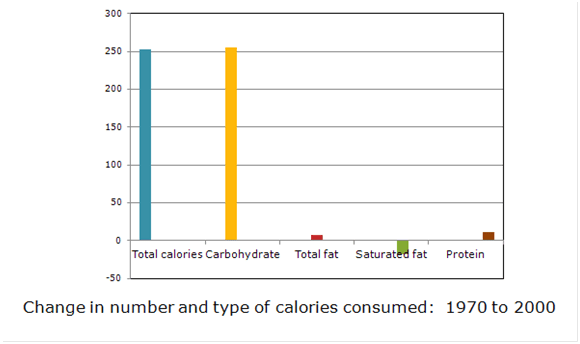
What this means is that it can’t just be the amount of calories that we are consuming, but also the source. And in the case of unnecessary carbohydrates in the diet, it’s likely to be both. The increase in caloric intake we’ve seen in the past 30 years has come almost entirely from industrialized carbohydrate food products—subsidized and endorsed by the USDA.

Would obesity rates have skyrocketed without the Guidelines prompting Americans to eat fewer animal products—especially meat and eggs which contain Very Scary saturated fat and cholesterol—and more whole grain cereal products? We’ll never know. But physics does tell us that carbohydrate foods have particular qualities that affect fat storage and metabolism, specifically: “A high carbohydrate meal stimulates the production of insulin. Insulin inhibits the body’s ability to use fat for energy and stimulates the uptake of fat and its storage as triacylglycerol” (Campbell & Farrell, 2009). That’s straight from my biochemistry textbook.

Now I don’t care if you eat carbs or not. Some of my best friends are carbs. But can we stop pretending that somehow—magically—there’s no relationship between the two figures above?

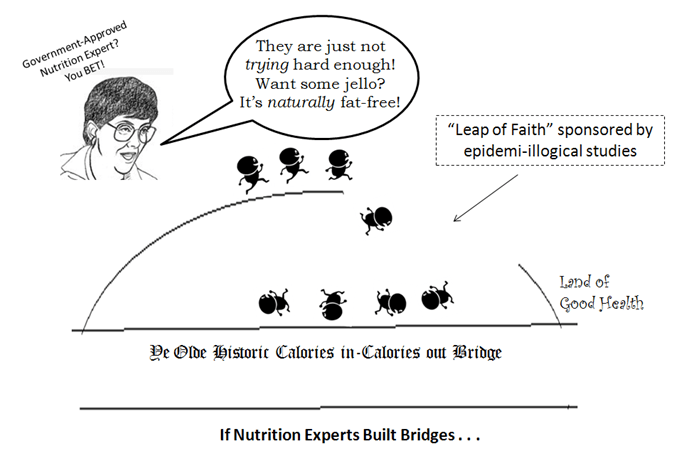
Apparently we can’t. According to many Nutrition Experts, including Marion Nestle, our low-fat Dietary Guidelines can be blamed only in that they do not do more to “address caloric intake, portion size, inactivity, and other contributors to obesity” (Woolf & Nestle, 2008). Notice that “caloric intake,” “portion size” and “inactivity” are all things that are our fault—in contrast to a diet recommendation of mostly carbohydrates, something the USDA and HHS are responsible for. In other words, if chubby little Americans can’t “achieve energy balance” by eating less and exercising more, it’s not because the Guidelines aren’t helping us, it’s because we are simply not trying hard enough.

(True Confession: I mostly just wanted to draw that cartoon.)

Should we reduce our calories? Maybe not a bad idea for some folks.

What kind of calories should we reduce? Ask an engineer. Unless you believe in magic . . .

References:

Campbell MK, Farrell SO. Biochemistry, 6th ed. United States: Thomson, 2009. p. 730.

Centers for Disease Control and Prevention (CDC). Trends in intake of energy and macronutrients–United States, 1971-2000. Morbidity and Mortality Weekly Report. 2004 Feb 6;53(4):80-2.

Woolf SH, Nestle M. Do dietary guidelines explain the obesity epidemic? American Journal of Preventive Medicine. 2008 Mar;34(3):263-5.

Americans don’t follow Guidelines—or do they?

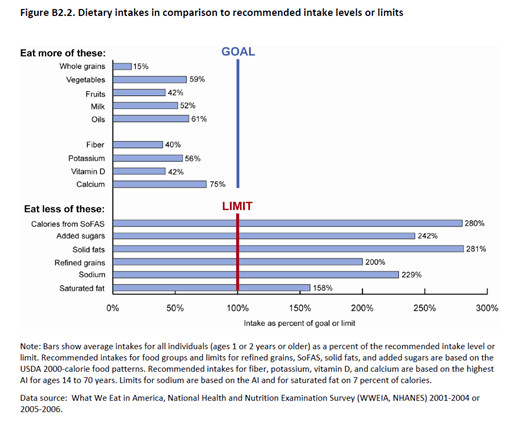
One of the enduring myths of our current nutrition culture is that Americans don’t follow recommendations–have never followed them–because if we had, this obesity thing wouldn’t have happened. According to the 2010 Dietary Guidelines Advisory Committee Report, “average American food patterns currently bear little resemblance to the diet recommended in the 2005 Dietary Guidelines for Americans.”

As proof, the following figure is provided:

FIGURE 1: Americans don’t follow dietary recommendations!

It seems pretty obvious that Americans are woefully off-base when it comes to eating anything close to what the USDA and HHS have been recommending for the past thirty years. I would bet my RD certification that this figure will be shown in PowerPoints across the land to demonstrate—to the accompaniment of much hand-wringing—how we must “make the healthy choice the easy choice” for those poor, dumb Americans who will otherwise just eat themselves into obesity and ruin airplane trips for the rest of us.

Aside from the fact that Americans are being evaluated on whether or not they follow the Guidelines, rather than whether or not the Guidelines are actually appropriate, there are some serious “truth in advertising” issues going on with this figure.

First, note the data collection time points: National Health and Nutrition Examination Surveys from 2001-2004, and 2005-2006. And the fun begins . . .

1) The figure shows that we eat too many calories from SoFAS. But this concept was not part of the Guidelines until the 2010 Dietary Report, the report that contains this figure. In other words, Americans are being held to standards that hadn’t even been created yet.

2) The saturated fat “cut-off” is based on a 7% of calories. The recommended limit for saturated fat at the time the data were collected and at the time this document was written is 10% of calories, not 7%.

3) The standards for whole grain consumption given in the Guidelines that the public would be familiar with when the data were collected were pretty vague: “Choose a variety of grains daily, especially whole grains” (from the 2000 Dietary Guidelines). I don’t know how this translates into an absolute amount of whole grains that Americans don’t consume.

4) The report that contains this figure (the 2010 Dietary Guidelines Advisory Committee Report) indicates that added sugars should be less than 25% of calories. Current research indicates that added sugar consumption by Americans is around 16% of total calories (Welsh et al, 2010, JAMA). According to this figure, Americans consume 242% more added sugars than recommended. Another mystery.

5) In the fine print, it says that the sodium cut-off is based on the recommended Adequate Intake (AI) amount. The AI amount is a “goal for adequate intake,” and, as such, is more of a floor than a ceiling. The AI amount is currently set at 1500 mg of sodium for adults. On the other hand, the Dietary Guidelines that were in effect at the time the data were collected set sodium recommendations at 2400 mg (2000 DGs) and 2300 mg (2005 DGs) per day.

Americans don’t follow the Guidelines–but the standards being used in a number of cases aren’t even part of the Guidelines?

Here’s a different perspective on whether or not Americans are following dietary recommendations:

FIGURE 2: Or do they? Black lines represent lower limits of Acceptable Macronutrient Distribution Range (AMDR) given in the Dietary Guidelines; red lines designate upper limits of AMDR.

Since 1980, Americans have been told to increase their carbohydrate consumption and reduce their fat intake. Since 1980, we’ve done just that. American’s consumption patterns fall within the recommended AMDR levels, with the exception of saturated fat, which—at 11% of total calories—is just slightly more than the recommended limit of 10% of calories. (If you are interested in just exactly how well Americans have complied with the dietary recommendations of the past 30 years, you can find the gory details here.)  Far from being careless and casual consumers of anything and everything, Americans have radically shifted their eating patterns to match recommendations.

So why don’t Americans get any credit for actually lowering their fat intake and raising their carbohydrate intake, as we were told to do? I think there are a couple of things behind that.

First, I think one of the purposes of information like that presented in Figure 1 is to make sure the responsibility for overweight and obesity continues to rest squarely on the chubby little shoulders of Americans themselves and in no way reflects a possible lack of appropriateness of (or—gasp!—good scientific basis for) the Guidelines themselves. This is an attitude that pervades the Dietary Guidelines.

Second, the USDA’s Center for Nutrition Policy and Promotion would really like another $9 million to “help Americans develop eating behaviors that are more consistent with the Dietary Guidelines for Americans.” It would be a little awkward to ask for a funding increase to convince Americans to follow current dietary recommendations if we were already doing that—and they still weren’t working.

This is where recommendations become fanaticism.  According to Neil Postman, “the key to all fanatical beliefs is that they are self-confirming.”  The USDA and HHS seem unwilling to even acknowledge that the dietary shift that has occurred during the past thirty years has actually been in the direction of compliance with recommendations; in fact–according to Figure 1–they are willing to fudge the numbers to prove otherwise.  That’s not nice, and it’s sure not science.

References:

Welsh JA, Sharma A, Abramson JL, Vaccarino V, Gillespie C, Vos MB. Caloric sweetener consumption and dyslipidemia among US adults. JAMA. 2010 Apr 21;303(15):1490-7

It’s not the Guidelines

One of the enduring mysteries to me about the whole Dietary Guidelines issue is the extent to which my concerns regarding their effectiveness causes some folks to question my intelligence, knowledge, professionalism, and—I think—prescription drug use.

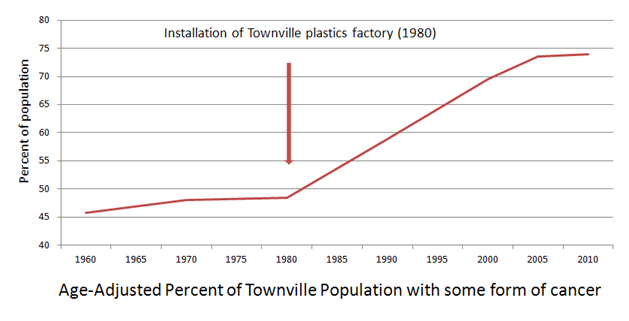
Take the graphic above, which appears to show a relationship in time between one event (the installation of a plastics factory) and another trend (rise in cancer rates). This does not demonstrate cause-and-effect, of course, but I think that most public health officials would be concerned enough about the clear inflection point and the following steep upward trend in disease to want to investigate the potential for a cause-effect relationship, or at least begin to ask some questions.

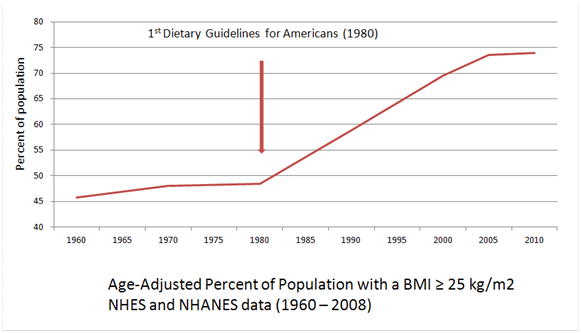
But when the graph looks like this, it’s a different story:


Every time I show someone the above relationship, I get remarks like, but what about physical activity levels? television? women in the work force? desk jobs? automobiles? anything, anything but the Guidelines!

Keeping in mind that the obesity graph above only shows the temporal relationship between when the Dietary Guidelines were implemented and when the rapid rise in obesity took place, I thought I would look at some of the other possible causes that are invoked in the name of avoiding the possibility that we’ve been wrong about public health nutrition for the past thirty years.

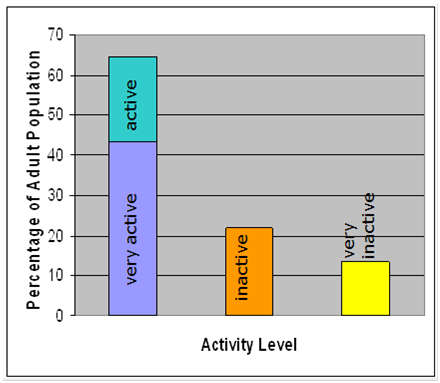
It’s not the Guidelines #1: For some reason, Americans got much lazier in the past 30 years than they have ever been before.

I will say right off the bat that we don’t have a lot of clear data about physical activity levels because we didn’t really start paying attention to it until Americans started getting fat. However, the 1983 Public Health Objectives for Americans offer some insight: “The American lifestyle is still relatively sedentary. The proportion of adults aged 18-65 regularly exercising has been estimated at just over 35% . . .” [From: Promoting Health/Preventing Disease. Public Health Service Implementation Plans for Attaining the Objectives for the Nation (Sep. – Oct., 1983), p. 155].

The most recent research—2010—on physical activity levels in America paints a much different picture:


From: Adabonyan I, Loustalot F, Kruger J, Carlson SA, Fulton JE. Prevalence of highly active adults–Behavioral Risk Factor Surveillance System, 2007.

This may not be the complete story, but there is little evidence to suggest that we have become radically more sedentary since 1980. And if we have, one would have to ask just why that would occur?

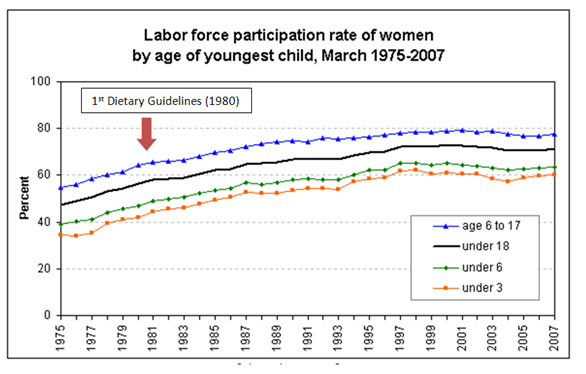
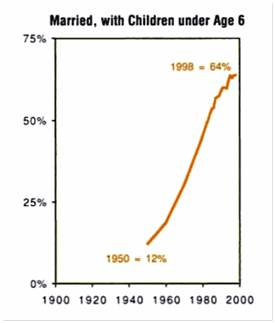
It’s not the Guidelines #2: Moms went to work, leaving the kids in front of TV sets!


Labor force participation rate of women by age of youngest child, March 1975-2007

Women began entering the workforce, even with small children at home, long before obesity rates began to climb.


Labor Force Participation of Women, Married with children under age 6. From: The first measured century

It’s not the Guidelines #3: Blame television! Television came along and we all turned into couch potatoes.


Television was in over 85% of American homes in 1960, 20 years before obesity rates began to climb. (However, it is possible that MTV, which debuted in 1980 along with the Dietary Guidelines, is at the root of our obesity crisis—anything, anything but the Guidelines!)

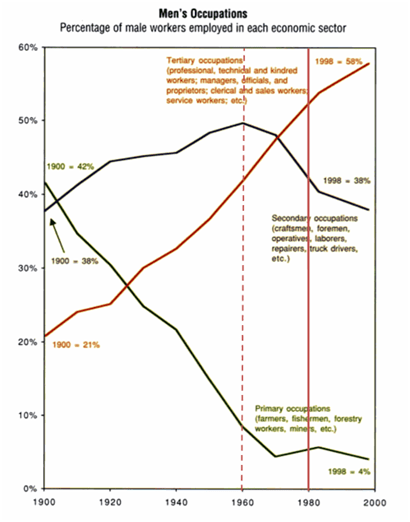
It’s not the Guidelines #4: We used to work at physically demanding jobs!


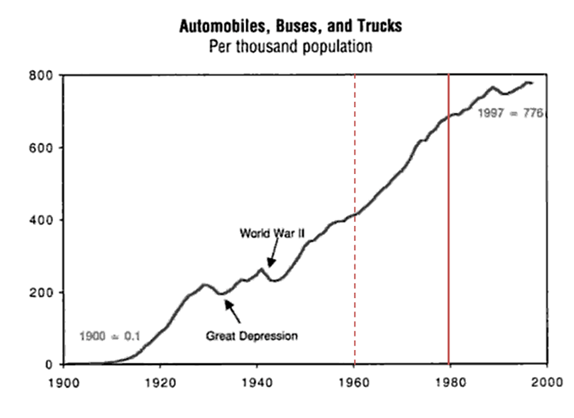
With these wonderful graphs from the book The first measured century: an illustrated guide to trends in America, 1900-2000, by Theodore Caplow, Louis Hicks, Ben J. Wattenberg, I looked for a similar pattern to that of the obesity trend, a parallel trend that might be a primary factor in the rise in obesity in America. The dashed lines represent the beginning of the obesity measurements above (beginning in 1960), while the solid lines shows when the first Dietary Guidelines were released (in 1980). To find some sort of correlated trend, we would want to find a flat-ish sort of line between the dashed line and the solid one, followed by a steep incline after the solid line, showing a concurrent trend.   Alternately, we might look for a curve similar to the obesity one, but shifted to the left, showing a trend that preceded the obesity one.  I didn’t find either in the transition from manual labor to more sedentary jobs.

It’s not the Guidelines #5: In the past, we used to walk everywhere–or ride our scooters, or our ponies!


I grew up in the 70s.  We rolled around in great big cars without our seat belts on.  Not such a great idea, but cars were an integral part of Americans lives long before obesity rates took off.

It’s not the Guidelines #6: Some seismic shift in our eating habits made many of us gain weight at an alarming rate.


From:  Gross et al, 2004, Increased consumption of refined carbohydrates and the epidemic of type 2 diabetes in the United States: an ecologic assessment.  AJCN

Wait a minute—this looks familiar. Hmmm. Dramatic rise in carbohydrate intake? Dramatic rise in obesity! Who’da thunk? And why did we start eating all those carbs? Not because we were sitting in front of the TV while our moms went to work (we were, but that’s not why). We started filling our plates with cereals and starches because the Dietary Guidelines told us to.

References:

Adabonyan I, Loustalot F, Kruger J, Carlson SA, Fulton JE. Prevalence of highly active adults–Behavioral Risk Factor Surveillance System, 2007. Prev Med. 2010 Aug;51(2):139-43.

Gross L, Li L, Ford ES, Liu S.  Increased consumption of refined carbohydrates and the epidemic of type 2 diabetes in the United States: an ecologic assessment.  American Journal of Clinical Nutrition, Vol. 79, No. 5, 774-779, May 2004

Public Health Reports (1974-) , Vol. 98, Supplement: Promoting Health/Preventing Disease. Public Health Service Implementation Plans for Attaining the Objectives for the Nation (Sep. – Oct., 1983), pp. 1-177

Fat? Blame Mom

“Adverse factors encountered during fetal life have the dual effect of perturbing prenatal growth patterns and establishing a pre-susceptibility to major disease states in adult life”

Langley Evans: Proc Nutr Soc. 2001;60(4):505-13.

Jimmy Moore of Livin’ La Vida Low Carb wrote a great post recently entitled “When Does Being Fat Become Your Fault?”  In it he states that his weight is 295 pounds. I would guess that’s accurate.  I have had the pleasure of meeting Jimmy many times & he’s a big guy. From what I understand, so was Dr. Atkins of the Atkins Diet fame. So is my 18-year old son.

In the past, when people meet some of the vocal and active members of the low-carb community who don’t necessarily match expectations of what a socially-acceptable “healthy” weight would be, I’ve been asked if the whole low-carb thing is a farce. Maybe people feel comfortable posing this question to me because I’m not heavy (anymore). And I think I can say that my weight loss journey was probably a little easier for me than for others, but not because I have more willpower or I just don’t eat that much (I love food!!). It may be because my mother insisted that I eat an egg for breakfast every morning as a child. I wasn’t there to check this out, but I assume that’s how she ate when she was pregnant with me. We were a meat-at-every-meal family. Why am I telling you this? Because it matters.

Epigenetics is a new term that gets used a lot without people know just exactly what it means. Simply put, epigenetics is the study of how the environment (especially the prenatal environment) can effect gene expression, as opposed to changing the genetic material itself. This means that certain metabolic features that are controlled by our genetic material—for instance, hormones, enzymes, appetite regulation signaling factors—may be upregulated or downregulated due to influences from our environment.

The effect of prenatal environment—including diet—on how genes are expressed can then in turn effect how we end up interacting with our current environment. Some folks get a “triple whammy”—genes that code for obesity, a prenatal environment that affects the expression of those and other genes, and an obesogenic environment. Can we honestly say that these folks have some character flaw that makes being fat their fault?


There are many things beyond our control, especially intrauterine environment, which have a primary impact on how much we weight as adults–perhaps even more impact than our current dietary habits.  I know this personally because my son, who was born when I was in my most strict vegetarian phase, has had much more trouble with his weight than my son whose pregnancy was one in which the doctor insisted that I eat high quality protein–at every single meal (unheard of for me).  My “vegetarian phase” pregnancy was a difficult one. I was on bed rest or in the hospital most of my last trimester; my son was born 6 weeks early anyway. He was a skinny little kid, but as soon as adolescence kicked in (a hyperinsulinemic phase in general), he began gaining weight.

  • In terms of genetics, he got flat feet and a large build (his father’s side)
  • In terms of epigenetics, he got a vegetarian mother who ate little fat and protein while he was swimming about in utero.
  • In terms of environment, he got a vegetarian mother through his first 6 years of life; now he has a college dining hall to contend with.


His fasting insulin is higher than “normal,” (a likely result of my eating habits, not his), so he has an uphill battle even though he lifts weights, is active, and eats a low-carb diet.  He does pretty well, but imagine if he’d first spent years trying to control his weight with a high-carb, low-fat diet?

That’s just my n=1 perspective. But if what he experienced is a real effect, imagine the population-size effect. It might look a lot like the obesity and diabetes rates we are experiencing now. So what does the science tell us about that possibility? Here’s a brief glance, much of it courtesy of a lecture by Dr. Linda Adair in Fall 2009.

If the mother’s supply of nutrients does not meet the demands of the fetus, there are a few adaptive measures that take place:

  • The fetus will grow less, but maintain head & brain circumference at the expense of skeletal muscle and some other organs.
  • The fetus will become more metabolically efficient as endocrine function is altered to enhance survival.

From animal studies, scientists have seen that, even with normal nutrition after birth, adult offspring of prenatally malnourished mothers have:

  • Increased blood pressure
  • Abnormal glucose tolerance
  • Impaired inflammatory response
  • More body fat
  • Eat more
  • Move less

Hmmm. Should we assume that these mice have some sort of lack of willpower or other character flaw?


Vickers, M. H. et al. Am J Physiol Regul Integr Comp Physiol 285: R271-R273 2003;

From epidemiology studies, especially the Dutch Hunger Winter, we’ve seen that exposure to famine during pregnancy results in higher rates of markers of insulin resistance and higher rates of obesity in adults. Note the type of nutrients that were most restricted during the “Hunger Winter” were protein and fat.  In fact, the protein-to-carbohydrate ratio has been shown to be the most predictive marker with regards to some of the negative health outcomes in adulthood.


Calories derived from carbohydrate, protein, and fat in the official daily rations provided between April 1941 and April 1947.  

Follow-up studies for the Dutch Hunger Winter and other famine or near-famine situations show that babies conceived during nutrient-restricted periods grow up to have increased risk of impaired glucose tolerance, obesity, high blood pressure, and other negative health outcomes in adulthood.

Other population studies have shown a consistent association between low weight for length at birth (a possible sign that the body is selectively nourishing the brain rather than the body, see above) and impaired glucose tolerance, insulin resistance, and type 2 diabetes.


In the Nurses’ Health Study, smaller babies grew up to have an increased risk of type 2 diabetes.

Other factors, such as environmental toxins may pre-dispose kids to obesity, either as children or later in life.

People who may be affected by these epigenetic mechanisms may be metabolically—not psychologically—inclined to eat more and move less. It’s not a character flaw; it’s a biological imperative. It is what their bodies are telling them to do. At what point do we stop blaming these people (who may now make up a majority of our population) and start trying to figure out how to assist them with their efforts to be healthy?

I don’t want to go all mama grizzly on people, but my blood pressure goes through the roof when I hear my classmates make comments like:

“Well, any diet intervention is going to show an improvement in obese people. They’ve been stuffing their faces with tons of calories before this.”

and

“People are fat because they eat too much. Period.”

I think of all the wonderful people I met at the clinic. Of myself. Of Jimmy. And my son. I can count on one hand the number of overweight/obese people I’ve met whom I think actually fit these generalizations.

The thing about the low-carb approach is that it attracts people who have been unsuccessful any other way–for a good reason.  A highly dysregulated system needs a stronger intervention.  It isn’t going to turn someone with a dysregulated system into a model-thin person, but it will often allow them to lower insulin levels to the point where good health is an achievable goal, even if it doesn’t come with a socially-approved weight. Let me emphasize: I do not think low-carb is the only way to do this, but it certainly should be considered as an option.

Until we can move past our “calories-in, calories out,” preconceived notions about what constitutes “healthy” food and what makes people fat, we are doing much of the population a tremendous injustice. Our refusal to entertain any other theories besides the current high carb/low fat dietary regime (which is still, after all, a theory although it is treated as a fact) is possibly the worst failure in public health since the rejection of germ theory in the 19th century. My son is the funniest person I know, and he doesn’t hate me for my very-likely part in mucking up his metabolism. He deserves better.

References:

de Rooij SR, Painter RC, Holleman F, Bossuyt PM, Roseboom TJ. The metabolic syndrome in adults prenatally exposed to the Dutch famine. Am J Clin Nutr. 2007 Oct;86(4):1219-24.

Heijmans BT, Tobi EW, Stein AD, Putter H, Blauw GJ, Susser ES, Slagboom PE, Lumey LH.Persistent epigenetic differences associated with prenatal exposure to famine in humans. Proc Natl Acad Sci U S A. 2008 Nov 4;105(44):17046-9. Epub 2008 Oct 27

Langley-Evans SC. Fetal programming of cardiovascular function through exposure to maternal undernutrition. Proc Nutr Soc. 2001 Nov;60(4):505-13. Review

Painter RC, de Rooij SR, Bossuyt PM, de Groot E, Stok WJ, Osmond C, Barker DJ, Bleker OP, Roseboom TJ. Maternal nutrition during gestation and carotid arterial compliance in the adult offspring: the Dutch famine birth cohort. J Hypertens. 2007 Mar;25(3):533-40.

Rich-Edwards JW, Colditz GA, Stampfer MJ, Willett WC, Gillman MW, Hennekens CH, Speizer FE, Manson JE.Birthweight and the risk for type 2 diabetes mellitus in adult women. Ann Intern Med. 1999 Feb 16;130(4 Pt 1):278-84.

Vickers MH, Breier BH, McCarthy D, Gluckman PD. Sedentary behavior during postnatal life is determined by the prenatal environment and exacerbated by postnatal hypercaloric nutrition. Am J Physiol Regul Integr Comp Physiol. 2003 Jul;285(1):R271-3

Just what the world needs – another blog

My blog reflects my own efforts to begin to translate what I learn about science into meaningful information, policy input, and dinner. This is science put into practice, in the kitchen and in my advocacy work.

Here’s the problem as I see it, plain and simple:

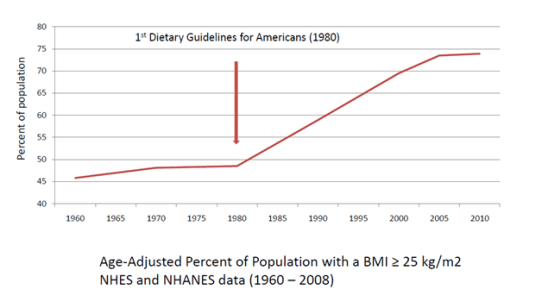
Really, though, there’s nothing simple about it. As a student of epidemiology I must claim that this only shows an association, not cause-effect. Whether the Guidelines “caused” the rapid rise in obesity has yet to be determined, but it’s clear that they certainly did not prevent it. To me, what is more interesting is why nutrition epidemiologists aren’t all over this particular—and remarkably obvious– association trying to figure it out. Instead, I read study after study on the arcuate nucleus and the “built” environment and circadian rhythms and the health belief model and how these things contribute to obesity—and virtually no one says “Um, excuse me, but what about the one public policy piece that since 1980 has influenced every single aspect of our food environment from our cultural norms to how nutrition research gets funded and everything in between?  You know, the Dietary Guidelines?”

As Dr. Su from Carbohydrates Can Kill said, it is like there is an invisible electric fence when it comes to questioning our national dietary policy. Scientists just don’t go there.

So of course, I want to go there.

Although I love nothing more than a romantic evening for one at PubMed, don’t expect a lot of article-jousting here. Frequently those arguments (leptin insulin ghrelin, oh my!) boil down to a collection of snapshots from experimental data that may or may not create a physiologically significant or practically useful collage.  I spent a few years at the Duke Lifestyle Medicine Clinic working with patients who were overweight/obese and frequently struggling with diabetes. This experience has focused my interests on the interactions between biology, culture, and the individual and how these influences become manifest in individual differences and population-wide similarities with regards to nutritional needs, food choices, and consumption patterns (a framework borrowed from anthropology and applied to eating, hence the name of the blog).

In addition, my experiences so far in graduate school—including an interning stint at the American Dietetic Association’s Washington, DC office—have made it very clear that when it comes to the science of nutrition, the playing field is far from level. In fact, I’m not sure our current crisis can be solved by science, or certainly not by science alone. Since the advent of the Dietary Guidelines for Americans in 1980, all aspects of nutrition research have become warped by industry and politics. And–as any grad student can tell you—the most political industry of all is the scientific/academic one.

At the same time, I’m not here to wring my hands in anguish. I’m actively trying to figure out what to do about this mess we’re in. I’d love all the feedback and help and ideas I can get from anyone with enough time on their hands to wade through my musings. Let’s save the world & have fun doing it.