Not Just Science: How nutrition got stuck in the past

Nostalgia for a misremembered past is no basis for governing a diverse and advancing nation.

David Frum

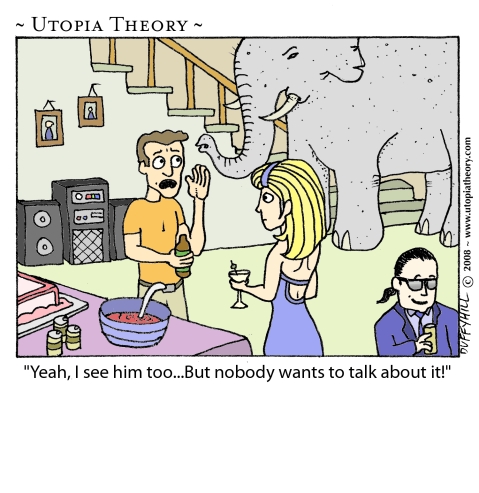
The truth is that I get most of my political insight from Mad Magazine; they offer the most balanced commentary by far. However, I’ve been very interested in the fallout from the recent election, much more so than I was in the election itself; it’s like watching a Britney Spears meltdown, only with power ties. I kept hearing the phrase “epistemic closure” and finally had to look it up. Now, whether or not the Republican party suffers from it, I don’t care (and won’t bother arguing about), but it undeniably describes the current state of nutrition. “Epistemic closure” refers to a type of close-mindedness that precludes any questioning of the prevailing dogma to the extent that the experts, leaders, and pundits of a particular paradigm:

“become worryingly untethered from reality”

“develop a distorted sense of priorities”

and are “voluntarily putting themselves in the same cocoon”

Forget about the Republicans. Does this not perfectly describe the public health leaders that are still clinging blindly to the past 35 years of nutritional policy?  The folks at USDA/HHS live in their own little bubble, listening only to their own experts, pretending that the world they live in now can be returned to an imaginary 1970s America, where children frolicked outside after downing a hearty breakfast of sugarless oat cereal and grown-ups walked to their physically-demanding jobs toting homemade lunches of hearty rye bread and shiny red apples.

Remember when all the families in America got their exercise playing outside together—including mom, dad, and the maid? Yeah, me neither.

So let me rephrase David Frum’s quote above for my own purposes: Nostalgia for a misremembered past is no basis for feeding a diverse and advancing nation.

If you listen to USDA/HHS, our current dietary recommendations are a culmination of science built over the past 35 years on the solid foundation of scientific certainty translated into public health policy. But this misremembered scientific certainty wasn’t there then and it isn’t here now; the early supporters of the Guidelines were very aware that they had not convinced the scientific community that they had a preponderance of evidence behind them [1]. Enter the first bit of mommy-state* government overreach. When George McGovern’s (D) Senate Select Committee came up with the 1977 Dietary Goals for Americans, it was a well-meaning approach to not only reduce chronic disease, a clear public health concern, but to return us all to a more “natural” way of eating. This last bit of ideology reflected a secular trend manifested in the form of the Dean Ornish-friendly Diet for a Small Planet, a vegetarian cookbook that smushed the humanitarian and environmental concerns of meat-eating in with some flimsy nutritional considerations, promising that a plant-based diet was the best way to feed the hungry, save the planet, safeguard your health, and usher in the Age of Aquarius.  This was a pop culture warm-fuzzy with which the “traditional emphasis on the biochemistry of disease” could not compete [2].

If you listen to some folks, the goofy low-fat, high-carb, calories in-calories out approach can be blamed entirely on this attempt of the Democrats to institutionalize food morality. But, let’s not forget that the stage for the Dietary Guidelines fiasco was set earlier by Secretary of Agriculture Earl Butz, an economist with many ties to large agricultural corporations who was appointed by a Republican president. He initiated the “fencerow to fencerow” policies that would start the shift of farm animals from pastureland to feed lots, increasing the efficiency of food production because what corn didn’t go into cows could go into humans, including the oils that were a by-product of turning crops into animal feed. [Update: Actually, not so much Butz’s fault, as I’ve come to learn, because so many of these policies were already in place before he came along. Excellent article on this here.]

When Giant Agribusiness—they’re not stupid, y’know—figured out that industrialized agriculture had just gotten fairydusted with tree-hugging liberalism in the form of the USDA Guidelines, they must have been wetting their collective panties. The oil-refining process became an end in itself for the food industry, supported by the notion that polyunsaturated fats from plants were better for you than saturated fats from animals, even though evidence for this began to appear only after the Guidelines were already created and only through the status quo-confirming channels of nutrition epidemiology, a field anchored solidly in the crimson halls of Harvard by Walter Willett himself.

Between Earl Butz and McGovern’s “barefoot boys of nutrition,” somehow corn oil from refineries like this became more “natural” than the fat that comes, well, naturally, from animals.

And here we are, 35 years later, trying to untie a Gordian knot of weak science and powerful industry cemented together by the mutual embarrassment of both political orientations. The entrenched liberal ivory-tower interests don’t want look stupid by having to admit that the 3 decades of public health policy they created and have tried to enforce have failed miserably. The entrenched big-business-supporting conservative interests don’t want to look stupid by having to admit that Giant Agribusiness, whose welfare they protect, is now driving up government spending on healthcare by acting like the cigarette industry did in the past and for much the same reasons.

These overlapping/competing agendas have created the schizophrenic, conjoined twins of a food industry-vegatarian coalition, draped together in the authority of government policy. Here the vegans (who generally seem to be politically liberal rather than conservative, although I’m sure there are exceptions) play the part of a vocal minority of food fundamentalists whose ideology brooks no compromise. (I will defend eternally the right for a vegan–or any fundamentalist–to choose his/her own way of life; I draw the line at having it imposed on anyone else–and I squirm a great deal if someone asks me if that includes children.)  The extent to which vegan ideology and USDA/HHS ideology overlap has got to be a strange bedfellow moment for each, but there’s no doubt that the USDA/HHS’s endorsement of vegan diets is a coup for both. USDA/HHS earns a politically-correct gold star for their true constituents in the academic-scientific-industrial complex, and vegans get the nutritional stamp of approval for a way of eating that, until recently, was considered by nutritionists to be inadequate, especially for children.

Like this chicken, the USDA/HHS loves vegans—at least enough to endorse vegan diets as a “healthy eating pattern.”

But if the current alternative nutrition movement is allegedly representing the disenfranchised eaters all over America who have been left out of this bizarre coalition, let us remember that, in many ways, the “alternative” is really just more of the same. If the McGovern hippies gave us “eat more grains and cereals, less meat and fat,” now the Republican/Libertarian-leaning low-carb/primaleo folks have the same idea only the other way around—and with the same justification.  “Eat more meat and fat, fewer grains and cereals;” it’s a more “natural” way to eat.

As counterparts to the fundamentalist vegans, we have the Occupy Wall street folks of the alternative nutrition community—raw meaters who sleep on the floor of their caves and squat over their compost toilets after chi running in their Vibrams. They’re adorably sincere, if a little grubby, and they have no clue how badly all the notions they cherish would get beaten in a fight with the reality of middle-Americans trying to make it to a PTA meeting.

How paleo might look from the outside.

To paraphrase David Frum again, the way forward in food-health reform is collaborative work, and although we all have our own dietary beliefs, food preferences, and lifestyle idiosyncrasies, the immediate need is for a plan with just this one goal: we must emancipate ourselves from prior mistakes and adapt to contemporary realities.

Because the world in which we live is not the Brady Bunch world that the many of us in nutrition seem to think it is.
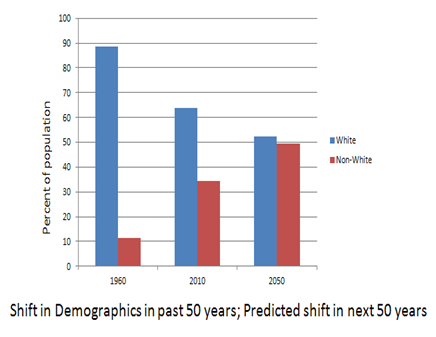
Frum makes the point that in 1980, when the Dietary Guidelines were first officially issued from the USDA, this was still an overwhelmingly white country. “Today, a majority of the population under age 18 traces its origins to Latin America, Africa, or Asia. Back then, America remained a relatively young country, with a median age of exactly 30 years. Today, over-80 is the fastest-growing age cohort, and the median age has surpassed 37.” Yet our nutrition recommendations have not changed from those originally created on a weak science base of studies done on middle-aged white people. To this day, we continue to make nutrition policy decisions on outcomes found in databases that are 97% white. The food-health needs of our country are far more diverse now, culturally and biologically. And another top-down, one-size-fits-all approach from the alternative nutrition community won’t address that issue any more adequately than the current USDA/HHS one.

For those who think the answer is to “just eat real food,” here’s another reality check: “In 1980, young women had only just recently entered the workforce in large numbers. Today, our leading labor-market worry is the number of young men who are exiting.” That means that unless these guys are exiting the workforce to go home and cook dinner, the idea that the solution to our obesity crisis lies in someone in each American household willingly taking up the mind-numbingly repetitive and eternally thankless chore of putting “real food” on the table for the folks at home 1 or more times a day for years on end—well, it’s as much a fantasy as Karl Rove’s Ohio outcome.

David Frum points out that “In 1980, our top environmental concerns involved risks to the health of individual human beings. Today, after 30 years of progress toward cleaner air and water, we must now worry about the health of the whole planetary climate system.” Today, our people and our environment are both sicker than ever. We can point our fingers at meat-eaters, but saying we now grow industrialized crops in order to feed them to livestock is like saying we drill for oil to make Vaseline. The fact that we can use the byproducts of oil extraction to make other things—like Vaseline or livestock feed—is a happy value-added efficiency in the system, no longer its raison d’etre. Concentrated vertical integration has undermined the once-proud tradition of land stewardship in farming. Giving this power back to farmers means taking some power away from Giant Agribusiness, and neither party has the political will to do that, especially when together they can demonize  livestock-eating while promoting corn oil refineries.

If we all just stopped eating meat, then we wouldn’t have to plant so much corn, right? Right?

And it’s not just our food system that has changed: “In 1980, 79 percent of Americans under age 65 were covered by employer-provided health-insurance plans, a level that had held constant since the mid-1960s. Back then, health-care costs accounted for only about one 10th of the federal budget. Since 1980, private health coverage has shriveled, leaving some 45 million people uninsured. Health care now consumes one quarter of all federal dollars, rapidly rising toward one third—and that’s without considering the costs of Obamacare.”  That the plant-based diet that was institutionalized by liberal forces and industrialized by conservative ones is a primary part of this enormous rise in healthcare costs is something no one on either side of the table wants to examine. Diabetes—the symptoms of which are fairly easily reversed by a diet that excludes most industrialized food products and focuses on meat, eggs, and veggies—is the nightmare in the closet of both political ideologies.

David Frum quotes the warning from  British conservative, the Marquess of Salisbury, “The commonest error in politics is sticking to the carcass of dead policies.”

Right now, it is in the best interest of both parties to stick to our dead nutrition policies and dump the ultimate blame on the individuals (we gave you sidewalks and vegetable stands–and you’re still fat! cry the Democrats; we let the food industry have free reign so you could make your own food choices–and you’re still fat! cry the Republicans). It’s a powerful coalition, resistant to change no matter who is in control of the White House or Congress.

What can be done about it, if anything? To paraphrase Frum once again, a 21st century food-health system must be economically inclusive, environmentally responsible, culturally modern, and intellectually credible.

We can start the process by stopping with the finger-pointing and blame game, shedding our collective delusions about the past and the present, and recognizing the multiplicity of concerns that must be addressed in our current reality. Let’s begin by acknowledging that—for the most part—the people in the spotlight on either side of the nutrition debate don’t represent the folks most affected by federal food-health policies. It is our job as leaders, in any party and for any nutritional paradigm, to represent those folks first, before our own interests, funding streams, pet theories, or personal ideologies. If we don’t, each group—from the vegatarians to folks at Harvard to the primaleos—runs the risk of suffering from its own embarrassing form of epistemic closure.

Let’s quit bickering and get to work.

**********************************************************

*This was too brilliant to leave buried in the comments section:

“Don’t you remember the phrase “wait til your father gets home”? You want to know what the state is? It’s Big Daddy. Doesn’t give a damn about the day to day scut, just swoops in to rescue when things get out of hand and then takes all the credit when the kids turn out well, whether it’s deserved or not. Equates spending money with parenting, too.”–from Dana

So from henceforth, all my “mommy-state” notions are hereby replaced with “Big Daddy,” a more accurate and appropriate metaphor.  And I never metaphor I didn’t like.

References:

1. See Select Committee on Nutrition and Human Needs of the United States Senate. Dietary Goals for the United States. 2nd ed. Washington, DC: US Government Printing Office; 1977b. Dr. Mark Hegsted, Professor of Nutrition at Harvard School of Public Health and an early supporter of the 1977 Goals, acknowledged their lack of scientific support at the press conference announcing their release: “There will undoubtedly be many people who will say we have not proven our point; we have not demonstrated that the dietary modifications we recommend will yield the dividends expected . . . ”

2. Broad, WJ. Jump in Funding Feeds Research on Nutrition. Science, New Series, Vol 204. No. 4397 (June 8, 1979). Pp. 1060-1061 + 1063-1064. In a series of articles in Science in 1979, William Broad details the political drama that allowed the “barefoot boys of nutrition” from McGovern’s committee to put nutrition in the hands of the USDA.

Not Just Science: Nutrition & Politics

Now that food–along with religion and politics–has joined the list of things you don’t talk about with friends, I thought I’d do my post-Election day best to offend everyone equally by highlighting just how political food and nutrition is these days.

I like to try to pass myself off as generally apolitical (on principle, I refuse to vote straight-ticket anything—but it could be I’m just a control freak who likes filling in all the bubbles myself). If forced to confess, underneath it all I’m a bleeding-heart liberal who wants to save trees and whales and who tends to blame the world’s ills on old white dudes (even—or especially –the one I’m married to).

But there’s another subtlety (and don’t tell my bleeding-heart liberal friends or they won’t invite me to anymore parties): I’d vote for ANYONE who was serious about fixing our food-health system, but—politically-speaking—who is going to do that?

Restructure subsidies, agricultural insurance, and agricultural financing to support small farmers rather than giant agribusiness? Who would do this? Democrats like feeding the excess corn, wheat, and soy commodities to the hungry people in America who are getting fatter and sicker by the minute as a result (It’s healthy!). Republicans like the big businesses that control those commodities. Everyone says they care for small farmers but no one does anything about it.

Federal nutrition program foods: plenty of soybean oil, corn syrup, gluten, and sugar, with a little arsenic thrown in for good measure

Modify food safety regulations to take into account size and type of operation? Democrats are all about protecting the public and regulating industry, but they are also all about “protecting” the public from the raw milk that those stupid Americans are stupid enough to drink. Republicans are more likely to support the dairy industry–the folks with the vested interest in outlawing raw milk–but also more likely to say the government shouldn’t be telling stupid Americans what they should and shouldn’t drink.

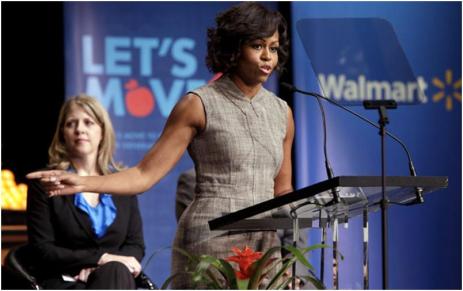
Somebody needs to tell Michelle that “moving more” makes kids hungry more; nothing wrong with that, but they’re not gonna “eat less” as a result.

End the one-size-fits all dietary recommendations? Thank you Michelle Obama for giving renewed vigor to the physiology-defying “eat less, move more” concept. Thank you, giant mom-and-pop-squashing Walmart, for playing right along.

You don’t like Obamacare? You do like Obamacare? You’re both right. Health reform is a joke until we focus on preventive measures that begin with feeding everyone adequate essential nutrition, not preventing chronic disease with foods that don’t prevent chronic disease.

Republicans believe that obesity is a personal responsibility; food and lifestyle choices by the public should not be interfered with by the government. Except when it comes to whether or not the public can know what is actually in the food they choose, in which case, the right to free speech when it comes to putting “health” claims on cereal boxes becomes the right to abstain from speech when it comes to putting GMO information there.

Democrats believe that it is up to the government to intervene in the market when personal choices become a public concern. So Democrats are out to make the “healthy choice” (a phrase that is an embarrassment to true meaning of both words) the easy choice for those poor stupid fat people out there who are too lazy and gluttonous to take care of their own health, never mind that the Democrat’s idea of “healthy” and “choice”  is limited to the USDA/HHS definition of both.

Republicans support the soda industry’s desire not to be taxed. Democrats are hoping butter and meat will be taxed next.

Thank goodness for the Libertarians—who are hard at work legalizing pot so the nation can now get the collective munchies. Watch for the Democrats to insist on restricted access to McDonald’s for those with medical marijuana prescriptions, while the Republicans fight for Monsanto’s right to patent all cannabis seeds grown anywhere ever by anyone. That backyard plot of weed will only be legal for about ten minutes before the Democrats start regulating the fun out of it and the Republicans hand everyone’s right to get stupid over to ConAgra.

Meanwhile, the rich get richer, the poor get fatter and sicker, and we all—rich and poor and middle-class alike—waste precious time, money, and attention on nutrition recommendations that support ideology and industry and do little for our nation’s very real health crisis. Politicians like Nixon and Clinton have undermined the nation’s ability to believe that any politicians can be trusted;  advice from the USDA/HHS, Ornish, and Atkins have done the same for nutrition. It’s a wonder we don’t all turn on, give in, and pig out.

Why Race Doesn’t Matter in Nutrition Policy

This is the first of a series looking at what does and doesn’t matter when it comes to nutrition policy. When I started out on this adventure, I thought that science would give me the answers to the questions I had about why public health and clinical recommendations for nutrition were so limited. Silly me. The science part is easy. But policy, politics, economics, industry, media framing, the scientific bureaucracy, cultural bias—now that stuff is crazy complicated. It’s like an onion: when you start peeling back the layers, you just want to cry. I am also honored to say that this post is part of the Diversity in Science Carnival on Latino / Hispanic Health: Science and Advocacy

When we began investigating relationships between diet and chronic disease, we didn’t pay much attention to race. The longest-running study of the relationship between dietary factors and chronic disease is the Framingham Heart Study, a study made up entirely of white, middle-class participants. Since 1951, the Framingham study has generated over 2 thousand journal articles and retains a central place in the creation of public health nutrition policy recommendations for all Americans.

More recent datasets—especially the large ones—are nearly as demographically skewed.

The Nurses’ Health Study is 97% Caucasian and consists of 122,000 married registered nurses who were between the ages of 30 and 55 when the study began in 1976. An additional 116,686 nurses ages 25 – 42 were added in 1989, but the racial demographics remained unchanged.

The Health Professionals’ Follow-up Study began in 1986, as a complementary dataset to the Nurses’ Health Study. It is 97% Caucasian and consists, as the name suggests, of 51, 529 men who were health professionals, aged 40-75, when the study began.

The Physicians’ Health Study began in 1982, with 29, 071 men between the ages of 40-84. The second phase started in 1997, adding men who were then over 50. Of participants whose race is indicated, 91% are Caucasian, 4.5% are Asian/Pacific Islander, 2% are Hispanic, and less than 1% are African-American or American Indian. I have detailed information about the racial subgroups of this dataset because I had to write the folks at Harvard and ask for them. Race was of such little interest that the racial composition of the participants is never mentioned in the articles generated from this dataset.

Over the years, these three mostly-white datasets have generated more journal articles than five of the more diverse datasets all put together.* These three datasets, all administered by Harvard, have been used to generate some of the more sensationalist nutrition headlines of the past few years–red meat kills, for instance–with virtually no discussion about the fact that the findings apply to a population–mostly white, middle to upper middle class, well-educated, health professionals, most of whom who were born before the atomic bomb–to which most of us do not belong.

Shift in demographics in past 50 years;
predicted shift in next 50 years

Although we did begin to realize that race and other characteristics might actually matter with regard to health (hence the existence of datasets with more diversity), we can’t really fault those early researchers for creating such lopsided datasets. At that point, not only was the US more white than it is now, scientific advances that would reveal more about how our genetic background might affect health had not yet been developed. We had not yet mapped the human genome; epigenetics (the study of the interaction between environmental inputs and the expression of genetic traits) was in its infancy, and biochemical individuality was little more than a glimmer in Roger Williams’ eye.

Socially, culturally, and I think, scientifically, we were all inclined to want to think that everyone was created equal, and this “equality” extended to how our health would be affected by food. Stephen Jay Gould’s 1981 book, The Mismeasure of Man, critiqued the notion that “the social and economic differences between human groups—primarily races, classes, and sexes—arise from inherited, inborn distinctions and that society, in this sense, is an accurate reflection of biology.” In the aftermath of the civil rights movement, with its embarrassingly racist behavior on the part of some representatives of the majority race and the heartbreaking violence over differences in something as superficial as skin color, it was patently unhip to suggest that racial differences were anything more than just skin deep.

But does that position still serve us now?

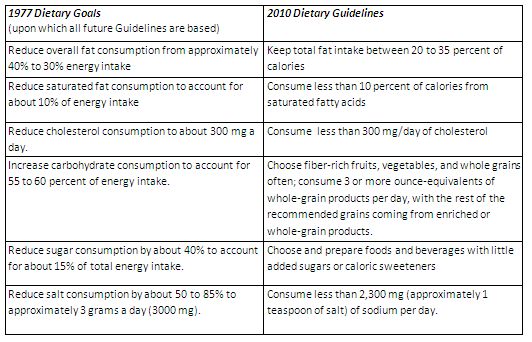
In the past 35 years, our population has become more diverse and nutrition science has become more nuanced—but our national nutrition recommendations have stayed exactly the same. The first government-endorsed dietary recommendations to prevent chronic disease were given to the US public in 1977. These Dietary Goals for Americans told us to reduce our intake of dietary saturated fat and cholesterol and increase our intake of dietary carbohydrates, especially grains and cereals in order to prevent obesity, diabetes, heart disease, cancer, and stroke.

Since 1980, the decreases in hypertension and serum cholesterol—health biomarkers—have been linked to Guidelines-directed dietary changes in the US population [1, 2, 3, 4].

“Age-adjusted mean Heart Disease Prevention Eating Index scores increased in both sexes during the past 2 decades, particularly driven by improvements in total grain, whole grain, total fat, saturated fatty acids, trans-fatty acids, and cholesterol intake.” [1]

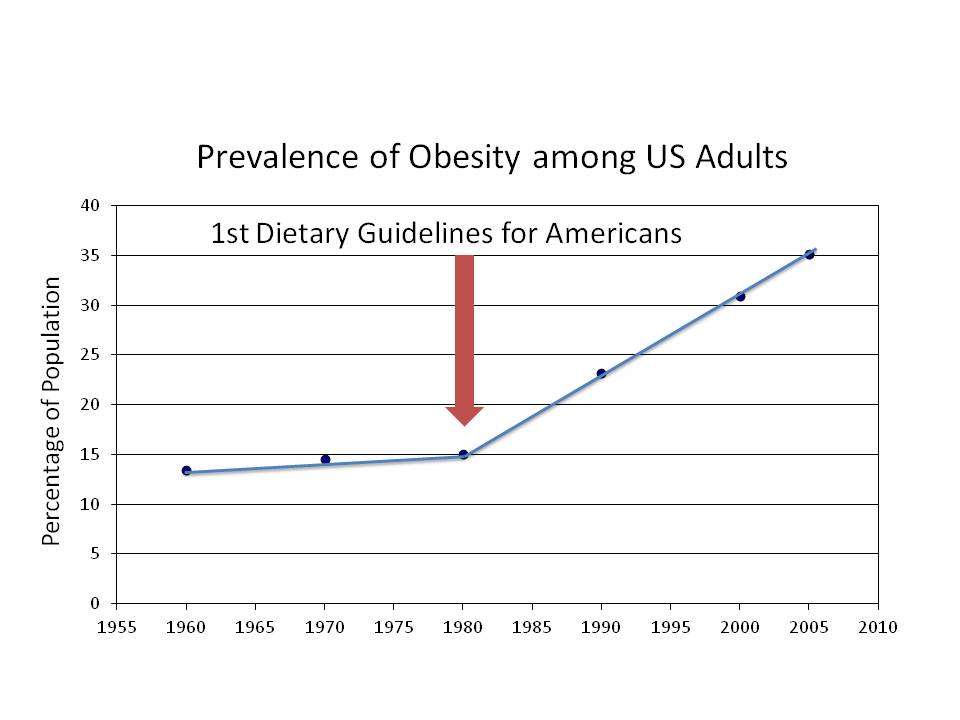
However, with regard to the actual chronic diseases that the Dietary Guidelines were specifically created to prevent, the Dietary Guidelines have been a resounding failure. If public health officials are going to attribute victory on some fronts to Americans adopting dietary changes in line with the Guidelines, I’m not sure how to avoid the conclusion that they also played a part in the dramatic increases in obesity, diabetes, stroke, and congestive heart failure.

If the Dietary Guidelines are a failure, why have policy makers failed to change them?

It is not as if there is an overwhelming body of scientific evidence supporting the recommendations in the Guidelines. Their weak scientific underpinnings made the 1977 Dietary Goals controversial from the start. The American Society for Clinical Nutrition issued a report in 1979 that found little conclusive evidence for linking the consumption of fat, saturated fat, and cholesterol to heart disease and found potential risks in recommending a diet high in polyunsaturated fats [5]. Other experts warned of the possibility of far-reaching and unanticipated consequences that might arise from basing a one-size-fits-all dietary prescription on such preliminary and inconclusive data: “The evidence for assuming that benefits to be derived from the adoption of such universal dietary goals . . . is not conclusive and there is potential for harmful effects from a radical long-term dietary change as would occur through adoption of the proposed national goals” [6]. Are the alarming increases in obesity and diabetes examples of the “harmful effects” that were predicted? It does look that way. But at this point, at least one thing is clear: in the face of the deteriorating health of Americans and significant scientific evidence to the contrary, the USDA and HHS have continued to doggedly pursue a course of dietary recommendations that no reasonable assessment would determine to be effective.

But what does this have to do with race?

Maintaining the myth that a one-size diet approach works for everyone is fine if that one-size works for you—socially, financially, and in terms of health outcomes. The single positive health outcome associated with the Dietary Guidelines has been a decrease in heart attacks—but only for white people.

And if that one-size diet doesn’t fit in terms of health, if you end up with one of the other numerous adverse health effects that has increased in the past 35 years, if you’re a member of the mostly-white, well-educated, middle/upper-middle class demographic—you know, the one represented in the datasets that we continue to use as the backbone for our nutrition policy—you are likely to have the financial and social resources to eat differently from the Guideline recommendations should you choose to do so, to exercise as much as you need to, and to demand excellent healthcare if you get sick anyway. Even if you accept that these foods are Guidelines-recommended “healthy” foods, you are not stuck with the commodity crop-based processed foods for which our nutrition programs have become a convenient dumping ground.

In the meantime, low-income women, children, and minorities and older adults with limited incomes—you know, the exact population not represented in those datasets—remain the primary recipients of federal nutrition programs. Black, Hispanic, and American Indian kids are more likely to qualify for free or reduced-price school lunches; non-white participants make up 68% of the Special Supplemental Nutrition Program for Women, Infants, and Children enrollment. These groups have many fewer social, financial, and dietary options. If the food they’re given doesn’t lead to good health—and there is evidence that it does not—what other choices do they have?

When it comes to health outcomes in minorities and low-income populations, the “healthier” you eat, the less likely you are to actually be healthy. Among low-income children, “healthy eaters” were more likely to be obese than “less-healthy eaters,” despite similar amounts of sedentary screen time. Among low-income adults, “healthy eaters” were more likely to have health insurance, watch less television, and to not smoke. Yet the “healthy eaters” had the same rates of obesity as the “less-healthy heaters” and increased rates of diabetes, even after adjustment for age.

These associations don’t necessarily indicate a cause-effect relationship between healthy eating and health problems. But there are other indications that being a “healthy eater” according to US Dietary Guidelines does not result in good health. Despite adherence to “healthy eating patterns” as determined by the USDA Food Pyramid, African American children remain at higher risk for development of diabetes and prediabetic conditions, and African American adults gain weight at a faster pace than their Caucasian counterparts [7,8].

Adjusted 20-year mean weight change according to low or high Diet Quality Index (DQI) scores [8]

In this landmark study by Zamora et al, “healthy eaters” (with a high DQI) were compared to “less-healthy eaters” (with a low DQI). Everyone (age 18-30 at baseline) gained weight over time; the slowest gainers—white participants who were “healthy eaters”—still gained a pound a year. More importantly however, for blacks, being a “healthy eater” according to our current high-carbohydrate, low-fat recommendations actually resulted in more weight gain over time than being a “less healthy eater,” an outcome predicted by known differences in carbohydrate metabolism between blacks and whites [9].

Clearly, we need to expand our knowledge of how food and nutrients interact with different genetic backgrounds by specifically studying particular racial and ethnic subpopulations. Social equality does not negate small but significant differences in biology. But it won’t matter how much diversity we build into our study populations if the conclusions arrived at through science are discarded in favor of maintaining public health nutrition messages created when most human beings studied were of the adult, mostly white, mostly male variety.

Right now the racial demographics of the participants in an experimental trial or an observational study dataset doesn’t matter, and the reason it doesn’t is because the science doesn’t matter. What really matters? Maintaining a consistent public health nutrition message—regardless of its affect on the health of the population—that means never having to say you’re sorry for 35 years of failed nutritional guidance.

*ARIC – Atherosclerosis Risk In Communities (1987), 73% white; MESA – Multi Ethnic Study of Atherosclerosis (2000), 38% white, 28% African American, 12% Chinese, 22% Hispanic; CARDIA – Coronary Artery Risk Development in Young Adults (1985), 50% black, 50% white; SHS – Strong Heart Study (1988), 100% Native American; BWHS – Black Women’s Health Study(1995), 100% black women.

References:

1. Lee S, Harnack L, Jacobs DR Jr, Steffen LM, Luepker RV, Arnett DK. Trends in diet quality for coronary heart disease prevention between 1980-1982 and 2000-2002: The Minnesota Heart Survey. J Am Diet Assoc. 2007 Feb;107(2):213-22.

2. Hu FB, Stampfer MJ, Manson JE, Grodstein F, Colditz GA, Speizer FE, Willett WC. Trends in the incidence of coronary heart disease and changes in diet and lifestyle in women. N Engl J Med. 2000 Aug 24;343(8):530-7.

3. Fung TT, Chiuve SE, McCullough ML, Rexrode KM, Logroscino G, Hu FB. Adherence to a DASH-style diet and risk of coronary heart disease and stroke in women. Arch Intern Med. 2008 Apr 14;168(7):713-20. Erratum in: Arch Intern Med. 2008 Jun 23;168(12):1276.

4. Briefel RR, Johnson CL. Annu Rev Nutr. 2004;24:401-31. Secular trends in dietary intake in the United States.

5. Broad, WJ. NIH Deals Gingerly with Diet-Disease Link. Science, New Series, Vol. 204, No. 4398 (Jun. 15, 1979), pp. 1175-1178.

6. American Medical Association. Dietary goals for the United States: statement of The American Medical Association to the Select Committee on Nutrition and Human Needs, United States Senate. R I Med J. 1977 Dec;60(12):576-81.

7. Lindquist CH, Gower BA, Goran MI Role of dietary factors in ethnic differences in early risk of cardiovascular disease and type 2 diabetes. Am J Clin Nutr. 2000 Mar; 71(3):725-32.

8. Zamora D, Gordon-Larsen P, Jacobs DR Jr, Popkin BM. Diet quality and weight gain among black and white young adults: the Coronary Artery Risk Development in Young Adults (CARDIA) Study (1985-2005). American Journal of Clinical Nutrition. 2010 Oct;92(4):784-93.

9. Hite AH, Berkowitz VG, Berkowitz K. Low-carbohydrate diet review: shifting the paradigm. Nutr Clin Pract. 2011 Jun;26(3):300-8. Review.

RD does NOT stand for “Really Dumb”

All you need to do is google “dietitians are stupid.” (Go ahead, I’ll wait here.) “Dumbshit nutritionists” [Free the Animal] all over America are apparently giving out “misleading, scientifically vapid, and possibly harmful information” [Postpartum Punk]. Sadly, it is sometimes hard to argue with that.

The Academy of Nutrition and Dietetics has a professional “Code of Ethics” that states that all Registered Dietitians should avoid even the appearance of a conflict of interest.

“The dietetics practitioner does not invite, accept, or offer gifts, monetary incentives, or other considerations that affect or reasonably give an appearance of affecting his/her professional judgment.” *

At the same time, because the organization officially has exactly zero written standards for ensuring that its sponsors actually share the AND’s ostensible vision for “optimizing the nation’s health through food and nutrition,” the Academy of Nutrition and Dietetics accepts money from both food manufacturers and pharmaceutical companies and provides continuing education credits for attending workshops sponsored by Kellogg’s, Kraft and ConAgra.

So what might the Academy of Nutrition and Dietetics be doing with all of this funding? Right now, the AND is fighting a (mostly losing, thankfully) battle to create a complete monopoly on nutrition information and guidance—despite the fact that there is little evidence that this guidance contributes to positive health outcomes.

One the one hand, dietitians are encouraged to turn in anyone who does not rigidly adhere to both licensing standards and/or “professional” standards (some states have turned this into a professional development activity).  Anyone who gives out nutrition information without having the appropriate state-required licensing can be a target (Steve Cooksey’s story has been a newsworthy example of this). But—here’s the scary part—even dietitians with the right credentials can come under attack if they follow their professional judgement rather than the party line (see Annette Presley, below).

On the other hand, the “party line” approaches for weight loss are so ineffective, the federal government (and many states) won’t cover  many dietitian services to help people lose weight.    According to Dr. Wendy Long, chief medical officer of TennCare:

There’s really no evidence to support the fact that providing those services [from dietitians] would result in a decrease in medical cost, certainly not immediately, and even in the longer term.” 

This lack of evidence may be due in part to the (sadly) limited scope of dietetic education and practice. The AND treats the USDA as if it is a scientific authority and not a government agency whose first mandate is to “strengthen the American agricultural economy.” It limits the training of RDs to USDA/HHS-approved diet recommendations despite the fact that even mainstream nutrition establishment scientists feel that the current US dietary recommendations are misguided and inappropriate.

Despite these snugly-fitted, professional handcuffs, there are plenty of RDs out there who not only think for themselves, but who are working to change the system—each in her own way. What they have in common is an unwavering belief in the importance of food in creating healthier individuals and communities. Truly, these women are amazing:

Valerie Berkowitz MS RD CDN CDE worked with Dr. Robert Atkins for a number of years, but has gone one to create her own approach to healthy eating. Valerie is the author of The Stubborn Fat Fix: The Essential Guide to High Fiber, Low Carbohydrate, Whole Food Diets. The book is the basis for a learning module for continuing education credits for RDs—yup, you read that right. Thanks to Valerie’s commitment to making carbohydrate-reduction a mainstream option for health professionals, RDs can get continuing education credits for learning more about low-carb diets. More evidence of her commitment? I got to know Valerie well when I worked with her on a review paper on low-carbohydrate diets —while she had a newborn in tow. (All I did when my children were infants was pray for the opportunity to take a shower.)  Valerie works with her husband, Dr. Keith Berkowitz, as the Director of Nutrition at the Center for Balanced Health, while blogging, writing, and mothering four active children. I know, I know—it makes me want to take a nap just reading about her. But I promise she is fully human and a lovely person. Go visit her at Valerie’s Voice: For the Health of It.

Abby Bloch PhD RD is the Executive Director for Programs and Research at the Dr. Robert C. and Veronica Atkins Foundation. Like Jackie Eberstein, she also has a story about being interviewed by Dr. Atkins and telling him that if she found out that he was a fraud, she would shout it from the rooftops. Well, he wasn’t and she didn’t, and she’s been working with the Atkins Foundation ever since. She is an RD who, quite literally, wrote the book on feeding cancer patients. When she began her career, doctors didn’t think trying to meet the nutritional requirements of cancer patients was all that important: if they lived, they’d eat again eventually; if they didn’t, oh well. Abby’s book paved the way to the now commonplace understanding that appropriate nutrition could make the difference between the first outcome and the second.

Allison Boomer MPH RD is a food writer who brings her nutrition expertise and love for food together in her work for The Boston Globe and other media outlets. I met Allison when she was working on a piece in about fat and the Dietary Guidelines. It hasn’t always been easy for her to educate the public about the complex realities of how science and policy don’t always match up—she makes her editors rather nervous—but she understands the importance of conveying this information in a readable and entertaining manner. As we see the low-fat tide turning, it is due, at least in part, to efforts like hers.

Cassandra Forsythe PhD RD has worked with low-carb researcher Dr. Jeff Volek, but that doesn’t even begin to describe the breadth of her expertise. She combines a background in dietetics, nutrition, and exercise science with a particular interest in women’s health—especially mommy health. If you happen to be a reader with more of a passion for working out than I have (which is likely to be every reader) or if you are not interested in joining the “fat mother’s club” (as my brother so charmingly described the tendency of bearing children to leave women looking permanently 5 months pregnant), check out her fun/exhausting combination of “cute baby and badass mommy” blog.

Suzanne Hobbs PhD RD comes from a different nutrition perspective than many of the women on my list, but she is—quite literally—the only person in America whose area of expertise encompasses both nutrition care and nutrition policy and politics. She is a lifelong vegetarian who writes a newspaper column highlighting the nutrition benefits of a plant-based diet. But she is no more of a vegetarian hard-liner than I am a low-carb one. Instead, she understands that the food choices that people make are complicated, the environment in which those choices are made is confusing, and the real target of concern—for any nutritional paradigm—should be how to take this big messy picture and frame it in a way that will allow us to improve public health nutrition for everyone, rather than to promote any one nutrition agenda. She helped put vegetarian nutrition on the map in the world of dietitians as well as the world of policy. I’m hoping I can learn from her how to stretch the old “top-down” model of nutrition guidance into a new shape that allows us to start thinking differently about how to accommodate individualized nutrition to a public health framework.

Amanda Holliday MS RD LDN is a mother, wife, daughter, and granddaughter—who never relinquishes the importance of those roles as she juggles multiple professional demands as the Director of the University of North Carolina at Chapel Hill’s Registered Dietitian/Masters of Public Health Program, clinician, instructor, public health leader, and blogger. Her family relationships inspired her specialization in nutrition for older adults, another booming subpopulation of Americans for whom standard one-size-fits-all dietary recommendations are inappropriate. Both fearless and humble, she has more integrity in her pinkie toe than most public health advocates could hope to accumulate in their lives. I think she simply lacks the ability to tolerate hypocrisy. She has a deep appreciation for the power of science to improve patient care; she always insisted that her RD students hold themselves to much higher standards of scientific knowledge and expertise than is actually required for dietitians. She also has a healthy respect for the flaws and limitations of science in addressing the complicated needs of real individuals. She never lets her students forget that they are treating people, not symptoms.

Karen Holtmeier MPH RD LN is the RD counterpart to Mary Vernon’s MD leadership at the American Society for Bariatric Physicians as well as director of her own weight loss clinic. She has been educating dietitians and nurses that work with bariatric physicians about the positive health effects of carbohydrate reduction for over a decade, while remaining active within the RD professional community. Not an easy feat to pull off, but Karen is not only warm, funny, and politically savvy, she’s one of the most intrepid women I know. (Traveling by myself still is a little nerve-wracking–with a husband and three kids, I’m used to traveling in a mangy but secure pack loaded down with coolers, pillows, and a bookmobile’s worth of reading material; Karen thinks nothing of hopping in the car for an extended road trip, by herself, up the US west coast and into Canada—tralala. I love that.)

Kris Johnson RD (retired) is one of those “mystery women” I’d run into all over the internets. Like Carmen Sandiego, everywhere I’d go, she seems to have gotten there first. Outraged and intelligent commentary on the attempts of the Academy of Nutrition and Dietetics to create a monopoly on nutrition guidance?

As a retired and reformed dietitian, I can say flat out, dietitians do not understand all there is to know about nutrition. In fact conventional RD’s persist in promulgating some very bad science, such as the misguided advice to avoid saturated fat and cholesterol and aim for a low fat diet. Much of the really useful nutrition information I learned after I retired.

A science-based view of saturated fat in response to outdated precautionary warnings?

Those who have looked carefully at the research have found no evidence that natural saturated fats or cholesterol actually cause heart disease or any other health problem. . . . Excessive amounts of polyunsaturated fats and the trans fats derived from them are the real problem. The best way to improve important cardiac risk factors, that is increase HDL and lower triglycerides, is to limit carbs and most vegetable oils, while getting adequate natural saturated fats in the diet.

I think one of the coolest things about Kris is that she worked as an RD for 15 years, retired, and—instead of spending all day playing Suduko—then she went on to read and learn enough about the shifting paradigm in nutrition to become a vocal and articulate advocate for change. Amazing. Check her out at www.MercyViewMedow.org.

Amy Kubal MS RD LN is another dietitian who combines her expertise in nutrition with a love for athletics. As part of Robb Wolf’s team, she gives the “mainstream” RD designation a paleo twist. Her ability to bridge both worlds is a welcome sign of the times.

Stacia Nordin RD combines her nutrition expertise with permaculture knowledge and the desire to end hunger in Malawi, Africa in a socially, environmentally, and nutritionally sustainable way. Never Ending Food is a family endeavor she shares with her husband and her daughter (who was born in Malawi). I met her after getting a post about the AND’s campaign to create a monopoly on nutrition guidance yanked from an RD discussion board. Her response was sympathetic and encouraging, and she introduced me to a number of other RDs whose agreed with my position, but who had much better diplomacy skills than I do! (One day, we would like to create a network of nutrition professionals with an array of credentials—RD, CNS, CCN, CNC, health coach—to work together to create an environment where all of us can practice our profession with mutual respect.) In the meantime, Stacia and her family’s work continues to inspire me to think about how to make sure that our food reform efforts begin with the communities that they are intended to serve.

Annette Hunsberger Presley RD, co-author of The Liberation Diet, was censured by the (then) American Dietetic Association for recommending that her clients use butter instead of margarine. When told to review the ADA’s Evidence Analysis Library (whose idea of “evidence” is so limited and biased that I have a hard time typing the phrase with straight face) to get the “facts” straight and renounce this position, she did. Plus, she reviewed the rest of the science on the subject and reached a conclusion—as you may have guessed—with which the ADA was not at all happy. You can read her Hyperlipidemia Report here; it’s a pretty amazing piece of work.

Pam Schoenfeld RD is not only a wife, mother, clinician, and public health advocate, she is also the person I blame for getting me into this mess! Together we started Healthy Nation Coalition, and it’s been quite an adventure.I still have the email she sent Dr. Eric Westman (the MD I worked with at the Duke Lifestyle Clinic), and which he passed on to me, describing some of her experiences as an RD intern. Her passion, concern, and professional assessment of nutrition science were inspiring and contagious. She convinced me that I wasn’t too old to go back to school and that I’d come through the dietetic groupthink hazing intact. She was—more or less—right. She remains my hero, mentor, and dear friend.

Picture Franziska Spritzler RD CDE is applying her nutrition expertise to specifically help patients with diabetes (CDE stands for Certified Diabetes Educator).  As Type 2 diabetes has reached epidemic proportions in this country and across the globe, we seem to have forgotten that it is designated in the prominent physician’s handbook, The Merck Manual, as a “disorder of carbohydrate metabolism,” and that, prior to the widespread use of insulin, Type 2 diabetes was effectively treated with a carbohydrate-restricted diet.   As The Low-Carb Dietitian, Franziska is reviving this wisdom in her own practice and for the benefit of everyone struggling with diabetes.

Joanne Slavin PhD RD was a member of the 2010 Dietary Guidelines Advisory Committee. I started following her through the transcripts of those meetings. What caught my attention was her commitment to 3 things: science, food, and people.  She’s been slagged on in the paleo community for being—gasp—a realist about both food prices and the fact that grains can be a perfectly reasonable source of calories for some people—like the teenage male who lives at my house—who actually need calories and can tolerate-grains-just-fine-thank-you. [Labeling her a “dumbshit nutritionist” is—imho—part of why paleo has good reason to be worried about its own future as a fringe-y food and fitness fad. In the brave new world of nutrition, we have to feed everybody, not just the people who agree with that ideology.]

Here’s our “dumbshit nutritionist” speaking to the Registered Dietitians assembled at the North Carolina Dietetics Association conference in April 2012.  Fangirl that I am, I literally tried to write down everything she said:

“The 1977 Dietary Goals were based on politics, not science.”

“Humans can adapt to a wide variety of diets—from 80% carbs to 80% fat.”

“Increasing intake of plant foods, which are low sources of protein, is a bad idea for growing children.”

“People who eat more carbohydrates weigh less, so eat more carbohydrates. Um, it doesn’t work like that.”

“A lot of people don’t get enough protein because of what they are choosing.”

“Dietary advice often has unintended consequences.”

“Micromanaging the diet by imposing strict dietary rules is difficult to support with evidence-based nutrition science.”

“Pink slime was created to come up with a low-fat, high-protein thing to put into processed food.”

“I believe fat needs to go higher and carbs need to go down.”

“It is overall carbohydrate, not just sugar. Just to take sugar out is not going to have any impact on public health.”

Dr. Slavin is NOT a low-carb or paleo diet advocate; she is simply reporting on the realities of nutrition science and policy. But if you have any lingering concerns about her being a “lackey” for the USDA and food industry, here she neatly and sweetly skewers the whole paradigm:

The 2010 Dietary Guidelines for Americans supports less consumption of sodium, solid fats, and added sugars. Make half your grains whole and half your plate fruits and vegetables. Seems simple for the food industry—keep slashing salt (but make sure my food is safe), get rid of added sugar (but add fruit and fruit extracts to everything), and make chips, pizza crust, cookies, and all other grains “whole” so they are healthy. Probably a good idea to tax soda, outlaw French fries, ban chocolate milk in schools (added sugar is bad, right?), and over-regulate school lunch, restaurants, and food manufacturers. Let’s blame the victim too—we know fat people are lazy, uneducated, and low income—too bad they live in food deserts and don’t have access to fresh fruits and vegetables. Hope my BMI is under 25 today!

Dr. Slavin is a mainstream nutrition expert and RD.  She is also an independent thinker and a true scientist.  The paleo community’s stance in making nutritionists like Dr. Slavin out to be the “enemy” is not only short-sighted and counterproductive, it’s inaccurate.   People like her will pave the way for better public health nutrition for everyone–including those who choose paleo diets.

This list would not be complete without a shout-out to all the dietitians I’ve met at the newly-formed PaleoRD group started by Aglaee Jacob MS RD—who deserves her own hooray (Aglaee, Your Paleo RD! It rhymes and everything!). I hope that the existence of such a group—you don’t have to be “paleo” to join—will encourage other RDs to stand up for their own professional understanding of the science and not feel afraid of being censured. There is strength in joining our voices together.

I’d love to hear about other RDs who share the belief—to paraphrase Kris Johnson—that the Academy of Nutrition and Dietetics doesn’t know all there is to know about nutrition and the conviction that as dietitians and nutritionists, we can and should exercise our professional expertise and judgment to help heal the world through food.

* From:
American Dietetic Association. American Dietetic Association/Commission on Dietetic Registration code of ethics for the profession of dietetics and process for consideration of ethics issues. J Am Diet Assoc. 2009 Aug;109(8):1461-7.

Where the Women Are, Nutrition Edition

I really try not to pout too much when I see lists like the one below from Jimmy Moore’s 2012 survey on “most trusted resources for the information you received about health”:

After pouring through a couple hundred names that people shared, here were the top 10 who made the list in 2012:

1. Mark Sisson (30%)
2. Robb Wolf (23%)
3. Gary Taubes (21%)
4. Chris Kresser (15%)
5. Sean Croxton (10%)
6. Dr. Mike Eades (9%)
7. Dr. Robert Atkins/Atkins.com (8%%)
8. Dr. William Davis (7%)
9. Tom Naughton (7%)
10. Diane Sanfilippo (6%)

But seriously?  ONE woman?  ONE?  That’s it?????? Good grief.

The reasons for this imbalance are another blog post.  Instead, I chose to channel my energies into introducing some women who are leading the way—in their own way—in the world of nutrition.  If there appears to be a  “bias” in that most of these women–in one way or another–suggest that the current “grains are great” approach to nutrition is an unsound approach to good health, you might ask yourself how much that has to do with the prevailing bias within our current, and highly unsuccessful, nutrition paradigm.  These women are leaders, not followers.

To me, they are the Chers, Madonnas  and Dolly Partons of the nutrition world, although with a few exceptions, you may not recognize their names (which I know is part of the problem). Most have them have been around the block a time or two, and they know how the game is played—and rigged. They’ve succeed by being entirely who they are—tough-minded broads, compassionate caretakers, and reluctant warriors in the cause for good health for all.

Some of these women I’ve met, some I know well, some I’ve only admired from a safe distance afar. I wouldn’t expect all of these women to agree with—or even like—each other, or me, for that matter. Some of them may be appalled to find themselves on this list at all. Oh well. I don’t agree with all that each of them has to say, but I embrace the diversity and the chance to recognize some women I think have shown us how to have the huevos we need for the work ahead of us.

So—without further ado, and in alphabetical order (why not?)—here they are.

Judy Barnes Baker brought us this useful meme.

Judy Barnes Baker came this close to getting the American Diabetes Association to publish and endorse her reduced-carb cookbook. When that arrangement fell through, she got her cookbook published anyway and went on to publish another. Like Dana Carpender (see below), she’s been making life easier for those folks who want a low-carb approach to life.

Dana Carpender is a force of nature. She’s been holding the toast since 1996, and with her technogeek husband, Eric, has been able to bring us that message over the web since the dawn of the internet. Her book and cookbooks have been a lifeline for many trying to figure out exactly how to put into practice a way of eating that makes them feel healthy and happy. And boy, does she ever have a mouth on her. Sometimes I think it would be fun to lock her in a padded room with Frank Sacks and see who makes it out intact. I know where my money would be.

Laurie Cagnassola

Laurie Cagnassola, dog-lover extrodinaire, was, until recently, the Director of Nutrition and Metabolism Society, a leading low-carb oriented organization. She managed to gracefully meld the work she did with NMS with her own stance as a vegetarian. While Richard Feinman lambasted the entrenched interests in science and government out front, she worked tirelessly behind the scenes to build the fledgling reduced-carbohydrate nutrition community into a full-grown movement.  I expect we’ll hear more from her in the future.

Laura Dolson’s beautiful Low-Carb Pyramid

Laura Dolson has been writing about the food, science, and politics of low-carb nutrition for over a decade.  As a person who “walks the walk,” her posts on about.com are an informative and realistic guide to carbohydrate reduction.

Mary Dan Eades MD is the beautiful half (okay, the beautiful half on the right, for all you women out there drooling over her husband) of the royal (protein) power-couple of the carb-reduction world, Drs. Mike and Mary Dan Eades. They are the authors of multiple diet and lifestyle books beginning with Protein Power, which helped me navigate my own personal path to health many years ago. She may prefer to focus on singing, traveling, and grandkids now, but her voice is what gave the brilliant biochem wonkiness of Protein Power its warmth, humanity, and accessibility.

Jackie Eberstein RN was Dr. Robert Atkins right-hand RN for many years. She’s soft-spoken, with a backbone of steel and a heart of gold. She thought Atkins was “a quack” when she interviewed for the job. Thirty years later, she was still marveling at the improvement people could make in their health following his diet. But she’s no extremist. She taught me the importance of making sure calorie levels on a low-carb diet were appropriate. She’s got her hands full with her husband, Conrad, a charmer who can seriously rock a bow tie.

Mary G. Enig PhD is co-founder with Sally Fallon Morrell of the Weston A. Price foundation. Her work on fats led her to be one of the first voices raised in warning about the dangers of trans fats—and she’s been battling the seed oil industries attempts to silence and marginalize her work ever since.

Mary Gannon PhD, has—along with her research partner, Frank Nuttall—been working quietly on the low-biologically-available-glucose (inelegantly known as the LoBAG) diet for a decade now, although her work stretches back into the 70s. She is persistent in her efforts to understand the benefits of reduced carbohydrate and increased protein in helping to reverse the symptoms of type 2 diabetes.

Zoe Harcombe has been researching obesity for a couple of decades now. A UK writer, researcher, and nutritionist, her book, The Obesity Epidemic, is giving readers on the other side of the pond a different perspective on nutrition.

hartke is online podcast

Kimberly Hartke puts the “life” in lifestyle changes as the publicist for the Weston A Price Foundation. She’s collected enough stories from being on the front lines of the nutrition revolution to write a book, which I am truly hoping she will do one day soon.

Weigh loss success story

Misty Humphrey’s warmth and humor permeate her writing and advice on diet and health.   If there was ever a way to screw up getting healthy Misty’s done it and she’s honest and funny as she tells her story and helps her readers avoid the same pitfalls.

Lierre Keith’s Vegetarian Myth is not just another story of someone who found that their favored way of eating didn’t work and—prestochango—transformed themselves and their health by discovering The Truth About Food. The power of her book lies in her examination of the beautiful myth that underlies vegetarian thinking—that we can somehow peacefully eat our way to personal and global health without any regard for ourselves as critters who—just like all other critters—must function within an ecosystem that is nothing but one expression of eat/be eaten after another. I like to put her book on the shelf next to Jonathan Safran Foer’s goofball Eating Animals, which amounts to little more than a literary snuggie for vegans (JSF considers the American Dietetic Association the very last word in science-based nutrition information <guffaw>). I expect The Vegetarian Myth to simply drain the ink off the pages of Eating Animals out of sheer proximity.

CarbSane’s Evelyn Kocur, shows us–and the rest of the world–what the focused energy of one cranky woman who thinks we’ve been fed a load of crap looks like. Although I’m not a fan of her style—after years of listening to my mother scream, even reading someone else’s raging makes me want to hide under the bed—I can nevertheless admire the no-holds-barred way she skips the warm fuzzies and goes straight for the jugular. I really wish–every now and then–that I could pull that off.  Even when she’s missed the target by a mile, I have to give her credit for sheer firepower.

Sally Fallon Morrell is the director and co-founder (along with Dr. Mary Enig) of the Weston A. Price Foundation. Sally Fallon Morrell is a mother of four and a force of nature who doesn’t mince words. She’s ticked off at least one person in the paleo movement with regard to her stance on saturated fat, but—as far as I can tell—he’s ended up changing his position on the subject; she hasn’t changed hers.

Patty Siri-Tarino, PhD, is lead author of the meta-analysis on the lack of association between saturated fat and heart disease that changed the nature of conversation about nutrition and prevention of chronic disease.

No pink fluffy weights for Krista Scott-Dixon

Krista Scott-Dixon is the first person I found on the internet who said lifting big heavy things is for women too. She taught me—and countless numbers of other women–how to squat and that feminist theory and nutrition do so go together. And she makes fart jokes. You could really just not bother reading anything else I write and just read her stuff. Case in point: a free e-book entitled, Fuck Calories. (As Krista says: Yes, this book has cuss words. Many of them. Deal with it. Hey, it’s free. You get what the fuck you pay for.) Could she get any cooler? She’s married to a rocket scientist.

Mary Vernon MD has been at the forefront of reduced-carbohydrate nutrition for many years as a leader at the American Society of Bariatric Physicians. This group has partnered with the Nutrition and Metabolism Society to encourage conversation within the scientific/academic/clinical setting about reduced-carbohydrate nutrition: its pros and cons; the science behind it; and its clinical application. When national nutrition policy eventually catches on, it will be due in no small part to the fact that Mary Vernon and ASBP have already been offering this nutrition option to patients for years.

Regina Wilshire is the inspiration for a folder on my desktop entitled, Regina Brilliance. She is full of common sense and uncommon smarts. Wife, mother, and tireless blogger, her Weight of the Evidence (now on facebook too) has been a resource for intelligent and insightful commentary on nutrition since 2005. In the midst of the PubMed duels we so often find ourselves wrapped up in, her posts on eating well on a food stamp budget bring a welcome reality check.

Daisy Zamora PhD fought battle after battle (a story she’s agreed to let me tell one day) to publish her groundbreaking research on why our one-size-fits-all diet may be especially devastating to the health of minorities. It is not difficult to imagine why the powers-that-be would not want this indictment of the failure of our dietary recommendations to be made public. But beyond being a quiet crusader for rethinking our current dietary paradigm, she recognizes the importance and centrality of food in our lives and health. You have no idea how rare it is in the world of academic nutrition experts to find someone who eats and cooks and talks about food—as opposed to nutrients in food—and, get this, appears to actually like the stuff!

Let me know who’s on your list, or who I should add.

Plus, if that’s not enough, I found that, in putting together this list, many of the women I admire in the field of nutrition are–gasp–Registered Dietitians. Since RDs catch so much crap from the rest of the alternative nutrition community about being mindless-Academy-of-Nutrition-and-Dietetics-robots, I thought I’d put together a list of RDs who have inspired me to continue to work towards better health for all, despite our own professional organization’s insistence on using USDA/HHS policy as if it is science and its wince-inducing reliance on both food and pharma funding.

Next up: Where the Women Are, RD edition.

Why Fat is Still a Feminist Issue

Sing along when the chorus rolls around (with apologies to Helen Reddy):

Yes I ate brown rice
And anything whole grain
Yes I’ve exercised
And look how much I’ve gained
If I have to, I won’t eat anything
I am fat
I am invisible
I am WOMAAAAAAAN!

The United Nations declared 1975 to be International Woman’s Year. Unfortunately, we haven’t really come a long way, baby, since then. Right now, I’m going to sidestep the whole media-generated body image issue, the glass labyrinth, the mommy wars, the “strong is the new sexy” idea (which somehow won out over my own personal favorite “smart is the new sexy” with campaign ads of slightly-unwashed-looking ladies without pedicures huddled over lab benches) and all the other complexities of contemporary feminist theory, and just focus on one little segment of how our national nutrition recommendations might have sucked the life out of women in general for the past 30 plus years.

We’ve been acting like the whole low-fat/low-glycemic/low-carb/paleo/whatever nutrition argument is a PubMed duel between scientists, and the fact that we are surrounded by lousy, nutrient-poor, cheap food is the fault of the Big Evil Food Industry. Let’s focus our attention regarding the current health crisis in America where it really belongs: on short-sighted, premature, poorly-designed (albeit well-intentioned) public health recommendations that were legitimized with the 1977 Dietary Goals for Americans and institutionalized as US policy beginning with the 1980 Dietary Guidelines for Americans.  Yes, fat is still a feminist issue.  But I’m not talking about body fat.

The scientific underpinnings for these recommendations came primarily from studies done with white men. And although the science conducted on these white guys was generally inconclusive, the white guys in Washington—in an attempt to prevent what they saw as a looming health crisis in America—recommended that Americans consume a diet high in carbohydrates and low in fat. And although these premature recommendations have certainly not prevented any health crises in America (the appearance seems to be just the opposite, see: Public Health Nutrition’s Epic Fail), they’ve also had serious repercussions in other respects for the rest of us, i.e. the ones of us who are not white men. [Please don’t take this as a “I hate white guys” thing; I love white guys. I gave birth to two of them.] I’m going to get into the “not white” part of the equation in another post (perhaps unimaginatively titled, Why Nutrition a Racial Issue), but let me focus just on the “not men” part.

For those of us who are not men (and mostly not poor and not part of a minority group), the 1970’s brought us Charlie’s Angels and the Bionic Woman. Women were given the message that we should be able to do and have “it all” (whatever “it all” was). The expectation was that you could “bring home the bacon, fry it up in a pan” and be thin, gorgeous, and sexy (and white) while you did it.

[circa 1980]

Only now bacon (and eggs for that matter) was forbidden, and as the eighties evolved into the nineties, breakfast became granola bars or rice cakes, nibbled virtuously while we drove the kids to school on our way to the job where we got paid less than the men with whom we worked. All the while, we were convinced that we could continue to fit into our tailored power suits by eating a diet that wasn’t designed with our health in mind.

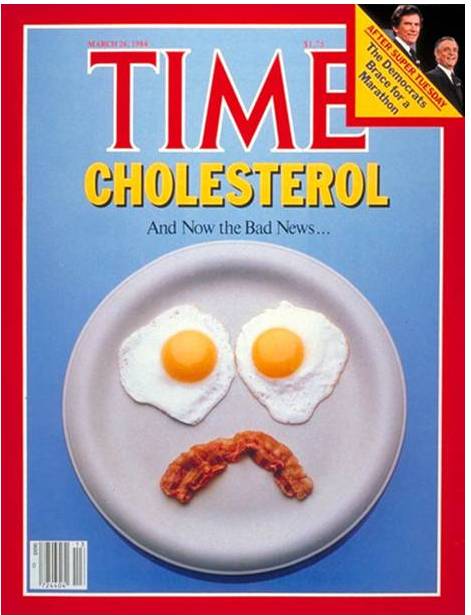
[bacon eggs frowny face, circa 1984]

As with nearly every other aspect in the fight for equal opportunities and treatment, our health as women was based on a single shiny little myth: success would come to those who were willing to work hard, sacrifice, and follow the rules. Airbrushed media images of buns of steel and boobies of plastic sold a diet-exercise message based on an absurdly crude formula—”calories in, calories out”— with one simple rule that would guarantee success: “eat less and move more.”

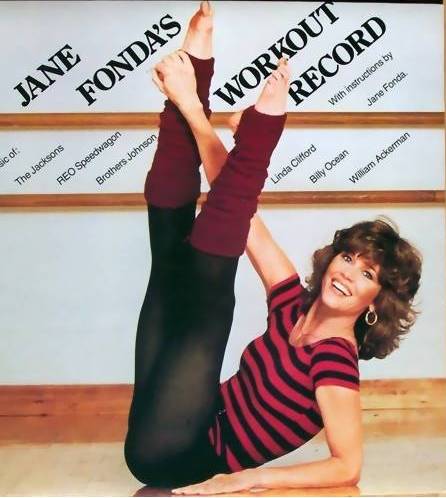
So we did. We ate less and exercised more and got tired and hungry and cranky—and when all that work didn’t really work in terms of giving us the bodies we were told we should have, we bought treadmills and diet pills, Lean Cuisines and leg warmers. We got our health advice from Jane (“feel the burn”) Fonda and Marie (“I’m a little bit country”) Osmond. We flailed through three decades of frustration, culminating— unsurprisingly enough—in the self-flagellation of Spanx® and the aptly-named Insanity®.

[Jane Fonda circa 1982]

Some of us “failed” by eating more (low-fat, high-carb) food and getting fat, and some of us “succeeded” by developing full-blown eating disorders, and some of us fought the battle and won sometimes and lost other times and ended up with closets full of size 6 (“lingering illness”) to size 26 (“post pregnancy number 3”) clothes. Most of us—no matter what the result—ended up spending a great deal of time, money, and energy trying to follow the rules to good health with the deck stacked against us. If we got fat, we blamed ourselves, and if we didn’t get fat it was because we turned our lives into micromanaged, most-virtuous eater/exerciser contests. Either way, our lives were reduced, distracted, and endlessly unsatisfying.  We were hungry for more in so many ways and aching for rest in so many others, but our self-imposed denial and exhaustion allowed us to control, at least for a bit, the one thing we felt like we could control, that we’d fought to be able to control:  our bodies.

We stopped cooking and started counting. We stopped resting and playing and started exercising. We stopped seeing food as love and started seeing it as the enemy. We didn’t embrace these bodies that were finally, tenuously, ours; we fought them too.

Access to high quality nutrition has always been divided along gender lines [1].  There was a time–not that long ago–in our world when men, by virtue of their size, stature, place as breadwinner (i.e. because of their “man-ness”) were entitled to a larger piece of meatloaf than their sisters (a practice that persists in many cultures still).  How many of us (of a certain age) have heard, “Let you brother have the last piece of chicken, he’s a growing boy”?  Now–conveniently–women would do their own restricting.  Gloria Steinem, with a fair amount of prescience that seems to predict the epigenetic contributions of diet to obesity, noted in her 1980 essay The Politics of Food:*

“Millions of women on welfare eat a poor and starchy diet that can permanently damage the children they bear, yet their heavy bodies are supposed to signify indulgence.  Even well-to-do women buy the notion that males need more protein and more strength.  They grow heavy on sugar and weak on diets . . . Perhaps food is still the first sign of respect–or the lack of it–that we pay to each other and to our bodies.”

Dieting and exercising not only provided a massive distraction and timesuck for women, it helped maintain a social order that the feminist movement otherwise threatened to undermine, one where women were undernourished and overworked, in a word: weak.

And when the scientists finally got around to testing the whole low-fat thing on (80% white) women? The verdict, published in  2006, looked like this:

The results, published in the Journal of the American Medical Association, showed no benefits for a low-fat diet. Women assigned to this eating strategy did not appear to gain protection against breast cancer [2], colorectal cancer [3], or cardiovascular disease [4]. And after eight years, their weights were generally the same as those of women following their usual diets [5].

But it was too late. We’d raised a generation of daughters who look at us and don’t want to be us, but they don’t know how to cook and they don’t know what to believe about nutrition and they too are afraid of food. Some end up drinking the same Kool-Aid we did, except that—in the hubris of a youth that doesn’t contain hallucination-inducing sleep deprivation from babies and/or stress and/or a career on life-support, where diet and exercise and rest are, like Peter Frampton’s hair, a dim memory—they think they will succeed where we failed. Or maybe they’ve found the vegan-flavored or paleo-flavored Kool-Aid. But they are still counting and exercising and battling.

White women have been [irony alert] scientifically proven to be more likely to closely follow the high-carb, low-fat dietary ideal set forth by the Dietary Guidelines than any other demographic [6]. (Black guys—who may not be all that convinced that rules created by the US government are in their best interests, given some history lessons—are likely to have the lowest adherence.) White women apparently are really good at following rules that were not written with them in mind and which have not been shown to offer them any health benefits whatsoever (but which have proven immensely beneficial for the food and fitness—not to mention pharmaceutical—industries). The best little rule-followers of all are the dietitians of the Academy of Nutrition and Dietetics (87% white women), who heartily endorsed the 2010 Dietary Guidelines, which reinforced and reiterated 30 years of low-fat, high-carb dogma despite the Harvard-based science that demonstrated that it offered no benefits to women. (Interesting tidbit: The Academy of Nutrition and Dietetics has elected two male presidents in the past decade despite the fact that men make up only 5% of the membership. My husband thinks the organization has “daddy issues.”)

In 2010, the American Medical Association recommended that women of normal weight (that’s less than 40% of us, by the way) who wanted to stay that way “while consuming their usual diet” (i.e. low-fat, high carb) would have to exercise for an hour a day

[Other reassuring conclusions from that study: There was an overall weight gain over the 13-year time frame. Exercising for anything less than 7 hours per week was associated with weight gain over time. If a woman was already fat, increased exercise was more likely to be related to increased weight than weight loss.  If these messages don’t scream to women all over America, “GIVE UP NOW!!!” I don’t know what would. By the way, those of us who go out and skip and jump and run because we like to and it makes our hearts truly happy are not exercising. We’re playing. I love to wave at those women from my couch.**]

But let’s get back to that hour a day for just a second.

Take a look at a recent study by Dr. David Ludwig, out of Harvard. It demonstrated that people who had recently been dieting (something that would apply to almost every woman in America), and were eating a low-fat diet, had to add an hour a day of exercise in order to keep their “calories in, calories out” balanced, while those on a reduced-carbohydrate diet expended that same amount of energy just going about their business.

What is all the women in the world who have been unsuccessfully battling their bulge woke up tomorrow morning and said:

I want my hour a day back?

For those of us who do not want to exercise for an hour just to maintain our weights or for those of us for whom exercise isn’t doing a damn thing except making us hungry and cranky and tired while we gain weight, we don’t have to. Instead, we can eat fewer of those USDA/HHS/dietitian-pushed, nutritionally-pathetic, low-fat whole-grain carbohydrate foods and more truly nourishing food and do whatever we please with that extra hour.

Who knows what changes we can make to a world that desperately needs our help?  In America alone, this would mean giving around–ooh let’s just say–50 million adult women an extra hour a day. That’s an extra 365 hours a year per woman, an extra 18 billion hours of womanpower a year total.

We could stop exercising and start playing. Stop counting calories and start enjoying feeling nourished. Start putting the love back into our food and embracing the bodies we have and the bodies of the men, women, and children all around us. I know that some of us would find that hour well spent just napping. Others of us might use that hour to figure out how to dismantle the system that stole it from us in the first place.

I can bring home the bacon, fry it up in a pan. And eat it.

******************************************************************************

In my own personal celebration of Asskicking Women of Food, I think (I hope) my next post will be:  The Grande Dames (Goddesses? Queens?) of Nutrition

*Thanks to Gingerzingi for bringing this to my attention.  What a great essay–look for it in a collection entitled Outrageous Acts and Everyday Rebellions.

**I have absolutely nothing against activities that bring inner/outer strength and happiness.  But exercise in the 80s and 90s was not about being happy or strong–it was about punishing ourselves (feel the burn? seriously?) in order to win at a game–being in total control of everything in our lives from babies to bodies to boardrooms–whose rules were created within the very social construct we were trying to defeat.

References:

1.  Bentley, Amy (1996) Islands of Serenity: Gender, Race, and Ordered Meals during World War II. Food and Foodways 6(2):131-156.

2. Prentice RL, Caan B, Chlebowski RT, et al. Low-fat dietary pattern and risk of invasive breast cancer: the Women’s Health Initiative Randomized Controlled Dietary Modification Trial. JAMA. 2006; 295:629-42.

3. Beresford SA, Johnson KC, Ritenbaugh C, et al. Low-fat dietary pattern and risk of colorectal cancer: the Women’s Health Initiative Randomized Controlled Dietary Modification Trial. JAMA. 2006; 295:643-54.

4. Howard BV, Van Horn L, Hsia J, et al. Low-fat dietary pattern and risk of cardiovascular disease: the Women’s Health Initiative Randomized Controlled Dietary Modification Trial. JAMA. 2006; 295:655-66.

5. Howard BV, Manson JE, Stefanick ML, et al. Low-fat dietary pattern and weight change over 7 years: the Women’s Health Initiative Dietary Modification Trial. JAMA. 2006; 295:39-49.

6.  Sijtsma FP, Meyer KA, Steffen LM et al.  Longitudinal trends in diet and effects of sex, race, and education on dietary quality score change: the Coronary Artery Risk Development in Young Adults study. Am J Clin Nutr. 2012 Mar;95(3):580-6. Epub 2012 Feb 1.

N of 1 Part 5: A Different Question

The magic formula

My friend, Andrew Abrahams, puts the current “diet wars” situation this way:

1.  the n of 1 view:  what works for you is what works, this is all that matters, end of story.

2.  the Platonic view: this is how your body/metabolism works, and so this is what you should do and if it isn’t working you probably are not doing right.

I think many of us start off being interested in nutrition because we like to know stuff, and knowing stuff about how to be healthy and fit is really cool because then you get to look better in your bathing suit than most or you can solve health problems that others can’t or any number of other minor acts of smug superiority masquerading as an objective search for knowledge. When we start out, we usually are completely immersed in perspective #2, that there is a “right” way to eat and exercise. We figure out what the “right” way is through various forms of scientific investigation/reporting brought to us by experts and/or the media; we apply that magic formula to ourselves, and we wait for the magic results to happen. If we are young and unencumbered by reality, they usually do—no matter what formula for fitness and health we’ve chosen from the ones offered by the experts—and we congratulate ourselves for our hard work and strength of character.

Enter reality. Crying babies. Crazy work hours. Demoralizing paychecks. Chronic injuries. Insane parents. Needy friends. Crying, crazy, demoralizing, chronically insane, needy life partners (No, my dear sweet rockstar hubby, I certainly couldn’t have had you in mind when I wrote this.)

A little reality can drop-kick your magic fitness formula into outer space.

For many of us, somewhere along the line, the magic formula stops working, or we stop working at the magic formula, or a little (or a lot) of both.

Some of us respond to this by looking for the next—better, easier, quicker, more doable—magic formula. Some of us respond by working even harder at the magic formula we haven’t given up on—yet. Some of us give up looking and trying because life is hard enough already.

But that doesn’t mean we’ve given up on the idea that there is a “right” way to go about being healthy. I was a low-fat vegetarian eater for 16 years because I thought it was the “right” way to eat. I’ve been a (mostly) low-carb, animal eater for 13 years, during most of which I thought I’d—finally—found the really “right” way to eat.

What I’d really found was a new and different way to be wrong.

I wasn’t wrong about the diet plan–for me. It helped me lose 60 pounds that I’ve kept off for 13 years without hunger, without a calculator, and without having to exercise more than I want to. What I was wrong about was being right. I was wrong about the magic formula—any magic formula.

[In blog posts yet to come, I’ll tell you all the story of the woman who changed my perspective on everything.]

I hate being wrong (although goodness knows I’m really good at it, from years of practice). I really want there to be a formula, magic or otherwise. I like order, routine, facts, and answers. Gray areas make me woozy. That’s why I love biochemistry. It’s a game with nothing but rules that, literally, every body has to follow.

But, to quote Andrew Abrahams again, a detailed understanding of the minutiae of biochemical mechanisms doesn’t really help us in the big messy world of real people. Although everyone is subject to the same biochemical rules, how those rules play out in any given individual is difficult—perhaps impossible—to predict.

I salute the work that Gary Taubes and Peter Attia are doing with NuSI, which will focus on providing randomized controlled experimental evidence regarding nutritional interventions. The idea is to have both highly controlled experiments and more “real world” ones. Hooray for both. These experiments may help us understand how well certain nutrition interventions work—in experimental situations with a selected group of individuals. As awesome as this might be for a scientific pursuit, this science still may not be of much help for you personally, depending on how closely matched you feel your life and your self are to the experimental conditions—and it won’t provide any easy answers for the hardest issue of all, public health policy.

One big long experiment

Is there a way to round up our messy, individual realities into comprehensible information that will eventually translate into meaningful policy? Maybe. Andrew Abrahams and others in the ancestral health community have been tossing around the idea of “n of 1” nutrition for a while. The basis for this approach is the idea that we all experiment. In fact, life is one big long experiment.

But how do we conduct these “n of 1” experiments in a manner that

  • helps the person doing the experiment learn the right lessons (rather than be distracted by coincidences or random events)?
  • helps the clinician give better nutrition guidance, not of the “one size fits all” variety?
  • helps the field of nutrition science develop more meaningful methods of investigation, especially with regard to long-term health and prevention of chronic disease?
  • helps us renegotiate the top-down, one-size-fits-all framework of current public health nutrition policy?

Andrew Abrahams had the brainchild of setting up a community for n of 1 nutritional experimentation to do exactly this.

As Andrew says, and I agree, individual characteristics, circumstances, and history are tremendously important as far as choosing food and activity that works for you. His idea is to create a way to help people with this n of 1 experimentation so they can evaluate how their body will respond to changes and find what’s right for them.

The purpose of this community would be to capture the wide variety of attributes that may contribute to the outcomes for any individual, and provide modeling tools that can help people make the right decisions about what changes to make.

From a participant’s perspective, it would:

  • provide a way for you to observe and analyze personal health in an organized and (more or less) objective fashion
  • give direction, support, and structure to your own n of 1 experimentation
  • create a community of fellow experimenters with whom you could compare/contrast results

From a health professional’s perspective, it would:

  • provide a way to assist clients/patients in find what works best for them without a superimposing “it’s supposed to work this way for everyone” bias
  • create a set of algorithms for adapting common patterns to individualized recommendations and further experimentation
    • For example: A postmenopausal female who wants to lose weight may start one way and experiment in a series of steps that is different from, say, a 30-year old marathoner who wants to have a healthy pregnancy.

From a researcher’s perspective, it would:

  • create a way to structure and conduct experiments across a variety of nutritional (and other) factors
  • allow sharing and analysis of both pooled results and case studies/series of relevant community members or subpopulations with common characteristics
  • develop tools allowing one to interpret the community results in an individual context, make predictions and suggest “next steps”
  • contribute to the development of modeling systems for complex and interrelated inputs and outputs

A different question means a different approach to public health

I see the value of n=1 as a scientific pursuit because it will teach us to ask a very different question than the one we’ve been asking.  We’ve been asking, “What way of eating will prevent chronic disease in most/all Americans?” Typically, nutrition epidemiology is recruited to try to answer that question with the idea that there is some factor or factors (like smoking and lung cancer) that can be included/eliminated to reach this goal.  We’ve been so phenomenally unsuccessful at chronic disease prevention with our current population-wide model that I think a new framework of investigation is needed. Thus, n of 1 investigation changes the question to something more like: “What way of eating will bring improved health to you now?”

As people make incremental changes toward shorter-term personal health goals, modeling tools can be used to map out “nearest neighbor” communities. These communities may be similar in terms of personal characteristics and health history, but also attributes relating to culture, region, lifestyle, ethnic and family background, education, income, etc. Over time, this information will reflect long-term health outcomes built on a background of complex human traits interacting with complex human environments.

The complexity of n of 1 nutrition seems to be the very opposite of public health nutrition. And it would be naïve to think that the concept of n of 1 will not be at least partially co-opted by the food, drug, and research industries (“Try new Methylation Carbonation –for PEMT polymorphisms!”).  But by its very nature, n of 1 nutrition resists being turned into yet another “magic formula.”  More importantly, it reframes our current approach to public health nutrition along two very important lines:

First, it weakens the current public health message that a one-size-fits-all dietary recommendation is appropriate. This is especially important because it has been assumed for 30+ years that dietary recommendations that are normed on one population are equally applicable to other populations. A landmark study published in 2010 shows that African-Americans who consumed a “healthier” diet according to Dietary Guidelines standards actually gained more weight over time than African-Americans who ate a “less healthy” diet [1].

DQI stands for Diet Quality Index. Blacks with a higher DQI had more weight gain over time than blacks with a lower DQI. From [1]


Second, n of 1 nutrition emphasizes the need to return to a focus on the provision of basic nutritional needs rather than prevention of chronic disease.  Balancing the complexity of the n of 1 concept (i.e. each human is radically different from another) with the simplicity of promoting/understanding essential nutrition (i.e. but each human shares these same basic needs provided by food) moves us away from the prevention model to the provision model. And the literature is pretty straightforward about what our basic nutritional needs are:

  • essential amino acids
  • essential fatty acids
  • vitamins and minerals
  • sufficient energy

Notice anything missing on that list of essentials? As the Institute of Medicine’s Food and Nutrition Board says: The lower limit of dietary carbohydrate compatible with life is apparently zero” (DRI, Ch. 6, 275) [2]. This doesn’t mean you can’t or shouldn’t eat carbohydrate foods, or that some carbohydrate foods aren’t beneficial for some people or even many people. Indeed, some of my best friends are carbs. But dietary carbohydrate is not an essential component of our nutritional needs and never has been (although it is a fine source of energy if energy is what is you need and you aren’t wearing a 6-month supply on your backside like I am). Rather, carbohydrate has been recommended as the source of the majority of our calories as a means of replacing the fat, saturated fat, and cholesterol that we’ve been told cause chronic disease.* This recommendation seems to have conveniently upsized the market for the industrialized and heavily marketed foods—made mostly from corn, wheat, and soy—that take up most of the space on our grocery store shelves.

But I think the most significant ramification of the history of our Dietary Guidelines is not its effect on diet so much as the acceptance of the notion that something as intimately and intricately related to our health, culture, personality, lifestyle, family, and history as food can and should be directed—in a most comprehensive manner—from a place exceedingly remote from the places where we actually get fed.

Focus on community

While the ostensible focus of n of 1 nutrition is the individual, the real focus is the community. Advances in both biological and social sciences are increasingly focused on what are now considered to be the primary determinants of health status for an individual: that person’s genetic community and that person’s present community. What health behaviors you as an individual think you “choose” have already been largely determined by social factors: culture, socioeconomic status, education, etc. Those behaviors interact with genetic and epigenetic mechanisms that you didn’t have much choice about either. Although every individual has some control over his/her health behaviors, many of the health outcomes that we think of as being a result of “individual choice” are already largely predetermined.

One of the enduring myths of healthcare in the US is that there are some folks out there who “choose” poor health. Maybe there are, but I’ve met a lot of people in poor health, and I’ve never met anyone who deliberately chose it.

As we find virtual “nearest neighbor” communities in our n of 1 nutrition database, we may be able to use this information to assist real communities to develop their own appropriate food-health systems. Despite our increasing diversity, much of America still clusters itself in communities that reflect shared characteristics which play leading roles in health and health behavior. Culturally-influenced food preferences and nutrition beliefs may be part of that community formation and/or may reinforce those communities. With scientific tools that embrace complexity and diversity, we can honor those characteristics that make one community (real or virtual) different from the next, rather than ignore them.

N of 1 nutritional approaches will give us a new way to think about public health nutrition and the individuals and communities most affected by nutrition policy. I’m proud to say that Healthy Nation Coalition will be supporting the project.

Up next:  My take on why nutrition is a feminist issue, or “I am Woman, hear my stomach growl.”

*While on a field trip to Washington, DC in January of 2010, I met Linda Meyers, one of the authors of reference #2 below. I asked her why carbohydrates were recommended as such a large part of our diet if there is no essential requirement for them. Her response was that the recommendation was based on prevention of chronic disease. I’m still not sure I get that.

References:

1. Zamora D, Gordon-Larsen P, Jacobs DR Jr, Popkin BM. Diet quality and weight gain among black and white young adults: the Coronary Artery Risk Development in Young Adults (CARDIA) Study (1985-2005). American Journal of Clinical Nutrition. 2010 Oct;92(4):784-93.

2. Dietary Reference Intakes for Energy, Carbohydrate, Fiber, Fat, Fatty Acids, Cholesterol, Protein, and Amino Acids (Macronutrients) (2005)

N of 1 Nutrition Part 4: The Elephant in the Room

“Nutrition is for real people. Statistical humans are of little interest.”
Roger J. Williams, PhD

Nutritional epidemiology has many shortcomings when it comes to acting as a basis for public health nutrition policy.   But you don’t have to take Walter Willett’s word for it.  Apart from the weaknesses in the methodology, there is one great big elephant in the nutrition epidemiology room that no one really wants to talk about:  our current culture-wide “health prescription.”

(Thanks to Utopia Theory!)

You don’t have to care about or read about nutrition to know that “fat is bad” and “whole grains are good” [1,2]. Whether or not you follow the nutrition part of the current  “health prescription” is likely to depend on a host of other factors related to general “health prescription” adherence, which in turn may have a much larger impact on your health than your actual nutritional choices. This is especially true because variation in intake and/or variation in risk related to intake are frequently quite small.

For example, in a study relating French fry consumption to type 2 diabetes, the women who ate the least amount of French fries ate 0 servings per day while the women who ate the most ate 0.14 servings per day or about 5 French fries per day (i.e. not a big difference in intake) [3]. The risk of developing type 2 diabetes among 5-fries a day piggies was observed to be .21 times greater than the risk among the no-fry zone ladies (i.e. not a big variation in risk).

Okay, everyone knows that French fries are “bad for you.” But these ladies ate them anyway. Were there other factors related to general “health prescription” adherence which may have had an impact on their risk of diabetes?

The French fry eaters also “tended to have a higher dietary glycemic load and higher intakes of red meat, refined grain, and total calories. They were more likely to smoke but were less likely to take multivitamins and postmenopausal hormone therapy.” (They also exercised less.) In other words, the French fry eaters, within a context of a known “health prescription” had chosen to ignore a number of healthy lifestyle recommendations, not just the ones related to French fries.

“As a general rule, noncompliant patients will usually have worse outcomes than compliant patients. In fact, there is solid evidence that patients who fail to comply with a placebo have worse outcomes than patients who comply with a placebo [4, 5] . . . . Patients who comply poorly with a placebo probably have other poor self-care habits.”

[Also, see Gary Taubes’ characteristically exhaustive discussion of the compliance effect. Pack a lunch.]

If you think of our current default diet recommendation as the “placebo” (although its effects may not be exactly benign), it is clear that people who fail to comply with dietary prohibitions against red meat, saturated fats, and “junk” food like French fries may also be more likely to have other poor self-care habits, like smoking and not exercising. That poor health care habits are related to poor health is of no surprise to anyone.

Statistical people

In their statistical manipulation of a dataset, nutritional epidemiologists attempt to “control” for confounding variables (confounders), such as differences in health behavior. A confounder is something that may be related to both the hypothesized cause under investigation (i.e. French fry eating) and the outcome (i.e. type 2 diabetes).  As such, it muddies the water when you are trying to figure out exactly what causes what.

When statisticians “control” or “adjust” for these confounders in a data set, they essentially “pretend” (that’s the exact word my biostats professor used) that the other qualities that any given individual brings to a data set are now equalized and that the specific factor under investigation—diet—has been isolated. Well, it has and it hasn’t. The “statistical humans” created by computer programs that now have equalized risk factors are a mirage; these people do not exist. The people who contributed the data that ostensibly demonstrates that “French fries increase risk of type 2 diabetes” are the exact same people who had other behaviors that may also contribute to increased risk of diabetes. (Please note: I chose this example, rather than “red meat causes heart disease” because there are many plausible explanations for French fries causing type 2 diabetes, it is just that you aren’t going to find evidence for them using this approach.)

If nutrition epidemiologists were clinicians.

(Thanks and apologies to Baloocartoons.com.)

Most nutritional epidemiology articles contain some version the following statement in their conclusions:

“We cannot rule out the possibility of unknown or residual confounding.”

Meaning: We can not rule out the possibility that our results can be explained by factors that we failed to fully take into account. Like the elephant in the room.

That this is actually the case becomes apparent when hypotheses that seem iron-clad in observational studies are put to the test in experimental conditions.

Lack of experimental confirmation

If ever there was a field about which you could say “for every study there is an equal and opposite study,” it is nutritional epidemiology–although experimental results are generally considered “more equal” than observational data. Associations that link specific nutrients to the prevention of specific diseases can be (relatively) strong and consistent in the context of nutritional epidemiology observational data, but absent in experimental situations. Epidemiological studies suggested that beta carotene could prevent cancer; experimental evidence suggested just the opposite and in fact, smokers given beta carotene supplements had increased risk of cancer [6]. Epidemiological studies suggest that low-fat, high-carb diets are related to a healthy weight. This may be the case, but experimental evidence shows that reducing carbs and increasing fat is more effective for weight loss [7, 8]. In one study, when experiment participants added carbs back into their diet (the increase in calories from 2 months to 12 months is entirely accounted for–and then some–by carbohydrate), they regained the weight they had lost.*

Data from [7]

Kenneth Rothman, in his book Epidemiology: An Introduction, emphasizes the importance of applying Karl Popper’s philosophy of refutationism to epidemiology:

“The refutationist philosophy postulates that all scientific knowledge is tentative in that it may one day need to be refined or even discarded. Under this philosophy, what we call scientific knowledge is a body of as yet unrefuted hypotheses that appear to explain existing observations.” [9]

Rothman makes the point that there is an asymmetry when it comes to refuting hypotheses based on observations: a single contrary observation carries more weight in judging whether or not a hypothesis is false than a hundred observations that suggest that it is true.

In the case of the current “low fat, whole grain diets will prevent chronic disease” hypothesis, there is not just one contrary observation, but scores of them, including the results of applying this hypothesis in a 30-year, population-wide experiment in the US.

If the current nutrition paradigm needs to be “refined or even discarded,” how will we acquire the knowledge we need to create a better system? How can we move away from “statistical people” towards a perspective that encompasses the individual variations in genetics, culture, and lifestyle that have such a tremendous impact on health?

Tune in next time for the final episode of N of 1 nutrition when I ask the all-important question: What the heck does n of 1 nutrition have to do with public health?

*This doesn’t mean that carbs are evil–some of my best friends are carbs–but that the conditions in a population that are associated with a healthy weight and the conditions in an experiment to that lead to increased weight loss are very different.

References:

1. Eckel RH, Kris-Etherton P, Lichtenstein AH, Wylie-Rosett J, Groom A, Stitzel KF, Yin-Piazza S. Americans’ awareness, knowledge, and behaviors regarding fats: 2006-2007. J Am Diet Assoc. 2009 Feb;109(2):288-96.

2. Marquart L, Pham AT, Lautenschlager L, Croy M, Sobal J. Beliefs about whole-grain foods by food and nutrition professionals, health club members, and special supplemental nutrition program for women, infants, and children participants/State fair attendees. J Am Diet Assoc. 2006 Nov;106(11):1856-60.

3. Halton TL, Willett WC, Liu S, et al. Potato and french fry consumption and the risk of type 2 diabetes in women. Am J Clin Nutr. 2006 Feb;83(2):284-90.

4. Coronary Drug Project Research Group. Influence of adherence to treatment and response of cholesterol on mortality in the coronary drug project. N Engl J Med. 1980 Oct 30;303(18):1038-41.

5. Horwitz RI, Viscoli CM, Berkman L et al. Treatment adherence and risk of death after a myocardial infarction. Lancet. 1990 Sep 1;336(8714):542-5.

6. Willett, W. Nutrition Epidemiology, 2nd ed. New York: Oxford University Press, 1998.

7. Gardner C, Kiazand A, Alhassan, et al. Weight Loss Study: A Randomized Trial Among Overweight Premenopausal Women: The A TO Z Diets for Change in Weight and Related Risk Factors .Comparison of the Atkins, Zone, Ornish, and LEARN. Journal of the American Medical Association. 2007;297(9):969-977

8. Shai I, Schwarzfuchs D, Henkin Y, Shahar DR, et al; Dietary Intervention Randomized Controlled Trial (DIRECT) Group. Weight loss with a low-carbohydrate, Mediterranean, or low-fat diet. N Engl J Med. 2008 Jul 17;359(3):229-41.

9. Rothman, K. Epidemiology: An Introduction. New York: Oxford University Press, 2002.


N of 1 Nutrition Part 3: The Love Song of Walter C. Willett

I didn’t want you all to have to wait all weekend for the truth:  Walter Willet didn’t really say, “I’ve never met a statistical person I didn’t like,” but he is sort of the Will Rogers of nutrition.

The Will Rogers of nutrition?

Everybody likes him, me included. Like Will Rogers was about politics, Willett is a staunch nutrition middle-of-the-roader who thinks fat it not so bad after all, but hey now, let’s not go any kind of crazy here, because saturated fat will still kill you in a New York minute probably maybe. 

I spent a lot of time with him earlier this year—okay, really just his book, but his book is so sweet and personal that I felt just like I was sitting at the master’s feet—which were clad in my imagination in the most sensible of shoes—as he unfolded for me the saga of nutritional epidemiology.

What I’m about to say is said with all due respect to the man himself (he’s basically created a whole freekin’ discipline for goodness sake). This is simply my reading of a particular text located within a particular context, i.e. this is what happens when they let English majors into science programs.

There are many reasons why nutritional epidemiology may not be up to the task of giving us a sound basis for nutrition policy. But why take my word for it? If you want to understand the heart of nutritional epidemiology—the driving force behind our bold 40-year march in the misguided direction of one-size-fits-all dietary recommendations—you must read Walter Willett’s Nutritional Epidemiology. It is a book I love more every time I read it, and I say this in all sincerity.

The exciting cover graphics merely hint at the fabulousness that awaits inside!

While I suppose it was written as a sort of textbook, and it is certainly used as one, it doesn’t really read like a textbook. It is part apology and part defense, and is much more about “why” than “how.” And the “why?” that it tries to answer to is “Why apply the techniques of epidemiology to nutrition and chronic disease?”

In this regard, it is a touching masterpiece. Walter Willett, MD, DrPH is a professor at the Harvard School of Public Health and at Harvard Medical School. He is considered by many to be the father of nutritional epidemiology. To stretch the analogy, you can think of nutritional epidemiology as his child. Reading the book this way, it almost moves me to tears (again, not joking*), for I find this book to be a father’s sweet and sad paean to a beautiful prince full of promise, who has grown into a spoiled, churlish, and lazy adult, unfit to rule the kingdom, but with too much of the dreams of many poured into him to banish altogether. And the dreams of the father are the most poignant of all.

Apparently, to Willett’s eternal dismay, the whole field got started off on the wrong foot by focusing on dietary cholesterol (as a cause) and serum cholesterol (as an outcome), associations—as we now know—that turned out to be weak, inconsistent, nonexistent, or even the inverse of what was expected (pp. 5-6, 417-418) . We now know that sub-fractions of serum cholesterol affect heart disease risk differently (LDL-C vs HDL-C, for instance) and that different foods affect different aspects of serum cholesterol differently, making the relationship to overall heart disease risk even more obscure, which seems to be par for the course in this field, as Willett readily admits.

Here, according to Willett, is what we don’t know and can’t do in nutritional epidemiology:

  • We don’t know any given individual’s true intake. It can only be estimated with greater or lesser degrees of error. (p. 65)
  • We don’t know any given individual’s true status for a nutrient. Ditto above. (p. 174)
  • We don’t know the true nutrient content of any given food that a person might eat. Double ditto. (pp. 23-24)
  • We don’t know what factors/nutrients in a food may operate together to prevent/cause disease. Similarly, we don’t how foods commonly found together in dietary patterns may operate together to prevent/cause disease. (pp. 15, 21-22, 327-328)
  • We have a really hard time separating calorie intake from nutrient intake (Ch. 11). Ditto nutrients and food patterns, food patterns and lifestyle patterns, etc. (pp. 10, 15, 22)
  • We can’t separate metabolic consequences of food intake patterns from the food itself, i.e. what we are looking at in any given data set is really metabolism of food, not food. (p. 15)
  • We don’t know what really causes the chronic diseases we study in nutrition epidemiology (p. 12); age, genetics, education, income, and lifestyle factors may influence, modify, or be more important than any dietary factor in the origins of these diseases (pp. 10, 15).
  • We can’t distinguish between causal and coincidental associations. Furthermore, weak associations could be causal; strong associations can be coincidental (p. 12).
  • Associations we do find are likely to be weak; we will often find no associations at all. Even if we do find statistically significant associations between nutrients and disease, they may be clinically or practically irrelevant and should not necessarily be used to make public health recommendations. (pp. 12-14, 21).

But wait! Willett cries. Don’t give up! This book is also a defense of those shortcomings—although one blinkered by what I must assume is Willett’s love for the field. I am always a little touched and frustrated by the section on why we find so many instances of lack of association between an ostensible nutritional cause and a disease outcome in nutrition epidemiology. Willett meticulously lists the possible reasons one by one as to why we may not be able to “observe a statistically significant association when such an association truly exists” (pp. 12-14). At no time does he venture to offer up the possibility that perhaps—and how would we know one way or the other?—no such association does truly exist.

A new edition of the book is coming out; this should make the old edition cheap in comparison. I won’t read the new edition because I’m afraid it would ruin my romance with the old edition, which is the one I recommend to you.

If you think Gary Taubes is “a poisonous pea in an ideological pod” (as I’ve heard him called), read this book (especially Ch 17 on “Diet and Coronary Heart Disease”). On the other hand, if you think population studies investigating nutrition and chronic disease are basically a gigantic undifferentiated crock of malarkey, read this book. Why? Because there are no clear answers and no real heroes. If you want to know the strengths and weakness of nutritional epidemiology, best to hear them outlined in excruciating and loving detail by Willett himself.

You don’t have to read it cover to cover. Skip around. You’ll learn in passing some methodology behind the folly of trying to forge links between specific nutrients in food to long-term chronic diseases that have multiple and complex origins (just the sections on how we collect information about what we think people are eating are eye-opening in that regard—Ch. 4-8). But I think (I hope) you’ll also hear the voice of a father wise enough to know that children are—must be—brought into this world on grand faith, one that hopes that they will make the world a better place than before, and that his child—nutritional epidemiology—is no different. Willett believes in this child and the book is a statement of that faith.

Please draw your own conclusions, here’s mine: Faith is not science.

Any parent out there knows this: you seem at first to have a child of your own, but you end up sending an adult out into the world who is no longer yours and never really was. The mistakes, limitations, failures, shortcomings belong only to that grown child, not to the parent. But still. It may be hard to acknowledge the fact that your precious one is no better than the other kids and probably won’t save the world. Sometimes, when I’m reading this book—when I’m supposedly studying for an exam—I am caught unawares by the sighs of disappointment, the rally of excuses, and finally the prickly justifications: The prince must be allowed to rule; the king knows he’s a weak little louse, but he’s all we’ve got.

I know—and any of us who are students of literature know—that this is the king’s tragic flaw. The prince can’t save the kingdom; the empire must crumble. But here is the king, holding brick and mortar together through sheer force of will, somehow acknowledging and somehow—at the same time—unaware, that this particular castle was built on sand in the first place. In this book, I hear Willett’s love for a hopelessly flawed field, a touching declaration of blind optimism, and I love this book, and I deeply respect the man himself, for showing that to me.

Note: I don’t expect anybody but dweeby English majors to get the title of this post, but for dweeby wanna-bees, see T. S. Eliot’s “The Love Song of J. Alfred Prufrock.”   It just makes my heart sing with joy that Willett refers to his diet of preference as the “prudent” diet.

Stay tuned for N of 1 Nutrition: Part 4, when you’ll hear Dr. Roger J. Williams say:

“Nutrition is for real people. Statistical humans are of little interest.”

*Admittedly, it could be eye strain.  I am OLD.

References:

Page numbers and chapters refer to the following edition:

Willett, W. Nutrition Epidemiology, 2nd ed. New York: Oxford University Press, 1998.

Just Asking the Question


So wouldn’t it be cool if we could ask folks on the street what they think caused the obesity crisis, and then show them this and ask them again?

Now back to your regularly scheduled blob.

Data from:  Centers for Disease Control and Prevention (CDC).  National Center for Health Statistics, Division of National Health and Nutrition Examination Surveys.  Prevalence of Overweight, Obesity, and Extreme Obesity Among Adults: United States, Trends 1976–1980 Through 2007–2008.